

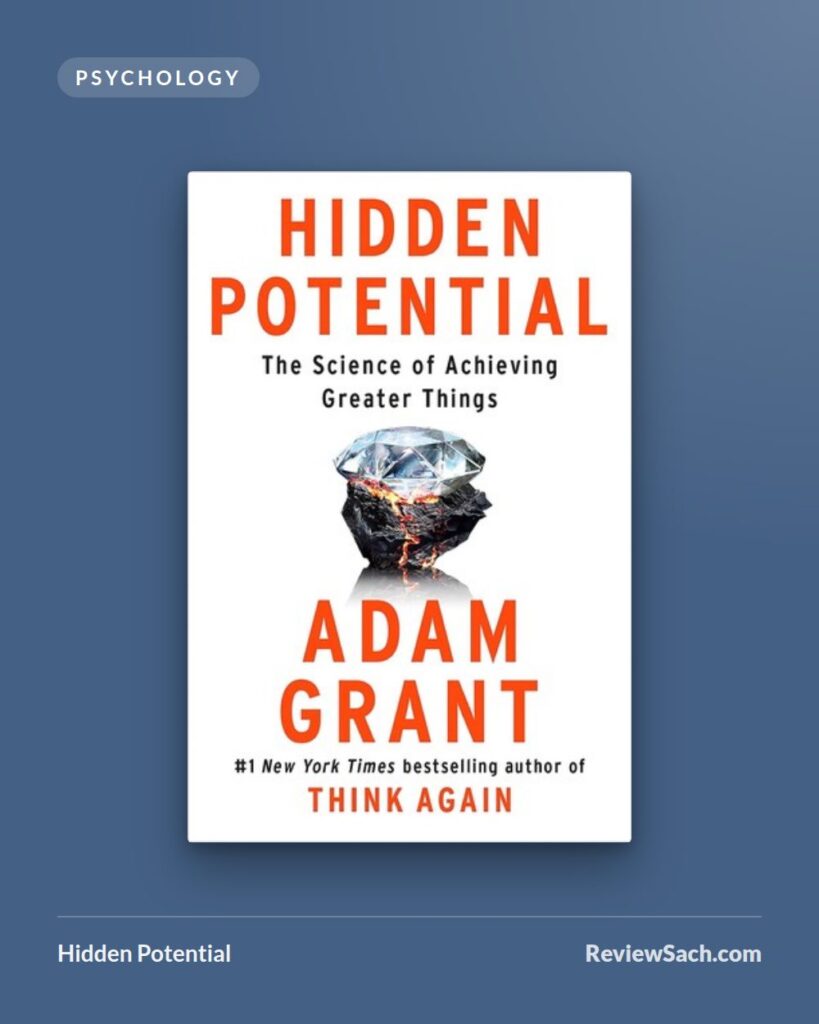
Author: Adam Grant · Published: 2023 · Genre: Psychology, Self-Improvement, Education
Hidden Potential argues that we badly overrate natural talent and underrate how far people can climb with the right character skills, support and opportunities. Grant brings his usual mix of studies and stories, and the sections on schools and hiring are genuinely useful. But the self-improvement chapters cover familiar ground, and the evidence is sometimes stretched thin. Good for teachers, coaches and managers; less essential for everyone else.
The big idea
Grant measures potential not by where people start but by how far they travel. The book has three parts.
Skills of character covers traits Grant says can be learned rather than inherited, such as proactivity, discipline and determination. He urges readers to become creatures of discomfort who seek out awkward practice, to act like sponges that absorb the right information, and to ask for advice rather than feedback. He also wants them to be imperfectionists, aiming high without being paralyzed by flaws.
Structures for motivation is about scaffolding: temporary support that helps you past obstacles you can’t clear alone. It covers deliberate play, which turns practice into games, and how to get unstuck when progress stalls, sometimes by taking a detour.
Systems of opportunity looks at schools, teams and hiring. Grant argues that institutions should judge people by their trajectory rather than their current level, and should design systems that surface overlooked talent.
What works
- The Finland chapter is the strongest. Grant explains how Finnish schools invest in highly trained teachers, often keep the same teacher with a class for several years, and build support teams around struggling students. It’s a specific model rather than vague inspiration.
- Some examples are memorable. Language learner Benny Lewis sets out to make lots of mistakes every day because each one speeds up his learning. Stephen Curry’s trainer Brandon Payne turns drills into games that make practice both harder and more fun.
- The hiring and admissions chapter is practical. Grant argues for weighing improvement over time, and describes research suggesting that high school grade trajectories predicted later earnings better than early grades alone. He also argues that team success depends more on members’ cooperative skills than on raw intelligence. His case for brainwriting, where people generate ideas alone before pooling them, is an easy way to hear from quieter team members.
- It is generous in tone. The book is aimed at people who were written off early, and that motivation shows on every page.
What doesn’t
The first part covers ground familiar from books on deliberate practice, growth mindset and grit. Grant repackages ideas like seeking discomfort and embracing mistakes, often vividly, but rarely adds much that is new.
The evidence can feel thin. Many chapters build broad claims on one or two studies plus an inspiring story, and Grant seldom discusses effect sizes or failed replications. Reviewers also noted that some cases, such as the 2010 Chilean mine rescue he uses to illustrate collective problem-solving, have been told many times before.
The case studies skew toward success, which risks survivorship bias. For every person who climbed far with the right scaffolding, others didn’t, and the book says little about why.
Finally, the structure is loose. The three parts sit together uneasily, and the jump from personal growth habits to national education policy can feel abrupt.
Who should read it
Teachers, coaches, parents and managers responsible for developing others will get the most from the second and third parts. If you’ve read Grant’s earlier books or much of the growth literature, you can safely skim the first part. Anyone who hires or admits people should read the final section.
Rating: 3.5/5
Image credits — Cover image via Open Library. Cover design © the publisher, shown for review purposes.
