

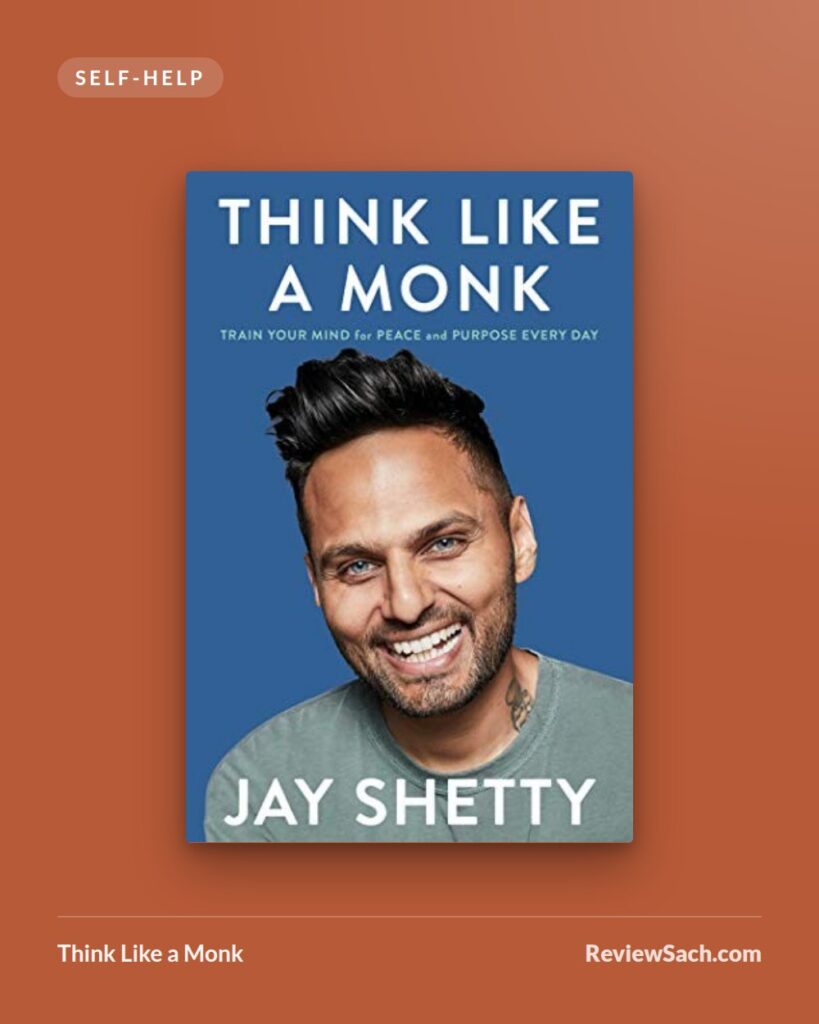
Author: Jay Shetty · Published: 2020 · Genre: Self-Help, Mindfulness
Think Like a Monk promises to teach the calm and purpose Shetty says he learned as a Hindu monk, through simple exercises anyone can try. Its biggest strength is accessibility: it is warm, easy to read and full of short practices for beginners. Its biggest weakness is depth and authority, because the advice is familiar wisdom repackaged, and reporting since 2019 has questioned both how Shetty credits others and how long he actually lived as a monk. It is worth reading for newcomers to meditation who want a friendly start, not for readers who know the traditions it draws on.

The big idea
Shetty tells how, as a business student in London, he heard a monk speak and later left the corporate path to join an ashram, before returning to build a career in viral videos and podcasting. The book turns that story into a three-part program. The first part, letting go, deals with identity, negativity, fear and the values we absorb from others. The second, growing, covers purpose, routine, the mind and the ego. The third, giving, covers gratitude, relationships and service.
He contrasts a restless “monkey mind” with a calm, purposeful monk mind. He borrows heavily from the Bhagavad Gita and Vedic ideas, including dharma, the idea that each person has a natural calling, and four personality types based on the varnas, with a personality quiz at the back. Each chapter mixes anecdotes, studies and short exercises, and the book includes guided meditations.
What’s great
- Easy entry points. The breathing and meditation practices are simple, and the exercises, such as looking at how you spend your time to see what you really value, are short enough to actually do.
- Warmth. Shetty writes like an encouraging friend, which helps readers who find meditation books intimidating.
- Sensible core advice. Comparing less, complaining less, building a steady morning routine and treating service as a source of meaning are sound, if not new, ideas.
The controversy
The book’s authority rests on Shetty’s story, and that story has been disputed. In August 2019, the YouTuber Nicole Arbour accused him of posting other people’s quotes and content on social media without proper credit. He then added attributions to more than a hundred posts.
A deeper investigation came later, in February 2024, when the journalist John McDermott reported for The Guardian that Shetty’s account of his monk years did not match the record. Shetty had often described living in an ashram in Mumbai from 2010 to 2013. McDermott cited blog posts and people familiar with Shetty’s movements suggesting he spent much of that time at Bhaktivedanta Manor, a Hare Krishna temple near London, and noted a 2011 blog post referring to almost four months in India. The report also found he had given different ages for when he first heard his mentor, Gauranga Das, speak. Shetty’s legal team said he had stayed at the Manor for a few months before moving to India. The same report questioned claims made by his paid coaching certification school.
None of this makes breathing exercises less useful. But a book sold on hard-won monastic wisdom should be judged partly on the honesty of that claim.
What’s weak
Even apart from the controversy, the book is thin. Much of it restates Stoic, Buddhist and Hindu ideas available in better and deeper sources, and the studies are quoted in passing rather than examined. The tone is relentlessly upbeat, and chapters often end where a serious discussion of hard cases should begin.
Who should read it
Read it if you are new to meditation and want a gentle, practical introduction. If you want depth, go to a good translation of the Bhagavad Gita or an experienced teacher instead.
Rating: 3/5
Image credits — Featured image: cover image via Open Library; cover design © the publisher, shown for review purposes. In-article images: Photo by Hanna Eberhard on Unsplash.
