

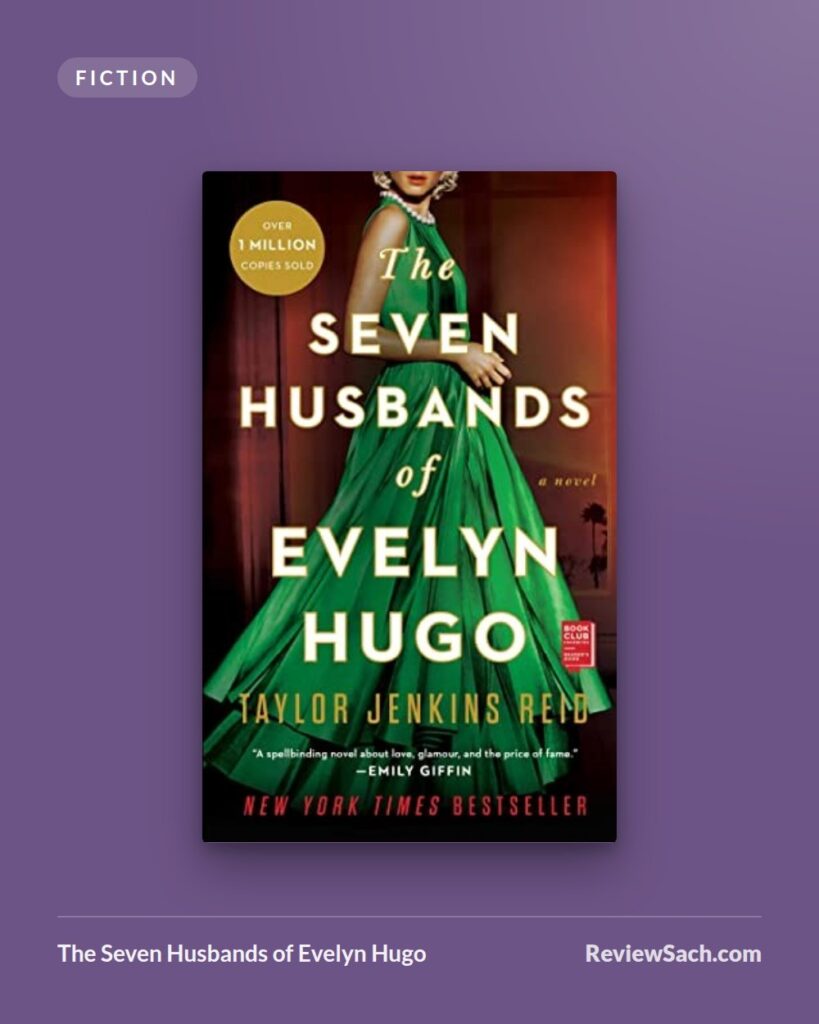
Author: Taylor Jenkins Reid · Published: 2017 · Genre: Historical Fiction, Romance
The Seven Husbands of Evelyn Hugo is a novel framed as a Hollywood star’s confession, and its biggest strength is Evelyn herself: ruthless, funny, wounded and impossible to stop listening to. Its biggest weakness is everything around her, from the plain, workmanlike prose to a present-day narrator who never becomes as interesting as the woman she interviews. Read it if you want an absorbing, emotional page-turner about fame, love and the price of hiding who you are.

What it’s about
Monique Grant is a mid-career journalist at a New York magazine, recently separated and stuck writing small pieces. Then Evelyn Hugo, a reclusive screen legend in her late seventies, asks for her by name. Evelyn wants to tell her whole life story, on the condition that Monique writes it as a book to be published after Evelyn’s death. Nobody, Monique included, understands why Evelyn chose her, and that question hangs over the novel.
Evelyn’s story is organized around her seven marriages, with each husband giving a section its title. She tells how she escaped a poor childhood in Hell’s Kitchen, remade herself for the studio system of the 1950s, and spent decades managing her image while trying to protect the people she loved. At the centre is a relationship she had to hide from the public, with a fellow actress, Celia St. James. Invented gossip columns and news items break up the chapters, showing how the press saw events that Evelyn describes from the inside.
What’s great
- A heroine with real edges. Evelyn is neither a victim nor a saint. She uses people, makes cold bargains and admits it without much apology. Reid lets her be selfish and sympathetic at the same time, and that tension gives the book its charge.
- Smart structure. Seven husbands make a natural set of acts, and each marriage reveals a different side of Evelyn and of Hollywood’s machinery: studio-arranged romances, publicity stunts and marriages of convenience.
- Bisexuality taken seriously. Evelyn insists on the word for herself, and the novel shows a bisexual woman’s life on its own terms, not as a phase or a betrayal of either side.
- Pace. Short chapters and a steady drip of revelations make it genuinely hard to put down, and the emotional payoffs land.
What’s weak
The prose is functional at best. Reid often tells you what characters feel rather than showing it, and big emotional moments tend to arrive in summary. The Hollywood detail is broad rather than lived-in: the films, studios and scandals feel invented to order, without much texture of the period.
Monique’s frame story is the weakest part. She gets a sketchy marriage subplot and a career arc, but she exists mostly to listen and react. The answer to why Evelyn chose her is dramatic, but some readers find it contrived. Evelyn’s darker choices are also treated with more sympathy than scrutiny, and the novel sometimes seems to admire her ruthlessness more than it questions it.
Who should read it
Read it if you like character-driven historical fiction, Old Hollywood glamour, or love stories with high stakes. It is a natural pick for book clubs, because Evelyn’s choices are worth arguing about. Readers who want rich, layered prose should look elsewhere.
Rating: 4/5
Image credits — Featured image: cover image via Open Library; cover design © the publisher, shown for review purposes. In-article images: Photo by Nathan DeFiesta on Unsplash.
