

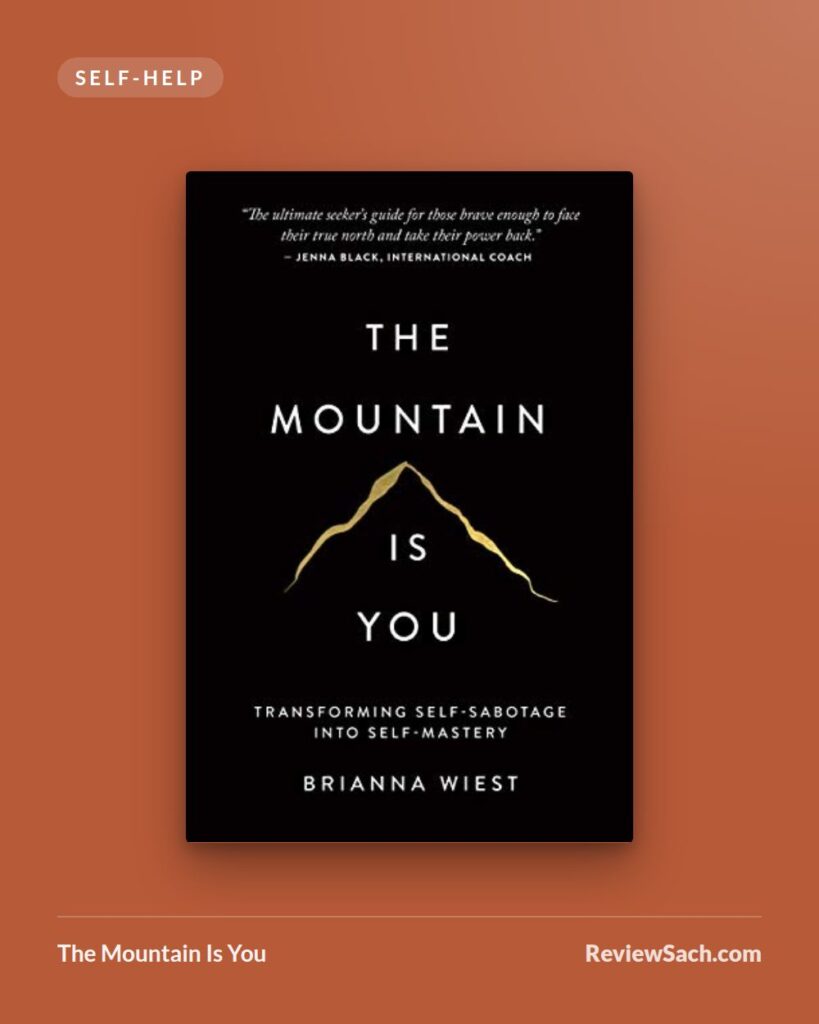
Author: Brianna Wiest · Published: 2020 · Genre: Self-Help, Emotional Health
The Mountain Is You argues that self-sabotage isn’t laziness or weakness but a way of meeting needs you haven’t admitted to, and that overcoming it means facing yourself rather than the world. The core idea is useful and kindly put. But the book reads like a long series of essays circling the same points, with little evidence behind its claims. Worth it if you need encouragement; skip it if you want a method.
The big idea
The title says it plainly: the obstacle you keep hitting is you. In Wiest’s account, self-sabotaging behavior is a coping mechanism. Procrastinating on a dream might protect you from the risk of failing at it. Staying in an unhappy situation might meet a need for the familiar. Until you identify the need a behavior serves, willpower won’t fix it.
From there the book moves through a sequence:
- Recognizing self-sabotage, with signs such as perfectionism, resistance, constant busyness and avoiding uncomfortable truths.
- Understanding why change feels threatening even when it’s good, which she ties to the mind’s pull toward homeostasis, its familiar baseline.
- Treating emotional triggers as information rather than enemies, and working through what she calls an emotional backlog of feelings you never processed.
- Releasing the past, imagining the person you want to become, and aiming for inner peace rather than constant happiness.
Throughout, she stresses small daily changes, which she calls microshifts, over dramatic breakthroughs. That emphasis on steady, repeated change rather than grand reinvention is sound, and fits what habit research suggests.
What works
- The reframe is genuinely helpful. Seeing self-sabotage as a misguided attempt to meet a real need is kinder and more productive than calling yourself lazy. Many readers find that shift alone worth the price, because it replaces self-criticism with curiosity about what the behavior is protecting.
- Intuition versus anxiety. Her distinction between intuition, which she describes as calm and grounded, and intrusive thoughts, which feel panicked and catastrophic, is a practical tool for overthinkers.
- Accessible tone. Wiest writes in short, quotable passages, and the book has spread widely on social media. It’s easy to see why: many sentences seem written to be underlined.
- Compassion with responsibility. Wiest pairs kindness with accountability: your patterns may have understandable roots, but changing them is your job. That balance avoids both blame and excuse-making.
What doesn’t
The most common complaint is repetition. Wiest built her audience writing essays for Thought Catalog, whose publishing arm released this book, and it shows. Chapters often restate the same idea in slightly different words, and the structure feels loose.
The book also makes psychological claims, such as the idea that trauma is stored in the body, with few citations or qualifications. Some of these ideas are popular but debated among researchers, and readers deserve to know that.
It also has limits for people with deeper struggles. What looks like self-sabotage can sometimes be depression, ADHD or an anxiety disorder that needs professional help. The book mostly frames change as a matter of self-awareness and personal responsibility, which can leave some readers feeling that everything is on them.
Finally, the advice often stays abstract. You’ll finish knowing you should process emotions and envision your future self, but with few concrete exercises for doing either, and little sense of how long real change usually takes.
Who should read it
Read it if you keep getting in your own way and want a kind, readable push to look at why. It suits readers new to self-help, and works best alongside journaling or therapy rather than as a replacement for either. If you want evidence-based tools, try a book grounded in therapy research instead.
Rating: 3/5
Image credits — Cover image via Open Library. Cover design © the publisher, shown for review purposes.
