

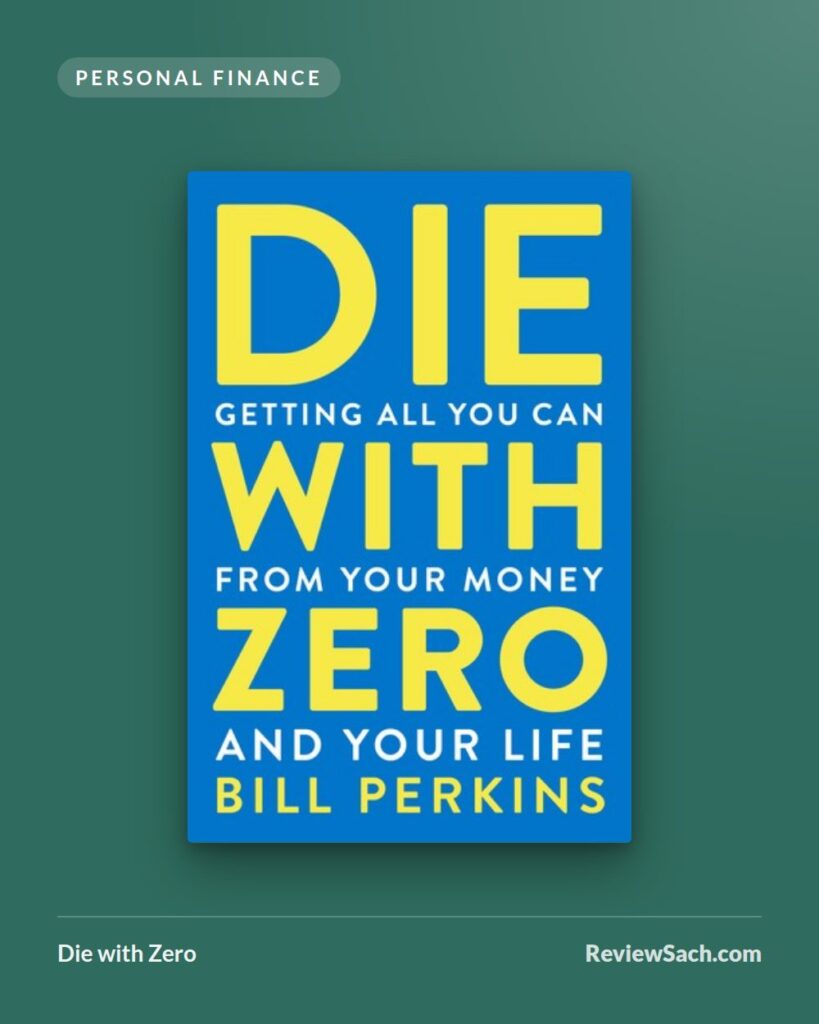
Author: Bill Perkins · Published: 2020 · Genre: Personal Finance, Life Planning
Die with Zero argues that many diligent savers hoard money for too long, trading irreplaceable years of health and energy for a bigger number on a statement they never use. Perkins, an energy hedge fund manager, wants readers to plan to spend down their wealth, on experiences and on other people, while it can still do the most good. It is a genuinely useful counterweight to standard advice, but only for people who already save.
The big idea
Perkins treats life as an optimisation problem. The goal is not to maximise net worth but to maximise lifetime fulfilment, and money is only a means to that end. Because health, free time and money peak at different ages, the best window for many experiences is narrow. Backpacking across a continent is far easier at 25 than at 75.
Several tools follow. Memory dividends: an experience keeps paying out in memories and stories for the rest of your life, so experiences had early are worth more than the same ones had late. Time buckets: divide your life into five- or ten-year periods and decide which experiences belong in each. Net worth peak: work out when to stop accumulating and start drawing down, rather than letting savings grow until death. He suggests annuities as a way to spend with confidence without fearing you’ll run out.
He applies the same logic to giving. Instead of leaving an inheritance at death, when children may be in their fifties or sixties, he argues for giving money when it has the most impact, roughly between the ages of 26 and 35. The same logic applies to charity: give when the money can do the most good, which usually means sooner rather than through a will.
What works
- It challenges a blind spot. Most financial books stop at saving more. Perkins asks what the saving is for, and points out that dying with a large surplus means you worked years you didn’t need to.
- The time-bucket exercise is practical. Writing down what you want to do in each decade forces decisions that a vague bucket list never does.
- Giving while alive. The chapter on inheritance is the most persuasive. Helping a child with a home deposit or a business at 30 does more than a windfall at 60.
- Health as a currency. Perkins makes a strong case that health, not money, is often the limit on enjoying later life, and that looking after your body now protects the experiences you want later.
What doesn’t
The book is written for people with a surplus. Perkins says as much, but the catchy title could encourage the wrong readers to spend. For many households, the bigger risk is running out of money, not dying with too much.
The planning tools are also harder than they sound. Nobody knows their lifespan, future care costs or market returns. Annuities can reduce the risk of outliving your savings, but they bring costs, inflation risk and complexity that the book passes over quickly. Zero is an aspiration, not a target anyone can hit precisely.
Perkins’s own success colours the examples. Advice to spend freely lands differently from a wealthy trader than it would from someone on a modest salary with no safety net.
The writing is breezy but repetitive, with the core idea restated several times in slightly different ways. A long essay could have carried most of the argument.
Who should read it
Diligent savers, especially in their thirties to fifties, who worry more about having too little than about living too little. If you are still building an emergency fund or paying off debt, read something else first.
Rating: 4/5
Image credits — Cover image via Open Library. Cover design © the publisher, shown for review purposes.
