

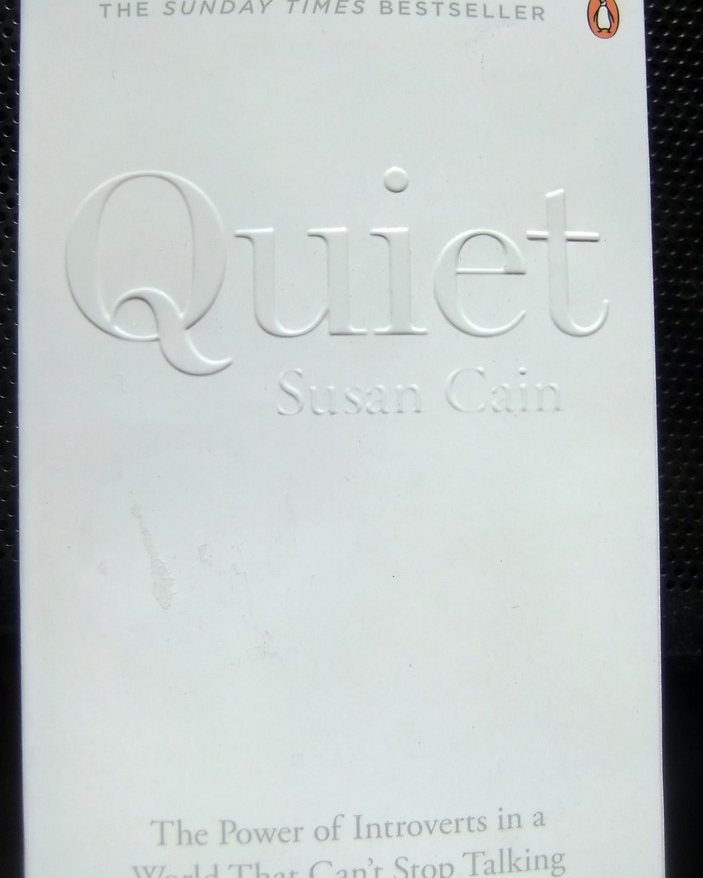
Author: Susan Cain · Published: 2012 · Genre: Psychology, Personality
Quiet argues that Western culture, especially in America, prizes extroversion so heavily that it wastes the talents of the third to half of people who, by Cain’s estimate, are introverts. She makes the case with research, reporting and her own experience, and it is persuasive. The book is best for introverts who have felt out of place and for managers and teachers who design group work. It sometimes overreaches, but it earns its reputation.
The big idea
Cain, a former corporate lawyer and negotiation consultant, traces the rise of what she calls the Extrovert Ideal. Drawing on historians, she argues that early twentieth-century America shifted from a culture of character to a culture of personality, with Dale Carnegie’s courses in public speaking and salesmanship as a turning point. Today schools, offices and even churches reward the bold, fast talker. Cain opens instead with Rosa Parks, whose soft-spoken refusal to give up her bus seat she offers as proof that quiet conviction can change history.
Against this she sets research on temperament, including Jerome Kagan’s long-running studies of infants who reacted strongly to new sights and sounds and often grew into cautious, introverted children. Her claim is that introverts are not broken extroverts. They are wired to work best with less stimulation, and that brings real strengths: focus, persistence and careful thinking.
What works
- The critique of groupthink. Cain’s chapter on what she calls the New Groupthink challenges open-plan offices and brainstorming sessions, citing research that people working alone often generate more and better ideas than groups brainstorming out loud. Anyone who has sat through a pointless meeting will recognize the problem.
- Reporting, not just theory. Her visits to Harvard Business School, where students are pushed to speak up with confidence, to a Tony Robbins seminar and to an evangelical megachurch make the Extrovert Ideal concrete. Her portrait of Steve Wozniak designing his early computer largely alone shows the payoff of solitude.
- Practical guidance. Later chapters give sensible advice on relationships between introverts and extroverts, on raising quiet children, and on how introverts can act out of character for things they care about, drawing on psychologist Brian Little’s free trait theory.
- Tone. Cain writes with warmth and without bitterness toward extroverts, and she admits her own struggles with public speaking.
What doesn’t
The definition of introversion is too loose. Cain folds in shyness, sensitivity, reflectiveness and a preference for depth, which aren’t the same thing. Personality researchers usually treat introversion as one end of a spectrum defined mainly by sociability, assertiveness and reward-seeking, not as a package of virtues. To her credit, she notes in the book that her usage is broader than the academic one.
As a result, the book sometimes flatters introverts. Thoughtfulness, creativity and conscientiousness are presented as introvert strengths, although plenty of extroverts have them and plenty of introverts don’t.
The evidence is also mixed in quality. Solid research sits alongside anecdotes and brain-imaging claims that look less certain now. A section on Asian American students in Cupertino, California, generalizes about cultural temperament in ways some readers find stereotyped.
The book is also rooted in American corporate and campus life. Readers from cultures that already value restraint, or who work outside offices, may find some chapters less relevant, and the middle section on temperament and biology drags compared with the lively reporting around it.
Who should read it
Introverts who have been told to speak up more, and anyone who manages teams, runs classrooms or designs workspaces. Extroverts who live or work with introverts will also find it useful, and may come away rethinking a few meetings. Parents of quiet children will find the chapter on raising them especially reassuring.
Rating: 4/5
Photo credits — Featured image: Photo by Gwydion M. Williams via Flickr, CC BY 2.0, cropped. In-article photo: Photo by Canshotz on Pexels.
