

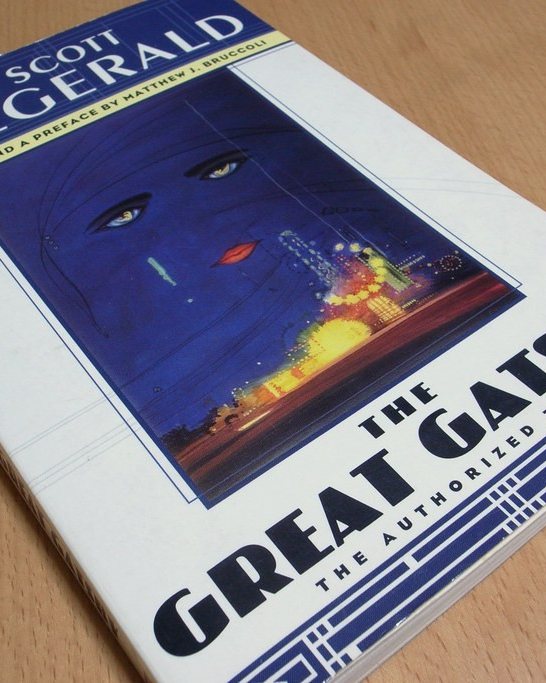
Author: F. Scott Fitzgerald · Published: 1925 · Genre: Literary fiction, Classic
The Great Gatsby is a short novel about a rich man who throws huge parties to win back a woman he lost years ago, and about the lie at the center of the American dream. The prose is some of the best in American fiction, and you can read the whole thing in an afternoon. It’s worth it for almost anyone, as long as you don’t need likeable characters.
What it’s about
It’s the summer of 1922. Nick Carraway, a young Midwesterner, rents a small house in West Egg on Long Island and commutes to New York to sell bonds. His neighbor is Jay Gatsby, a mysterious millionaire whose mansion hosts enormous parties every weekend. Nobody seems to know where his money comes from, and the guests who drink his champagne trade wild rumors about him without ever meeting him.
Across the bay, in old-money East Egg, live Nick’s cousin Daisy Buchanan and her husband Tom, a former Yale football star who is wealthy, bullying and openly unfaithful. Gatsby, it turns out, knew Daisy five years earlier, before the war, and has built his whole life around getting her back. Nick becomes the go-between and watches Gatsby’s dream collide with reality.
What works
- The prose. Fitzgerald writes sentences you want to read twice. His parties glitter and then curdle. His descriptions of Daisy’s voice and the light across the water make longing feel physical.
- The symbols. The green light at the end of Daisy’s dock, the huge painted eyes of Doctor T. J. Eckleburg on a billboard, the gray valley of ashes between the Eggs and the city. They’re obvious once you notice them, but they work because they belong to the landscape rather than being stuck onto it.
- Nick as narrator. He calls himself one of the few honest people he has ever known, yet he is involved, judgmental and not always reliable. Reading between his lines is half the pleasure.
- Gatsby’s performance. His mansion, his shirts and his habit of calling everyone old sport are all part of a carefully built persona. Much of the book’s tension comes from Nick learning, piece by piece, who Gatsby was before he invented himself.
- Economy. At under 200 pages, there is almost no wasted scene. The story moves from sunlit parties to a sweltering, tense afternoon in a suite at the Plaza Hotel with real momentum.
What doesn’t
The characters are hard to care about. Tom is a brute, Daisy is careless and hard to know, and Gatsby is more an idea than a person. Jordan Baker, the golfer Nick gets involved with, stays at a cool distance. Many readers finish the book admiring it more than feeling it.
The women get the worst of it. Daisy and Myrtle Wilson, Tom’s mistress, are seen almost entirely through men’s desires, and neither gets much of an inner life. Meyer Wolfsheim, Gatsby’s gangster associate and supposedly the man who fixed the 1919 World Series, is an anti-Semitic caricature that modern readers will notice and wince at.
There’s also the weight of reputation. The book was a commercial disappointment on release and only became a classroom staple after Fitzgerald died in 1940. Its label as the Great American Novel can make first-time readers expect an epic from something this short and this quiet.
Who should read it
Anyone who wants to see how much a short novel can do, and anyone who read it too young in school. It rewards rereading more than most classics. Readers who want plot-driven fiction or warm characters may find it cold, but even they should give the final pages a slow, careful read.
Rating: 4.5/5
Photo credits — Featured image: Photo by yoppy via Flickr, CC BY 2.0, cropped. In-article photo: Photo by The Design Lady on Unsplash.
