

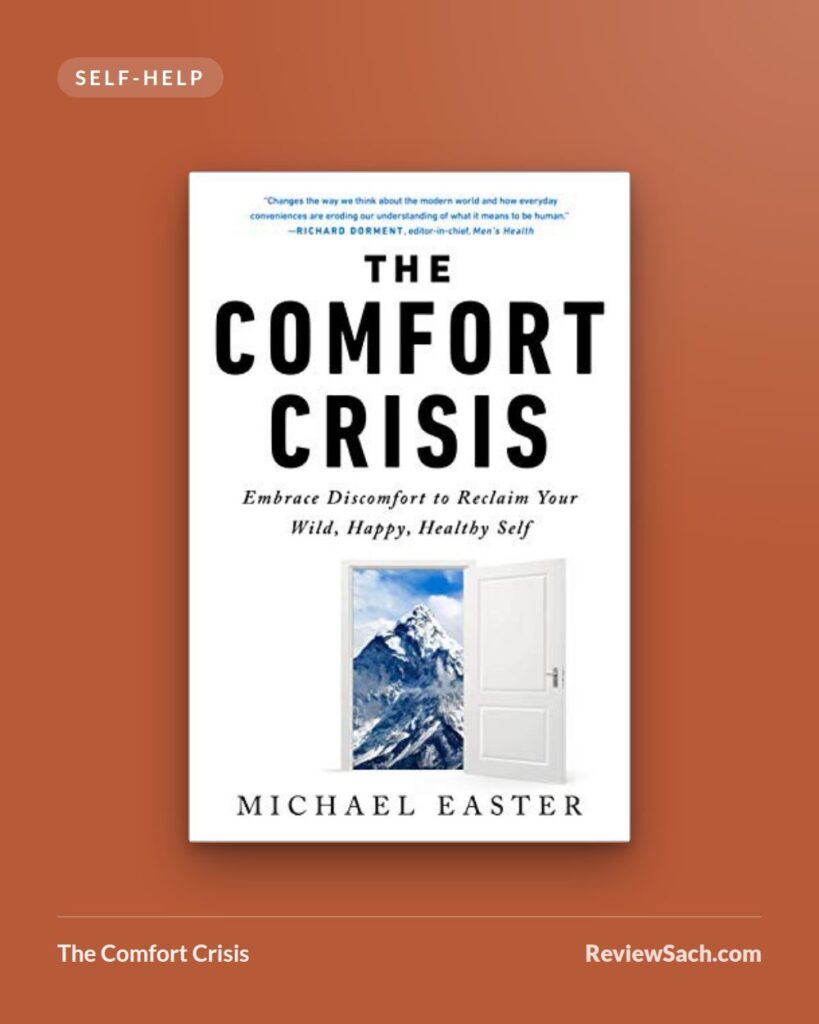
Author: Michael Easter · Published: 2021 · Genre: Self-Help, Health
The Comfort Crisis is an entertaining, persuasive argument that a little chosen hardship makes people healthier and happier, and its biggest strength is the way it blends adventure writing with interviews with researchers. Its biggest weakness is that the science is selective and often correlational, and its centerpiece, a month-long Arctic hunting trip, is out of reach for most readers. It is worth reading for anyone who feels soft, restless or glued to their phone and wants a push.

What it’s about
Easter, a health journalist who teaches journalism at the University of Nevada, Las Vegas, argues that modern life has stripped away the discomforts humans evolved with: hunger, cold, boredom, hard physical effort and the nearness of death. As each comfort becomes normal, he says, our tolerance for discomfort shrinks, and we pay in chronic disease, anxiety and a loss of meaning.
The narrative thread is a 33-day hunting expedition in the Alaskan Arctic with the bowhunter and filmmaker Donnie Vincent, during which Easter hauls heavy loads across the tundra, goes hungry, endures the cold and spends long hours with nothing to do. Between chapters of the trip, he visits experts and places that illustrate each theme. He also writes candidly about his past struggle with alcohol and getting sober.
Key ideas:
- Misogi. From the physician and sports scientist Marcus Elliott: once a year, take on a challenge so hard you have roughly a 50-50 chance of completing it. There are two rules: it must be really hard, and you must not die.
- Boredom and silence. Phones have all but eliminated boredom, and Easter argues we lose the reflection and creativity it used to prompt.
- Nature. He describes research on the mental benefits of time outdoors, including the so-called three-day effect, the idea that about three days in the wild produces a noticeable shift in mood and thinking.
- Carrying weight. Rucking, walking with a loaded pack, is presented as a simple, low-impact exercise our ancestors did constantly.
- Death. In Bhutan, he explores a culture in which thinking about death regularly is treated as a path to contentment.
What’s great
The writing is lively and funny, and the Arctic sections give real stakes to what could have been a dry list of health tips. Easter’s best point is that the right dose of adversity builds resilience, an idea with research behind it, such as the psychologist Mark Seery’s finding that people with some lifetime adversity tend to fare better than those with none or a great deal. The practical takeaways, from rucking to leaving your phone behind on a walk, are easy to try.
What’s weak
The evidence is selective. Easter often presents correlations and single studies as settled, and some readers have pointed out that a decline in creativity scores he connects to modern screen habits began before smartphones existed. The book’s idea of hardship is also strongly male-coded, with hunting, endurance and toughness as the ideals.
There is a privilege problem, too. A month-long guided Arctic expedition takes time and money few readers have, and the irony that chosen discomfort is itself a luxury, while many people face plenty of unchosen hardship, gets little attention.
Who should read it
Read it if you like adventure writing and want motivation to move more, get outside and put your phone down. If you already train hard and spend lots of time outdoors, you’ll find little new.
Rating: 3.5/5
Image credits — Featured image: cover image via Open Library; cover design © the publisher, shown for review purposes. In-article images: Photo by Tamás Mészáros on Pexels.
