

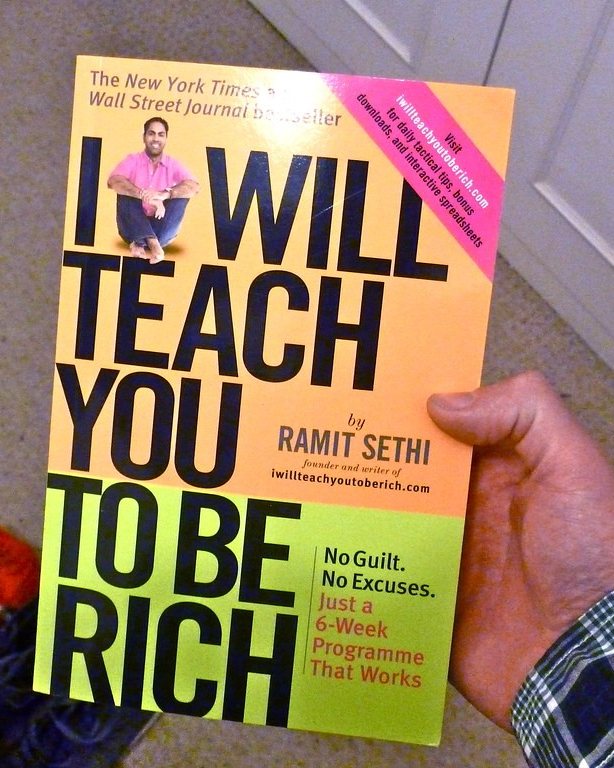
Author: Ramit Sethi · Published: 2009 · Genre: Personal Finance, Budgeting
I Will Teach You to Be Rich is a six-week programme for young adults: set up the right accounts, automate your money, invest in low-cost funds, then spend without guilt on what you love. It is one of the most practical first money books available, and the 2019 second edition keeps it reasonably current. The swagger and the US focus are the price of admission.
The big idea
Sethi’s premise is that most people obsess over small decisions and ignore the big wins. Agonising over a coffee is pointless; automating your investments, negotiating your salary and avoiding high fees matter far more. His answer is a system that, once built, runs with very little attention. The point of the system is what he calls a Rich Life, which each reader defines for themselves: frequent travel, a home near family, or simply never worrying about the price of dinner with friends.
Week by week, readers optimise their credit cards, choose low-fee bank accounts, open investment accounts, build a conscious spending plan and automate the lot. Later chapters explain why so-called experts rarely beat the market and how to pick a few simple funds and leave them alone.
The conscious spending plan replaces a traditional budget. Take-home pay is split into fixed costs, investments, savings goals and guilt-free spending. Sethi gives rough ranges, such as 50–60% for fixed costs and 20–35% for guilt-free spending, but the principle matters more than the numbers: spend extravagantly on the things you love, and cut costs mercilessly on the things you don’t.
What works
- Automation. The chapter on routing each pay cheque automatically to investments, savings and bills is the book’s best. It turns good intentions into defaults and takes willpower out of the equation.
- Scripts. Sethi provides word-for-word scripts for calling a bank to waive a fee or a card company to lower an interest rate. They are practical and give nervous readers the confidence to ask.
- Permission to spend. Unlike frugality books, this one encourages readers to spend heavily on what matters to them. That makes the plan easier to sustain, and it is a direct answer to latte-factor advice that treats every small pleasure as a sin.
- Sensible investing. He steers readers towards low-cost index funds and target-date funds, and away from active managers, stock tips and market timing.
What doesn’t
The tone is brash. Sethi writes like a salesman, with bold promises, jokes and frequent references to his own success. Some readers love the energy; others will find it tiring and a little condescending.
The book is heavily American. Roth IRAs, 401(k)s, credit scores and US banking products dominate, so readers elsewhere must translate most of the practical steps, and some of the specific products he recommends will not exist where they live.
The credit-card chapter assumes readers can handle rewards cards responsibly. For people with a history of card debt, that advice carries real risk, and a stricter approach may be safer.
Coverage is also uneven. Housing, insurance and major life events get light treatment compared with accounts and automation. The investing chapters are sound but brief, so readers who want to understand asset allocation, bonds or rebalancing in any depth will need a second book. And Sethi runs a large business selling online courses, so parts of the book can read like an entry point to them.
Who should read it
Graduates and young professionals with a steady income who want a working system rather than a philosophy. If you are struggling with serious debt or a very low income, start with a book aimed squarely at those problems.
Rating: 4/5
Photo credits — Featured image: Photo by Magnus D via Flickr, CC BY 2.0, cropped.
