

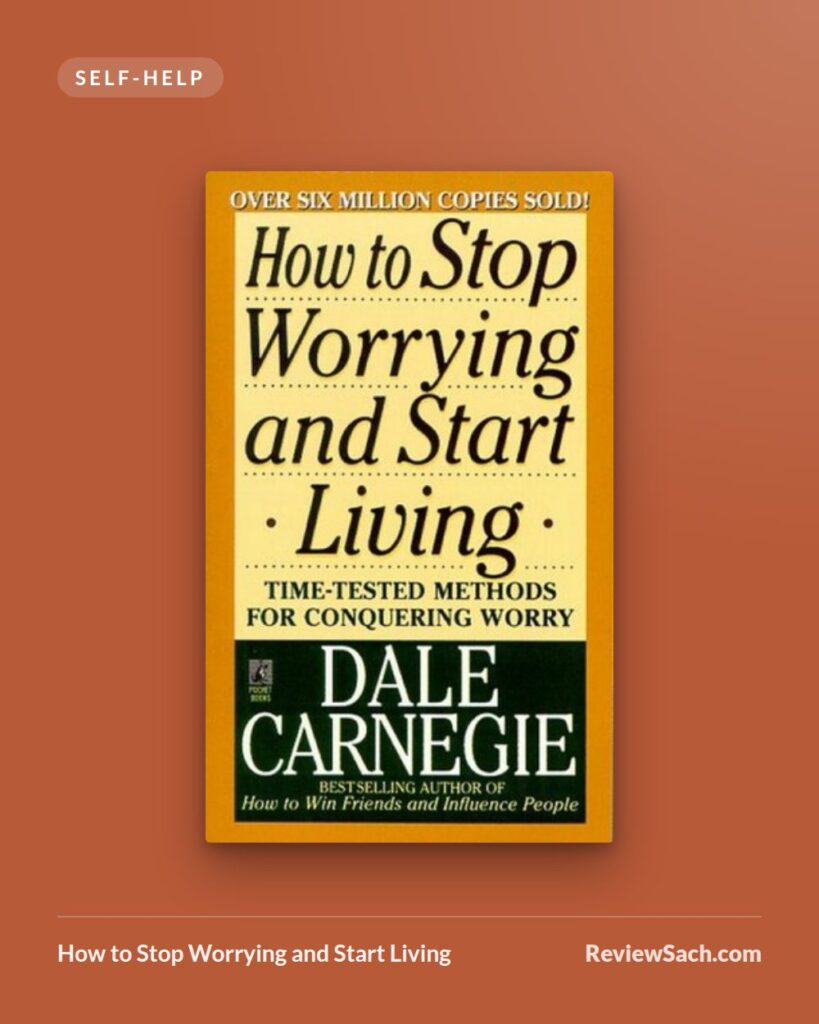
Author: Dale Carnegie · Published: 1948 · Genre: Self-Help, Stress
How to Stop Worrying and Start Living is a practical, readable toolkit for everyday worry, and its biggest strength is that several of its techniques anticipate ideas therapists still use. Its biggest weakness is that it proves everything by anecdote and treats serious anxiety and depression as problems a better attitude can fix. It is worth reading for ordinary worriers who like old-fashioned, story-driven advice.

What it’s about
Carnegie, already famous for How to Win Friends and Influence People, gathered advice from his adult-education classes, interviews and wide reading, and organized it into short chapters, each built around one rule and illustrated with stories of businesspeople, soldiers, homemakers and famous figures.
The core techniques:
- Live in day-tight compartments. Borrowing from the physician William Osler, Carnegie says to shut out yesterday and tomorrow and deal only with today.
- The magic formula. From the engineer Willis Carrier: ask what is the worst that can happen, prepare to accept it, then calmly work to improve on it.
- Analyze the worry. Get the facts, decide, then act. The publisher Leon Shimkin contributes a method for cutting pointless meetings: before raising a problem, staff must write down what the problem is, its cause, the possible solutions, and which one they recommend.
- Break the habit. Keep busy, don’t fret over trifles, check the law of averages on how likely your fear really is, cooperate with the inevitable, and don’t saw sawdust, Carnegie’s image for reliving the past.
- Attitude and energy. Count your blessings rather than your troubles, don’t expect gratitude, turn a lemon into lemonade, and rest before you get tired.
What’s great
The worst-case formula and the habit of checking how probable a fear really is closely resemble what cognitive behavioral therapists call decatastrophizing and reality-testing. Carnegie’s emphasis on accepting what you can’t change echoes the Stoics, whom he quotes, and it holds up well.
The book is also easy to use. Each chapter ends with a clear rule, the stories are vivid, and the business sections, such as Shimkin’s meeting method, still work. The chapter arguing that unjust criticism is often a disguised compliment is a useful reframe for anyone who takes attacks personally.
What’s weak
The evidence is anecdotal, many of the stories come from his own students, and there is no way to know how often the techniques failed. Some medical claims are dated, such as the repeated idea that worry is a major cause of stomach ulcers. Most peptic ulcers are now known to be caused by bacterial infection or common painkillers.
The biggest problem is its treatment of mental illness. One chapter promises to cure melancholy in fourteen days by thinking each day about how to please someone else, advice it credits to the psychiatrist Alfred Adler. Helping others can lift mood, but presenting it as a cure for depression is misleading, and anyone with an anxiety disorder or depression needs more than this book. The 1940s setting shows too, in dated gender roles and a chapter on prayer that will suit some readers more than others.
Who should read it
Read it if you are a routine worrier who likes practical, story-led advice and doesn’t mind its age. If worry is disrupting your sleep, work or relationships, talk to a professional and treat this book as a supplement.
Rating: 3.5/5
Image credits — Featured image: cover image via Open Library; cover design © the publisher, shown for review purposes. In-article images: Photo by William Dmytrow on Unsplash.
