

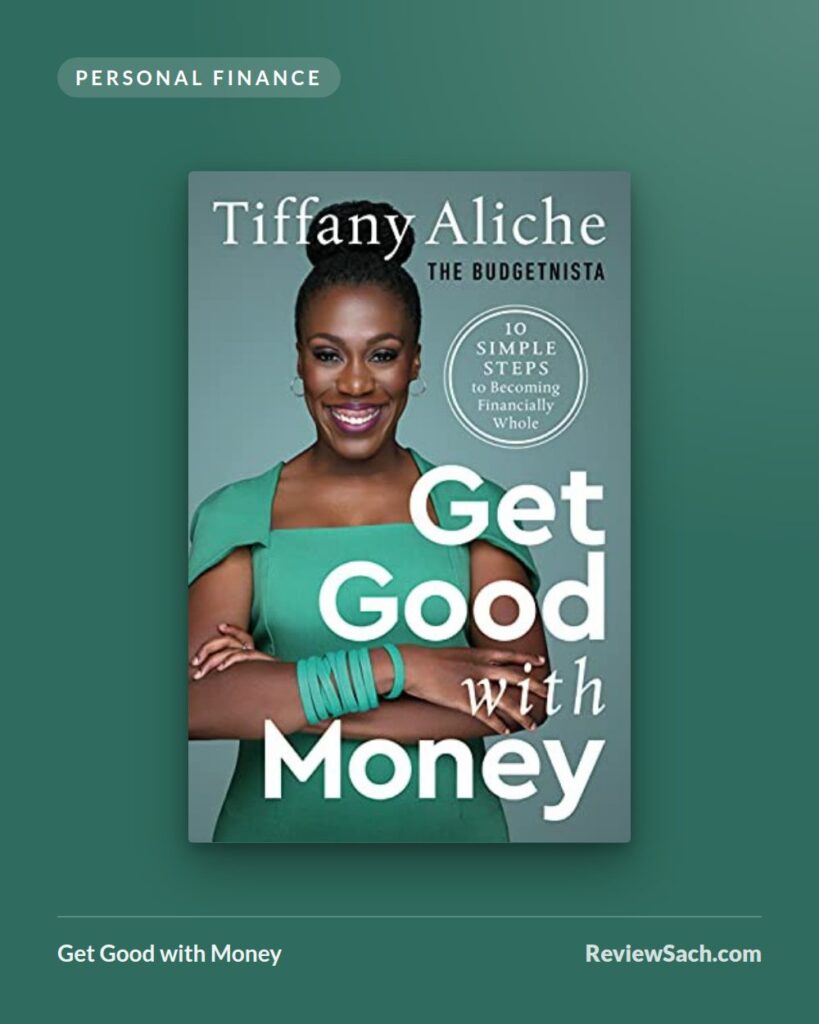
Author: Tiffany Aliche · Published: 2021 · Genre: Personal Finance, Budgeting
Get Good with Money is an encouraging, well-organised roadmap for people who feel behind with money. Tiffany Aliche breaks personal finance into ten steps toward what she calls “financial wholeness”, from budgeting through to estate planning. It covers more ground than most beginner books, though experienced readers will find the investing chapter basic.
What it’s about
Aliche, known online as the Budgetnista, was a preschool teacher when a recession and a run-in with a scam artist cost her her savings and her job and left her deep in debt. She rebuilt from there, became one of the best-known financial educators in the US, and helped write a 2019 New Jersey law requiring financial education in middle schools. The book is the system she developed along the way.
The ten steps are: build a budget and automate it; save for protection; dig out of debt; build your credit score; learn to earn more; invest for retirement; use insurance to manage risk; set net worth goals; pick a money team of professionals; and leave a legacy through estate planning. Financial wholeness means all ten areas are in working order at the same time. The aim is peace of mind, not a particular number or a luxury lifestyle.
What works
- The noodle budget. Her bare-bones, emergency-only budget, named after living on cheap instant noodles, shows exactly how little you need to survive a job loss. Knowing that number takes much of the fear out of a crisis, and it tells you how big your emergency fund really needs to be.
- Breadth. Few beginner books give real space to insurance, wills and choosing professionals. Aliche explains what a financial planner, insurance agent, estate lawyer and accountant each do, and when you actually need them.
- Earning more. The income chapter treats pay rises, negotiation and side income as part of the plan rather than an afterthought. That suits readers whose real problem is too little money, not too much spending.
- Estate planning for ordinary people. The final step treats wills and trusts as basic household admin rather than something only the rich need. Many readers will never have been told to think about this in their thirties, and the chapter makes it feel manageable.
- A single number to watch. Setting net worth goals, what you own minus what you owe, gives readers a clear scoreboard that improves as debts shrink and savings grow.
- Tone. She is warm and non-judgemental, and her own mistakes make the advice credible. The steps build in order, so readers always know what to do next.
What doesn’t
Breadth comes at a cost. Investing gets a solid but introductory treatment, and anyone who already uses index funds and retirement accounts will learn little from it. Several sections, especially those on credit scores and retirement accounts, are specific to the US, so readers elsewhere will need local equivalents.
The chatty, upbeat style, full of personal stories and encouragement, will delight some readers and slow others down. If you prefer a lean, numbers-first book, the pep talk can feel like padding. Ten steps done properly is also a lot of work: this is a programme to follow over months, not a quick read.
The advice itself is mainstream. That is a strength for beginners, who need sound guidance rather than novelty, but it means there are few new ideas here. Readers looking for a fresh argument about money, rather than a clear plan to follow, won’t find one.
Who should read it
Beginners, people rebuilding after a setback, and anyone who wants one book that covers the whole of their financial life in a sensible order. It suits readers who want encouragement as much as information. If you’re already comfortable with budgeting and investing, skip it.
Rating: 4/5
Image credits — Cover image via Open Library. Cover design © the publisher, shown for review purposes.
