

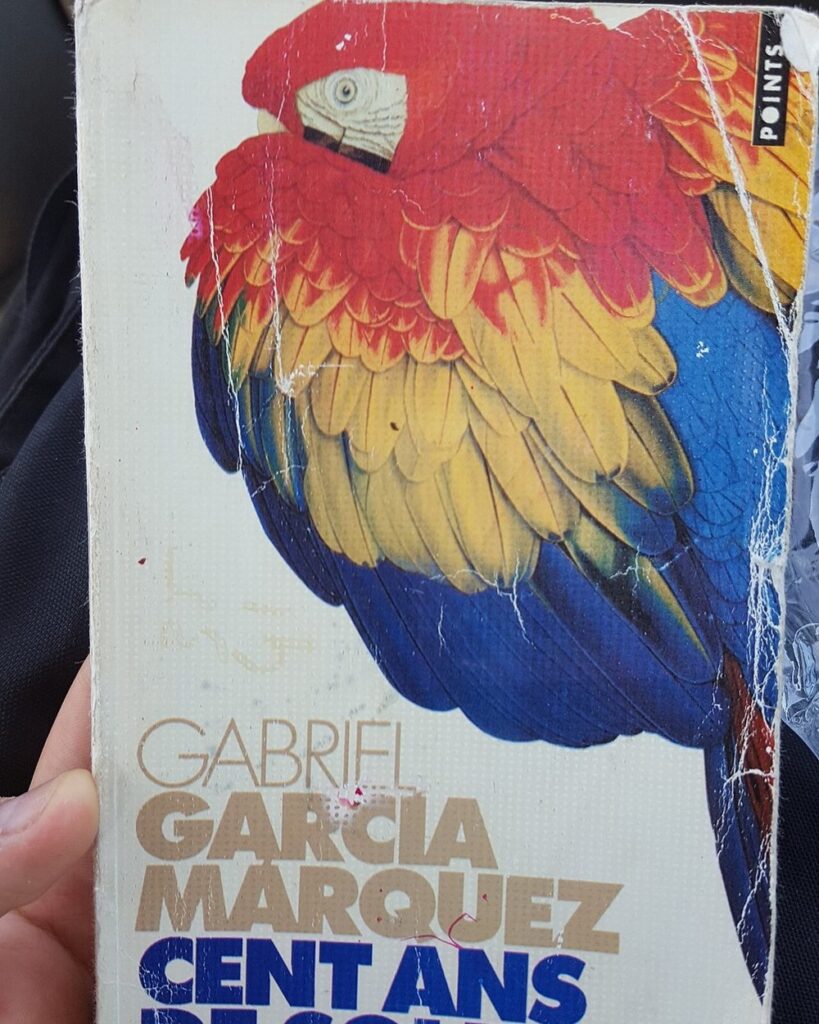
Author: Gabriel García Márquez · Published: 1967 · Genre: Magical realism, Literary fiction · Original title: Cien años de soledad
One Hundred Years of Solitude follows seven generations of one family in a town that exists nowhere, and through them tells the history of Latin America. It’s the defining novel of magical realism: extraordinary events told in a flat, matter-of-fact voice. It is also dense and repetitive by design. Read it if you have patience and are willing to keep a finger on the family tree.
What it’s about
José Arcadio Buendía and his wife Úrsula Iguarán, who are cousins, leave their home village and found Macondo, a settlement cut off from the world by swamps and mountains. Úrsula lives in fear that, because of their shared blood, they will have a child born with a pig’s tail. The novel follows their descendants for a century as Macondo grows from a village into a town and gets pulled into civil wars, the arrival of the railroad and the rule of a foreign banana company.
Along the way, a gypsy named Melquíades brings magnets and ice to town and leaves behind mysterious parchments. A plague of insomnia makes everyone start forgetting the names of things. Colonel Aureliano Buendía leads thirty-two armed uprisings and loses every one. Remedios the Beauty rises into the sky while folding sheets. Nobody in Macondo is very surprised.
What works
- The voice. García Márquez describes miracles and massacres in the same even tone, the way a grandmother tells family stories. That calm makes the strange things believable and the violent things hit harder. Gregory Rabassa’s English translation keeps that voice intact.
- The opening. The first sentence jumps forward to Colonel Aureliano Buendía facing a firing squad and remembering the afternoon his father took him to discover ice. It sets up the book’s looping sense of time in a single line.
- History inside the fantasy. The massacre of striking banana workers, followed by an official insistence that it never happened, draws on a real 1928 massacre in Colombia. It’s the book’s darkest episode and its sharpest political point.
- Úrsula. The family matriarch lives well past a hundred and holds the house together through wars, madness and bad marriages. She is practical and sharp, and she is the book’s real backbone.
- The patterns. Úrsula notices that the José Arcadios tend to be impulsive and the Aurelianos withdrawn, and that time in the house seems to run in circles. The reader starts to feel it too.
What doesn’t
The recycled names are a genuine obstacle. There are several José Arcadios, a crowd of Aurelianos (including seventeen sons of the Colonel who all share his name) and more than one Remedios. Most editions print a family tree, and you will need it.
The book can also feel airless. There is little dialogue and almost no scene-by-scene drama, so the middle stretches can blur into one another. Some readers find the treatment of sex uncomfortable: incest runs through the family, and one major character marries a girl who is still a child. The narrator reports these things without comment, which is the method, but it isn’t always easy to read.
The novel won García Márquez international fame and helped lead to his 1982 Nobel Prize, and that reputation can make the first fifty pages feel like homework. They get easier.
Who should read it
Readers who love big, ambitious novels and don’t mind working for them. If you enjoyed Isabel Allende’s The House of the Spirits, this is the book it grew from. If you want tighter plotting, try García Márquez’s short Chronicle of a Death Foretold first. Netflix adapted the novel as a Spanish-language series in 2024, but the book’s voice is the point.
Rating: 4.5/5
Photo credits — Featured image: Photo by Walid Benattia via Wikimedia Commons, CC BY-SA 4.0, cropped.
