

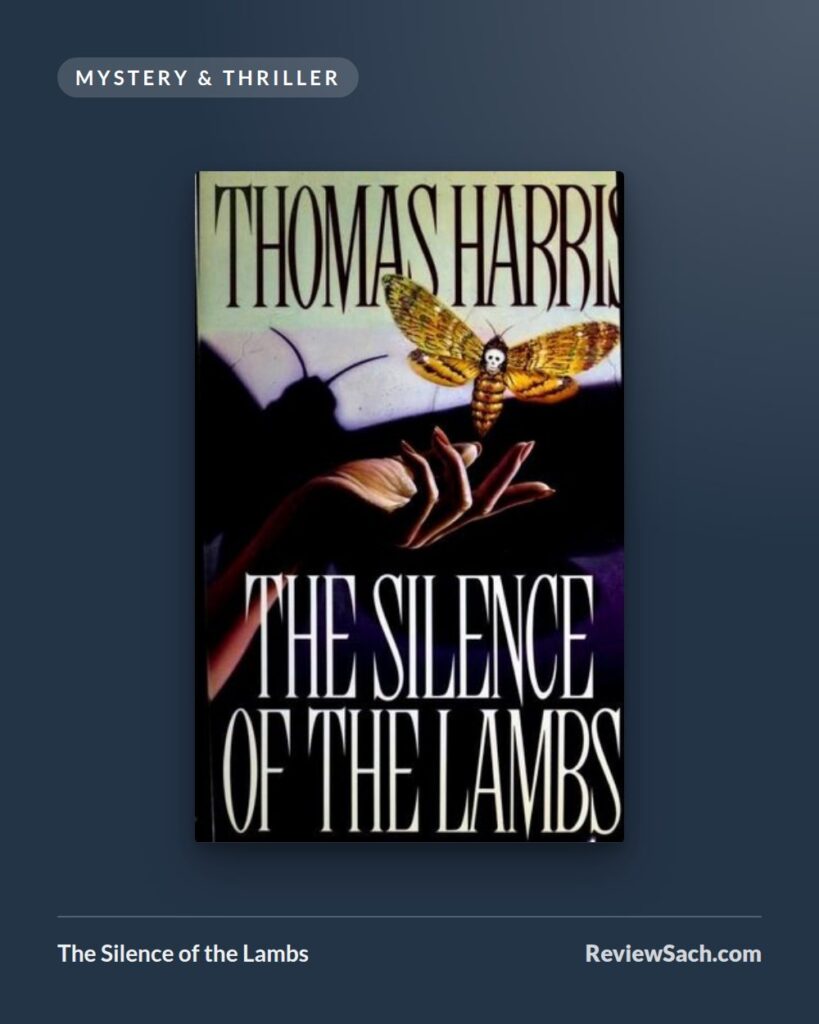
Author: Thomas Harris · Published: 1988 · Genre: Crime Thriller, Psychological Thriller
The Silence of the Lambs is the serial-killer thriller that all the others are measured against. It is part procedural, part psychological duel and part race against time, and Clarice Starling is a superb heroine. Read it even if you know the film by heart, but be aware that its portrait of the killer has aged badly.
What it’s about Clarice Starling is an FBI trainee at Quantico. Jack Crawford, who runs the Bureau’s Behavioral Science unit, sends her on what looks like a routine errand: ask Dr Hannibal Lecter, a brilliant psychiatrist and cannibal killer held in a Baltimore hospital for the criminally insane, to fill in a questionnaire. Crawford’s real hope is that Lecter can help with a case the FBI cannot crack. A killer the press calls Buffalo Bill is abducting young women, holding them for days, then killing them and removing their skin.
Lecter agrees to play, but on his terms. In exchange for hints about the killer, Clarice must tell him about her own past, including a childhood memory she has never shared. The deal turns urgent when Bill takes a new captive, Catherine Martin, the daughter of a United States senator. From then on the clock is ticking, and every conversation with Lecter costs Clarice something.
What works – Clarice. She is poor, from West Virginia, ambitious and constantly underestimated by the men around her. Harris makes her competence and her anxiety equally real, and her sessions with Lecter are as much about her as about the case. – Lecter. He frightens through courtesy, taste and insight rather than violence, mostly from inside a cell. Harris uses him sparingly, which is exactly why he works. – Procedure. The investigative detail is absorbing: profiling, forensic entomology, the grind of records and phone calls. An insect pupa found in a victim’s throat becomes a key thread, and following it is as gripping as any chase. – Supporting cast. Catherine Martin, trapped and terrified, refuses to be a passive victim, and her chapters give the book a second heroine. Ardelia Mapp, Clarice’s roommate at the academy, adds warmth and wit. – Structure. Harris cuts between Clarice, Crawford, the captive Catherine and the killer himself. This is a race rather than a whodunit, and the crosscutting makes the final chapters almost unbearable.
What doesn’t The biggest problem is the killer. Buffalo Bill wants to transform his body. The novel does have Lecter explain that Bill is not truly transsexual and has been turned away by gender clinics, but critics have long argued that the book, and even more the 1991 film, tied gender nonconformity to monstrousness in the public imagination. That criticism is fair, and it is the part of the book that has aged worst.
There are smaller flaws. Harris’s prose can be mannered in places, which some readers find distracting. Supporting characters such as Dr Frederick Chilton, the vain hospital director, are close to caricature. A subplot about Crawford’s dying wife slows the momentum, although it adds emotional weight to a man who could otherwise seem like a pure strategist. Readers who know only the film may also be surprised by how much time the book spends on turf wars between the FBI, the senator’s office and Chilton. It is realistic, but it is occasionally tedious.
Who should read it Anyone who likes crime thrillers, especially readers who only know Jonathan Demme’s Oscar-winning film. It works as a standalone, though Lecter first appears in Red Dragon (1981). The subject matter is grim, but Harris is more restrained on the page than most of his imitators. The film follows the plot closely, but only the book gives you Clarice’s inner life in full.
Rating: 4.5/5
Image credits — Cover image via Open Library. Cover design © the publisher, shown for review purposes.
