

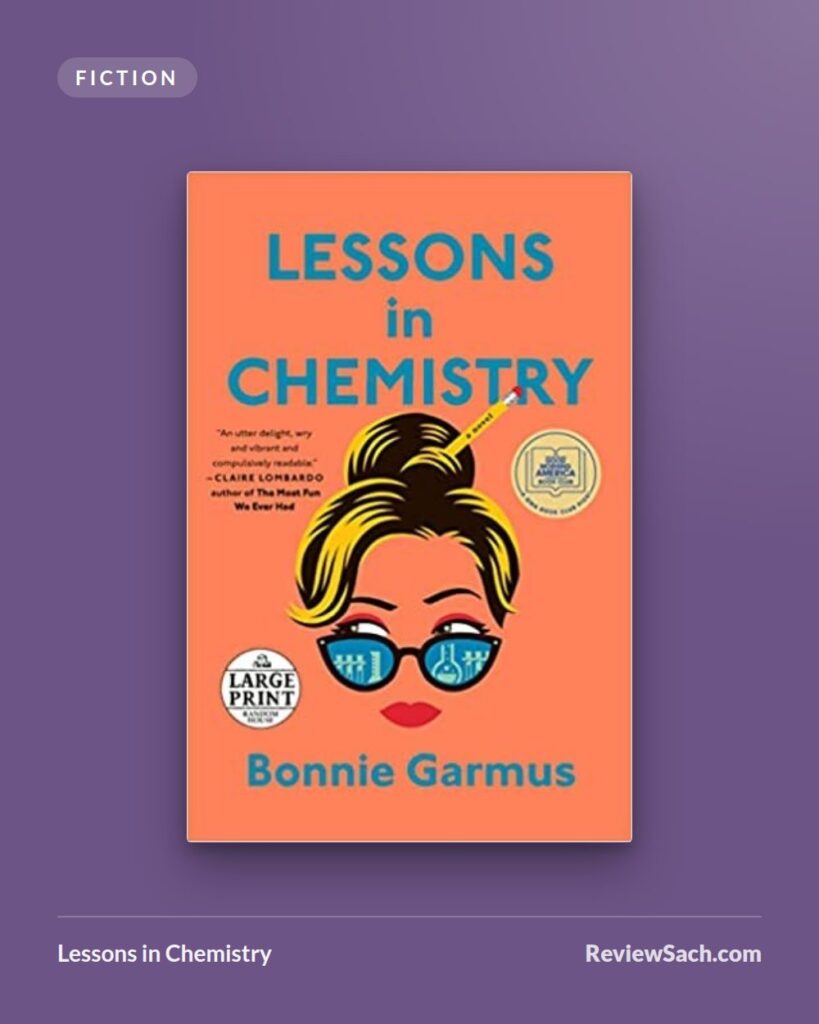
Author: Bonnie Garmus · Published: 2022 · Genre: Historical Fiction, Comic Fiction
Lessons in Chemistry is a comic novel about a brilliant woman scientist boxed in by the sexism of the 1950s and early 1960s, and it’s hugely entertaining. It is also blunt: the bad men are very bad, the heroine is nearly always right, and the history bends to fit a modern message. Read it for a smart, fast, feel-good story; look elsewhere for nuance.
What it’s about
Elizabeth Zott is a chemist at the Hastings Research Institute in Southern California, where male colleagues take credit for her work and dismiss her ideas. Her doctoral studies had already ended after she was assaulted by her adviser and refused to apologize for defending herself, a history the book reveals early and briefly. She falls for Calvin Evans, the institute’s star scientist and a keen rower, and the two share an unusually equal love. A few years later, Elizabeth is a single mother to a precocious daughter, Madeline, and out of a lab job.
A television producer, Walter Pine, a harried single father whose daughter has been eating Madeline’s lunches, hires her to host an afternoon cooking show, Supper at Six. Elizabeth refuses to play the smiling housewife. She treats each episode as a chemistry lesson, explaining reactions and telling her viewers that their time and their minds matter. The show becomes a hit, and a quiet source of rebellion across the country.
What works
- The voice. Garmus writes with dry, deadpan wit. Elizabeth’s literal-minded answers to foolish questions are the book’s best running joke, and they rarely wear thin.
- Six-Thirty. The family dog, a failed bomb-sniffing dog, gets his own chapters and gradually picks up a large vocabulary. It sounds twee, and sometimes is, but he may be the most lovable character in the book.
- Found family. Harriet Sloane, the neighbor, and Walter Pine form a small support network around Elizabeth and Madeline, and those relationships give the book warmth beyond its satire.
- Chemistry as a worldview. Elizabeth’s creed is that chemistry is the study of change, and the book applies it everywhere: to cooking, to grief, to the viewers who start rethinking their lives. Rowing, Calvin’s passion, works the same way, as a lesson in trust and teamwork.
- The premise. The cooking show turns a feminist argument into something concrete and funny: kitchen chemistry as a way of telling women to think for themselves.
What doesn’t
Subtlety. Almost every man in authority is a sneering sexist, and scenes of harassment and sexual assault are handled quickly before the book swings back to comedy. That tonal lurch bothered many readers, as did the way serious harms tend to be resolved with neat comeuppances.
Elizabeth herself feels like a woman of today dropped into 1961. That’s partly the joke, but her views on religion, marriage and science arrive fully formed, and she barely changes over the course of the novel. Madeline, meanwhile, is implausibly precocious even by the standards of fictional children, and a late subplot about Calvin’s family history leans heavily on coincidence.
Some critics also noted that the point of view wanders between characters without much discipline, a common first-novel habit. The result is lively but occasionally messy, with minor characters suddenly given inner lives and then dropped.
Who should read it
Book clubs, fans of warm comic novels with blunt, underestimated heroines, such as Eleanor Oliphant Is Completely Fine, and anyone who wants an uplifting story with a sharp feminist edge. Garmus published it at 64 as her first novel, and it won the 2022 Goodreads Choice Award for best debut. The 2023 Apple TV+ series starring Brie Larson changes a good deal, so the book is worth reading even if you’ve seen it.
Rating: 3.5/5
Image credits — Cover image via Open Library. Cover design © the publisher, shown for review purposes.
