

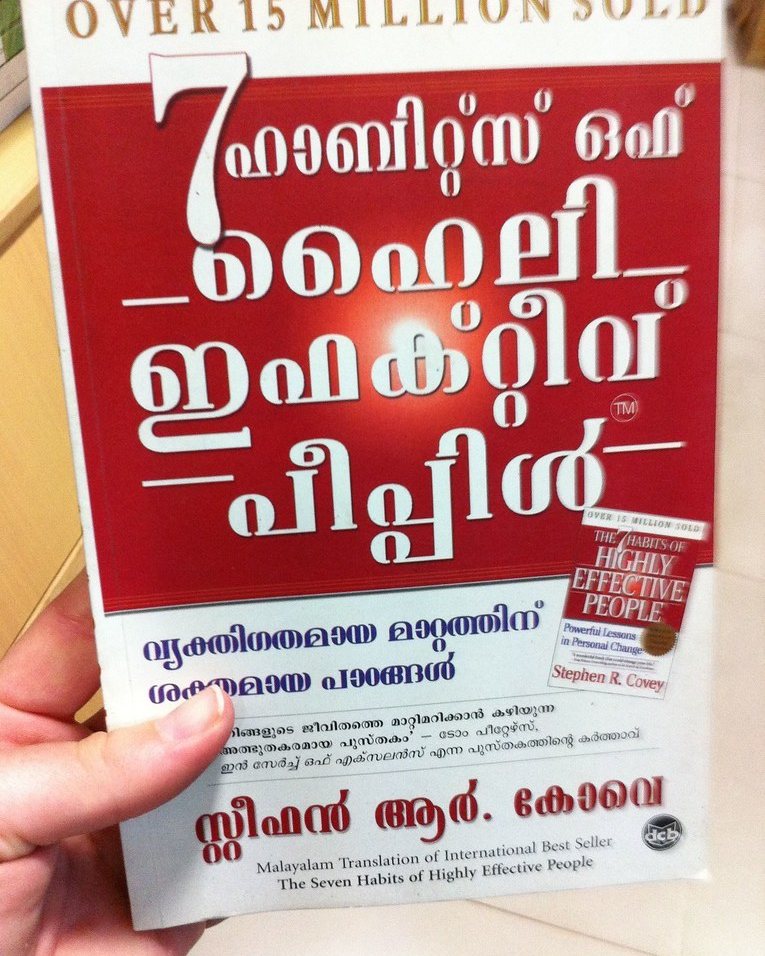
Author: Stephen R. Covey · Published: 1989 · Genre: Self-Help, Leadership
The 7 Habits of Highly Effective People argues that lasting success comes from character and principles, not from techniques or charm. More than three decades on, it remains one of the most complete frameworks in self-help, and several of its ideas are now everyday office vocabulary. Read it if you want a system for priorities and relationships, but expect a slow, sermon-like book.
The big idea
Covey says American success writing took a wrong turn after World War I. Earlier books stressed a character ethic of integrity, patience and fairness. Later ones pushed a personality ethic of image, attitude and quick techniques. He wants to go back to principles.
His habits follow a maturity path from dependence to independence to interdependence. The first three build self-mastery, which he calls the private victory: be proactive, begin with the end in mind, and put first things first. The next three are about working with others, the public victory: think win-win, seek first to understand and then to be understood, and synergize. The seventh, sharpen the saw, is about renewing body, mind, heart and spirit so the other six can last.
The order matters. Covey argues you can’t build trust with others until you can keep promises to yourself.
What works
- Circle of Influence vs Circle of Concern. Covey asks you to sort your worries into what you can affect and what you can’t, then spend your energy on the first. Proactive people, he says, focus on the inner circle, and it slowly grows.
- The time matrix. Sorting tasks by urgent and important, and protecting the important-but-not-urgent work of Quadrant II (planning, relationships, prevention), is probably the most borrowed idea in productivity writing.
- Memorable scenes. The funeral exercise, where you imagine what you’d want people to say about you at your own funeral, makes “begin with the end in mind” hit hard. So does his subway story: he was irritated by a father letting his children run wild, until the man explained they had just left the hospital where their mother had died. It’s a sharp lesson in how a changed perspective changes behavior.
- The Emotional Bank Account. Treating trust as deposits and withdrawals gives a practical way to think about family and work relationships.
- Empathic listening. Covey’s observation that most people listen with the intent to reply, not to understand, is the heart of habit 5. His advice to reflect back what someone feels before offering your own view is simple, and it works in arguments at home as well as at work.
What doesn’t
The book is long, abstract and heavy on jargon. Paradigm, synergy and win-win arrive in large doses, and the corporate tone has aged. Many examples involve executives and training seminars, so readers outside that world have to translate. The book also launched a large training business, and parts of it read like course material.
Covey also presents his habits as timeless, universal principles, but this is a moral framework, not research you can test. He was a devout Latter-day Saint, and the book’s certainty that correct principles work like natural laws has an almost religious confidence. Some readers find that grounding; others find it preachy.
Synergize is the weakest habit. It reads more like a hope that good teamwork will happen than a method for making it happen. And the book’s length works against it: the core ideas could be taught in half the pages.
Who should read it
Read it if you manage people, run a busy household or feel busy but not effective. Go slowly, one habit at a time. If you only want the productivity tools, the chapters on the first three habits deliver most of the value.
Rating: 4/5
Photo credits — Featured image: Photo by Jennifer Kumar via Flickr, CC BY 2.0, cropped.
