

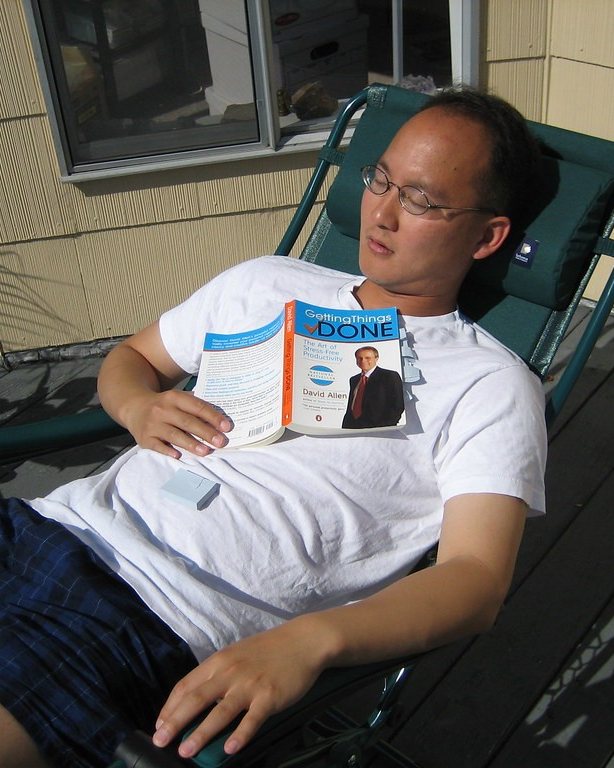
Author: David Allen · Published: 2001 · Genre: Self-Help, Productivity
Getting Things Done argues that stress comes less from having too much to do than from carrying unfinished commitments in your head. Get them all into a trusted external system, decide the next physical action for each, and your mind is free to focus. It’s the most influential workflow book of its era and still worth reading, especially in the 2015 revised edition. The catch is that the system demands a lot of setup and steady discipline.
The big idea
Allen calls unfinished commitments open loops. Each one, from fixing the gutter to planning a product launch, takes up mental space until it’s captured somewhere you trust. His goal is a state he calls mind like water: calm and responsive, reacting to each thing in proportion.
The workflow has five stages, named in the revised edition as capture, clarify, organize, reflect and engage. Capture everything that has your attention. Clarify what each item means and whether it needs action. Organize it into the right list. Reflect by reviewing regularly. Then engage by choosing what to do.
The key question when clarifying is simple: what’s the next action? A to-do item that just says taxes will sit untouched; finding last year’s return in the filing cabinet is something you can actually start. Anything that needs more than one step becomes a project. Things you might do someday go on a Someday/Maybe list, and things you’re waiting on from others go on a Waiting For list.
For bigger projects, Allen offers a natural planning model that mirrors how people think when they plan well: define the purpose, picture a successful outcome, brainstorm, organize the ideas, and then decide the next actions.
What works
- The two-minute rule. If something takes less than two minutes, do it now. It clears small tasks that would cost more to track than to finish.
- Next actions. Turning vague projects into concrete physical steps is the book’s best idea. It fixes a lot of procrastination on its own, because most stalled projects are stalled on an unclear first step.
- The weekly review. Allen’s weekly pass through every list and project keeps the system trustworthy. Without it, most productivity systems quietly fall apart.
- Contexts. Grouping actions by where or with what you can do them, such as calls, computer or errands, makes it easy to use odd pockets of time.
- It’s tool-neutral. It works with paper, a notes app or dedicated software, which is why it has outlasted many trends.
Later research on unfinished goals, showing that making a specific plan for a task can quiet intrusive thoughts about it, lends some support to Allen’s central claim.
What doesn’t
The system is heavy. Setting it up properly means capturing and processing everything, which can take days, and keeping it working depends on the weekly review, which many people drop after a few weeks. It also works best if you control your own inputs. If your job is a constant stream of urgent requests, keeping the lists current becomes a job in itself.
It’s better at organizing than at prioritizing. Allen does describe horizons of focus, from current actions up to long-term goals and purpose, but the book mostly works from the bottom up. It will help you do things efficiently; it won’t tell you whether they’re worth doing. That’s where books like Essentialism or The 7 Habits do better.
The writing is dry and detailed, and older editions spend pages on filing cabinets, labelers and paper tickler files that now feel dated. Some readers also turn endless tinkering with their system into a new way to procrastinate.
Who should read it
Read it if you juggle many projects, drop commitments or feel constantly overwhelmed. Get the revised edition, and start with capture and next actions before building the whole system.
Rating: 4/5
Photo credits — Featured image: Photo by Eugene Kim (eekim) via Flickr, CC BY 2.0, cropped.
