

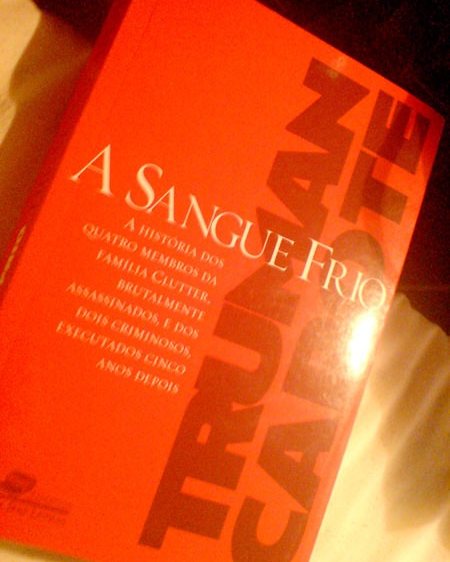
Author: Truman Capote · Published: 1966 · Genre: True Crime, Nonfiction Novel
In Cold Blood is the book that shaped modern true crime, and it is still one of the best examples of it. Capote reconstructs a 1959 Kansas murder case with a novelist’s tools, and the result is gripping and humane. But his claim that every word was true does not survive scrutiny, so read it as a brilliant “nonfiction novel”, his own label, rather than as a court record.
What it’s about In November 1959, four members of the Clutter family were murdered in their farmhouse in Holcomb, a small wheat town in western Kansas: Herb Clutter, a respected farmer; his wife, Bonnie; and their two youngest children, Nancy and Kenyon. There was no obvious motive, and a community where people rarely locked their doors was suddenly terrified.
Capote read a short report of the killings in The New York Times and went to Kansas with his childhood friend Harper Lee, who helped him win the trust of wary locals. He spent years on the story, which ran in The New Yorker in 1965 before appearing as a book. It is not a whodunit. From early on, Capote follows the two ex-convicts responsible, Dick Hickock and Perry Smith, in parallel with the Clutters’ last day. He then tracks the investigation led by Alvin Dewey of the Kansas Bureau of Investigation, and the long legal process that followed.
What works – Structure. Capote cuts between the victims and the killers as their paths converge. You know what is coming, and the dread is almost unbearable precisely because you have come to know the Clutters as people. Knowing the outcome in advance only sharpens the tension. – Portraiture. Holcomb, its café, its post office and its gossip are rendered in vivid detail. Nancy Clutter, busy, kind and popular, is especially alive on the page, which makes her death hurt. – Perry Smith. Capote’s portrait of Smith, damaged, self-pitying and artistic, is the book’s most complex creation. It forces the reader to hold sympathy and horror at the same time, and it raises hard questions about how violent people are made. – Influence. Much of the narrative true crime that followed, in print and in podcasts, uses the techniques Capote refined here: reconstructed scenes, interior thoughts and cross-cutting between victim and killer.
The controversy Capote insisted that every word was true, and said he had relied on his memory rather than a tape recorder or notes during interviews. Critics soon found problems. In 1966 the journalist Phillip K. Tompkins reported in Esquire that some people contradicted Capote’s version; one woman described as close to Smith said she had barely spoken with him. Alvin Dewey himself later said the book’s quiet closing scene was Capote’s invention. And in 2013 the Wall Street Journal reported that Kansas Bureau of Investigation files showed Dewey had not acted on a crucial tip as quickly as the book suggests, which made its heroic portrait of him look polished.
There are ethical criticisms too. Capote grew close to the killers, especially Smith, while also needing the case to reach its conclusion so he could finish his book. The critic Kenneth Tynan accused him of doing too little to help the men whose story made his name. The fairest verdict is that the book is true in outline but shaped and embellished in its details, and Capote should never have claimed otherwise.
Who should read it Anyone interested in true crime, journalism or American writing. It is also essential for understanding the ethical debates that still surround the genre. For anyone who writes narrative nonfiction, it is also a masterclass in structure and pacing. Pair it with the 2005 film Capote for the story behind the book.
Rating: 4/5
Photo credits — Featured image: Photo by Julia P (autumn_bliss) via Flickr, CC BY-SA 2.0, cropped.
