

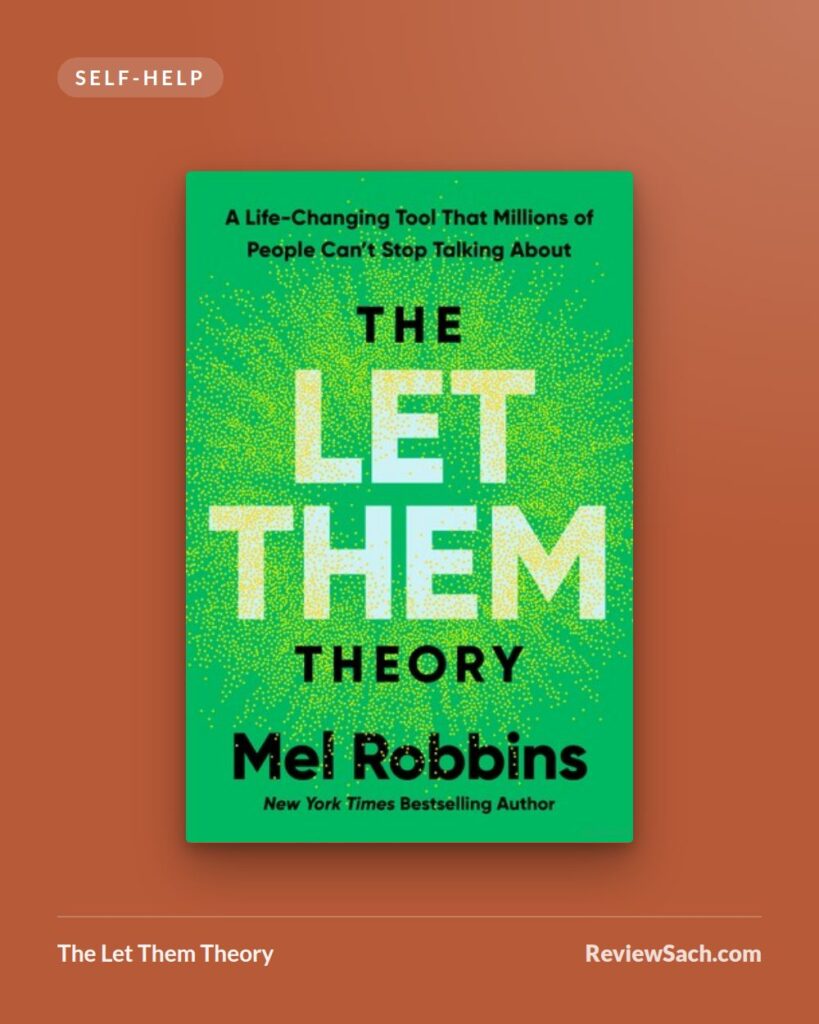
Author: Mel Robbins, with Sawyer Robbins · Published: 2024 · Genre: Self-Help, Relationships
The Let Them Theory argues that you waste energy trying to control other people’s opinions, moods and choices, and that two words, let them, can give that energy back to you. The mantra is genuinely useful, and Robbins is a warm, clear writer. But it’s a simple idea stretched across a full-length book, with thin evidence and a disputed origin. It’s worth reading for people-pleasers; others can get the gist from one of her podcast episodes.
The big idea
Robbins says the idea began with her son’s prom. She was fretting over the plans for the evening, and her daughter told her to let them handle it their own way. Robbins shared the idea in a 2023 social media video that spread widely, and she wrote this book with her daughter Sawyer.
The theory has two halves. Let Them means allowing people to think, feel and do what they want, because you can’t control it anyway. Let Me means turning your attention to what you can control: your response, your choices and your next step. Robbins insists the second half matters as much as the first. Without it, the mantra is just resignation.
The book applies this across eight areas of life: stress, fear of other people’s opinions, other people’s emotional reactions, comparison, adult friendship, motivating others to change, supporting people who are struggling, and romantic relationships. She mixes her own stories, listener stories and brief input from experts in psychology and medicine. The early chapters on stress explain how a stressed body makes clear thinking harder, and suggest calming yourself first, then choosing your response.
What works
- It’s easy to use. A short phrase you can say under your breath in the moment is more practical than a complicated framework. That’s the book’s real strength.
- Comparison, reframed. Robbins argues that envy can be a teacher. If someone else’s success stings, it points to something you want, and Let Me turns that feeling into a next step.
- Adult friendship. Her chapters argue that adult friendships usually fade because of shifts in proximity, timing and energy, not because anyone did something wrong. Many readers find that reassuring.
- Tone. Robbins writes the way she talks, with self-deprecating humor and plenty of her own missteps as a parent, so the advice rarely feels preachy.
- Letting adults be adults. The advice on supporting struggling loved ones, including grown children, without trying to rescue or fix them, is one of the book’s most useful sections.
The controversy
The first issue is originality. The phrase went viral in 2022 through a poem by Cassie Phillips, before Robbins popularized it, and critics accused her of building a brand on it without credit. A representative for Robbins said neither she nor her team had seen the poem. The overlap is real; a charge of deliberate copying is not proven.
The second is substance. The book is repetitive and long on personal anecdote. The research summaries are brief and sometimes simplified, and the core idea is a restatement of the Stoic split between what you can and can’t control, or of the Serenity Prayer. Supporters answer that repackaging old wisdom in a form people actually remember is what good self-help does, and the book’s bestseller run suggests many readers agree.
Finally, the mantra can be misused. Let Them can slide into avoiding hard conversations or excusing yourself from responsibility toward others. Robbins addresses this, but a slogan travels without its caveats.
Who should read it
Read it if you’re a people-pleaser, a chronic worrier or a parent struggling to let go. If you already know the Stoics, skim the chapters that match your problem and skip the rest.
Rating: 3/5
Image credits — Cover image via Open Library. Cover design © the publisher, shown for review purposes.
