

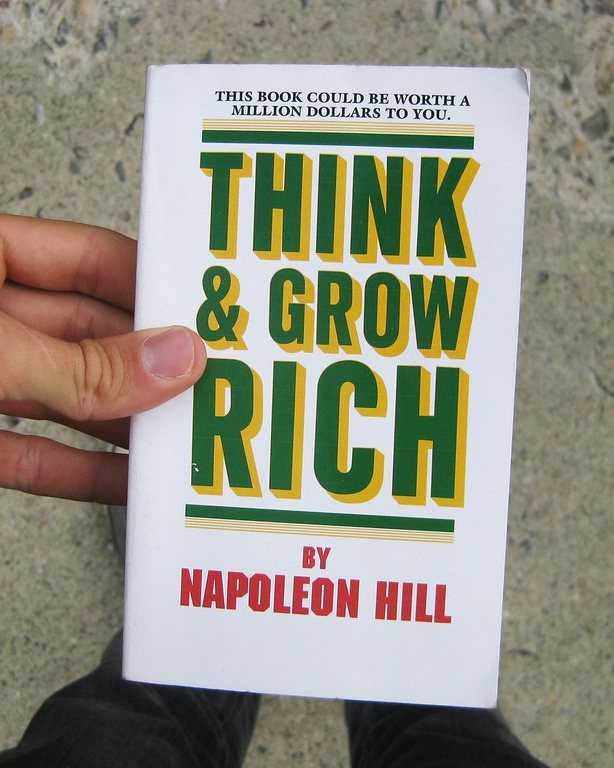
Author: Napoleon Hill · Published: 1937 · Genre: Self-Help, Business
Think and Grow Rich claims that riches begin with a state of mind: define a burning desire, believe in it completely, and your thoughts will turn into money. It’s a historically important book with a few lasting ideas about goals and persistence. But much of it is magical thinking, and its famous backstory is doubtful. Read it as a period piece, not a manual.

The big idea
Hill says Andrew Carnegie shared a formula for success with him and encouraged him to spend some twenty years studying the most successful people of the day. The result is thirteen steps to riches, starting with desire, faith and autosuggestion and ending with the subconscious mind, the brain and the sixth sense.
The method is simple. Decide on an exact sum of money, set a date, decide what you’ll give in return, write a plan, and read your statement aloud twice a day until your subconscious believes it. A desire held strongly enough, Hill says, will find its own way into reality. He also warns against six ghosts of fear, including fear of poverty, criticism and old age, which he sees as the main barriers to success. Published during the Great Depression, it told readers that their mindset, not the economy, decided their fate, which goes a long way toward explaining its appeal.
What works
- A good opening story. Edwin C. Barnes arrived at Thomas Edison’s lab determined to become his business partner, took a lowly job there, and waited years for his chance, which came with the Ediphone dictating machine. As a lesson in patient, focused ambition, it holds up.
- Clear goals. Hill’s insistence on a specific, written target with a deadline anticipates later goal-setting advice, and it’s still sound.
- Persistence. His story of R. U. Darby, who gave up on a gold mine only for the man who bought his equipment to find the vein a few feet further on, is a memorable warning against quitting too early.
- The Master Mind. A small group of people who share knowledge and push each other toward a goal is practical advice, and it’s the ancestor of today’s mastermind groups.
- Historical interest. It shows where much of modern motivational culture came from.
The controversy
Hill’s credibility is the main problem. Carnegie’s biographer David Nasaw found no evidence the two men ever met, and Hill only described their meeting after Carnegie’s death. Beyond a brief documented encounter with Thomas Edison, there’s little outside Hill’s own writing to support his claimed access to famous men. Reporting by journalist Matt Novak and others has also documented a string of failed ventures and fraud allegations in Hill’s life.
The content has problems too. One chapter argues that sexual energy, redirected, is a key to genius. Another describes a sixth sense that connects you to infinite intelligence. Hill even credits his own refusal to accept his son Blair’s deafness, the boy was born without ears, with helping him gain much of his hearing. And throughout, Hill teases a secret he never states plainly, a device that keeps readers turning pages but explains very little.
The whole book also suffers from survivorship bias. It studies people who got rich and ignores the many who wanted it just as badly and failed. Its central promise, that belief draws money toward you, is the ancestor of The Secret, and just as untestable.
Defenders argue that the book’s value lies in its motivational core, not its history, and many readers say it helped them set goals and stick with them. That’s fair, but Hill presents his claims as proven fact, and they aren’t.
Who should read it
Read it if you’re curious about the roots of American self-help or want to understand a book many entrepreneurs still quote. For goal-setting and persistence, modern books do the job without the mysticism.
Rating: 2/5
Photo credits — Featured image: Photo by Tristan (The Booklight) via Flickr, CC BY 2.0, cropped. In-article photo: Photo by Jodie Cook on Unsplash.
