

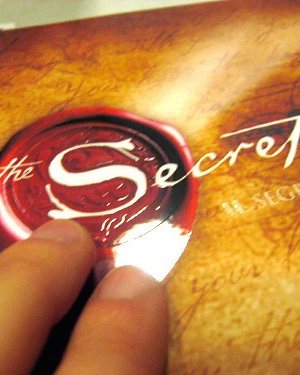
Author: Rhonda Byrne · Published: 2006 · Genre: Self-Help, Spirituality
The Secret claims that your thoughts create your reality: think about what you want with enough feeling, and the universe will deliver it. This is the law of attraction, and there is no scientific evidence for it. The book contains some harmless advice about gratitude, but its central idea is pseudoscience, and at its worst it implies that sick or poor people attracted their own problems. I wouldn’t recommend it, except as a case study in why it sold.
What it’s about
Byrne, an Australian television producer, released The Secret first as a film in 2006 and then as a book. She says she discovered the secret during a hard period in her life, after reading Wallace Wattles’s 1910 book The Science of Getting Rich. The book strings together short passages from teachers who appeared in the film, including Bob Proctor, Joe Vitale, Michael Beckwith and Jack Canfield. Oprah Winfrey’s television episodes on it in 2007 turned it into a publishing phenomenon.
The method has three steps: ask, believe, receive. Decide what you want, act and feel as if you already have it, and stay open to receiving it. Thoughts, the book says, are magnetic and send out a frequency, and like attracts like. Positive thoughts bring good things; negative thoughts bring bad ones.
Byrne applies this to money, relationships, health and even weight. She claims food can’t make you gain weight unless you believe it will, and advises readers not to look at overweight people but to picture their own ideal body instead. She also lists historical figures, from Plato to Einstein, who supposedly knew the secret.
What works
- Gratitude. Byrne tells readers to list things they’re grateful for every day. Gratitude practices have modest research support for improving mood.
- Attention. Noticing what goes right, rather than dwelling on what goes wrong, is a reasonable habit, and some readers find the book lifts them out of a rut.
- Presentation. It’s short, handsome and simple, with old-fashioned typography and bite-size passages. That explains much of its appeal.
The controversy
The core claims fail on the evidence. The book borrows words like energy, frequency and quantum to sound scientific, but it uses them loosely, and there’s no known mechanism by which thoughts send out a signal that rearranges events. Its roots are in the 19th-century New Thought movement, not in physics. Its list of famous believers is also asserted rather than documented.
The logic has a dark side. If you attract everything that happens to you, then people who get sick, lose their jobs or live through disasters must have attracted it too. Byrne doesn’t dwell on this, but critics have pointed out that it blames victims and can leave people feeling guilty for illness or poverty. The book also includes stories of people who credit their thinking with healing serious illness, which is risky for any reader facing a real diagnosis.
Research actually cuts against the method. Psychologist Gabriele Oettingen’s studies suggest that simply fantasizing about a good outcome can reduce the energy people put into achieving it. Picturing the goal as already achieved may make you less likely to work for it.
Defenders say the book simply encourages optimism, and that’s true as far as it goes. But it doesn’t present optimism as a mood; it presents it as a law of the universe, and that’s where it goes wrong.
Who should read it
Honestly, few people. Read it if you want to understand the law of attraction and why it’s so popular. If you want a gratitude habit or clearer goals, better-grounded books will get you there without the magical thinking.
Rating: 1.5/5
Photo credits — Featured image: Photo by the Italian voice via Flickr, CC BY 2.0, cropped.
