

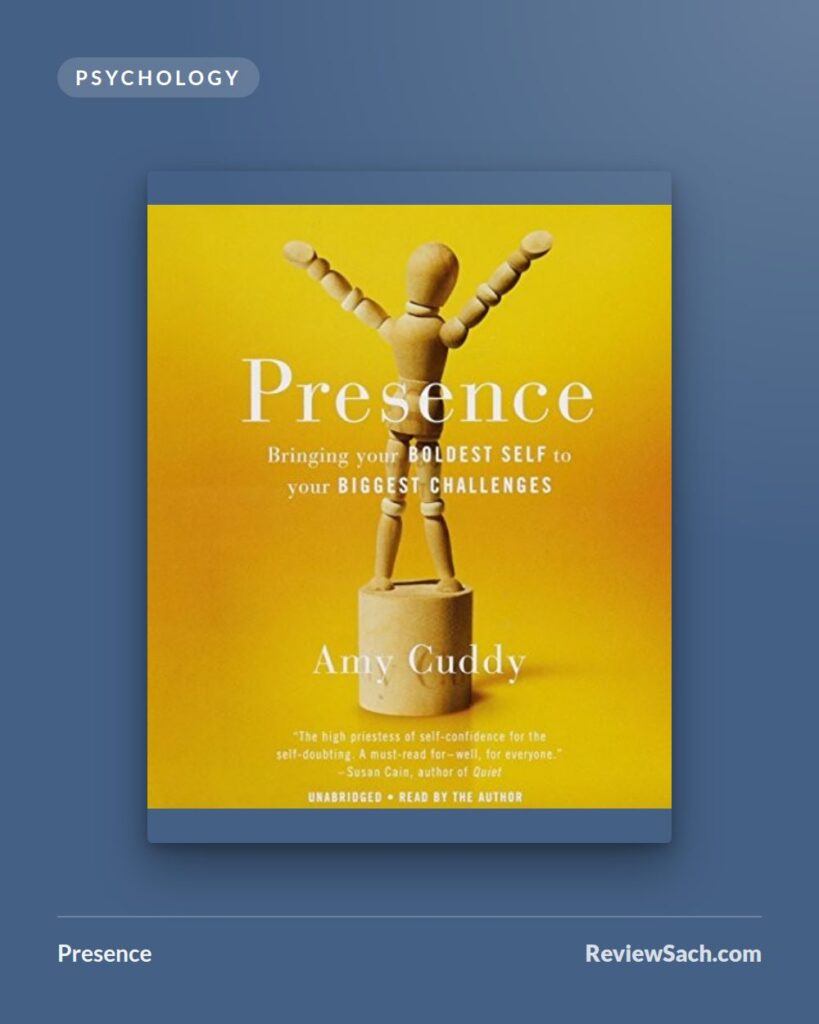
Author: Amy Cuddy · Published: 2015 · Genre: Psychology, Self-Help
Presence argues that you can perform better in high-pressure moments, such as interviews, pitches and auditions, by becoming more fully yourself, and that your body can lead your mind there. Some of its advice on anxiety and authenticity is sensible and kind. But its most famous idea, that expansive power poses change how you perform, did not hold up in later research. It’s easy to read, but I can’t recommend it as science.
The big idea
Cuddy defines presence as being attuned to, and able to comfortably express, your true thoughts, feelings and values. Present people, she argues, are confident without arrogance, and they perform well because they aren’t distracted by self-doubt or by trying to manage other people’s impressions.
The route to presence runs partly through the body. The book leans on the 2010 study Cuddy co-authored with Dana Carney and Andy Yap, which reported that holding expansive postures for two minutes raised testosterone, lowered cortisol and increased willingness to take risks. The idea became famous through Cuddy’s 2012 TED talk, one of the most watched ever. Her slogan, fake it till you become it, captures the book’s promise: adopt the body language of power and the feeling, and better performance, will follow.
Around that core, the book covers impostor syndrome, how powerlessness makes people shrink physically and mentally, and how anxiety narrows attention. Cuddy also shares personal material, including a serious car accident in college that left her with a brain injury and a long, uncertain recovery.
What works
- The personal material is affecting. Cuddy’s account of feeling like an impostor after her injury, and of rebuilding her confidence, is honest and will resonate with anyone who has doubted they belong.
- The focus on authenticity is sensible. Her advice to prepare for a big moment by reconnecting with your own values, rather than performing a persona, is useful and humane.
- It is accessible. Short chapters, plenty of stories and clear takeaways make it a quick read.
The controversy
Power posing became one of the best-known cases in psychology’s replication crisis. In 2015, a team led by Eva Ranehill ran a larger version of the original experiment and found no effect on hormones or risk-taking, though participants did report feeling somewhat more powerful. Analyses by Joseph Simmons and Uri Simonsohn then argued that the published studies showed no clear evidence of a real effect once selective reporting was taken into account.
In 2016, Dana Carney, the original study’s lead author, publicly said she no longer believed power pose effects were real. Cuddy faced harsh criticism, some of it fair and some of it personal, which the New York Times Magazine explored in a 2017 profile.
Cuddy has defended the narrower claim that posture affects how powerful people feel, and later meta-analyses broadly support that: expansive postures reliably nudge self-reported feelings, while effects on hormones are not supported and effects on behavior remain unclear. The book, however, promises that changing your body will change how you perform, and that is the part the evidence doesn’t back.
Beyond the science, the book feels padded. Much of it consists of reader emails and anecdotes that illustrate the argument rather than test it, and many of its studies come from the same era of small-sample social psychology.
Who should read it
Readers struggling with impostor feelings may find comfort in the personal chapters. Anyone wanting evidence-based help with performance anxiety should look to CBT-based resources instead, and treat power posing as a small mood nudge at best. Cuddy’s warmth toward readers who feel they don’t belong is the book’s most lasting quality.
Rating: 2.5/5
Image credits — Cover image via Open Library. Cover design © the publisher, shown for review purposes.
