

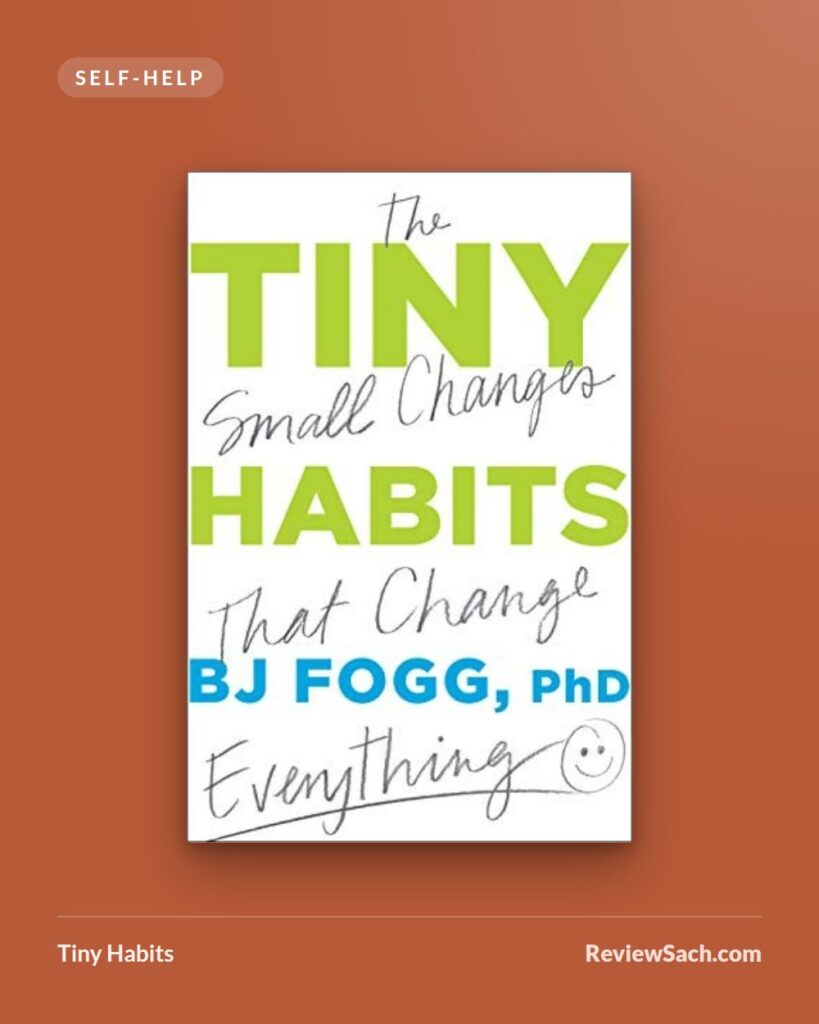
Author: BJ Fogg · Published: 2019 · Genre: Self-Help, Habits
Tiny Habits argues that lasting change comes from making new behaviors so small and easy that motivation barely matters, then attaching them to routines you already have. The method is simple, practical and far kinder than willpower-based advice. The book is longer than the method needs, but the core ideas are worth the time. If you’ve failed at big resolutions, start here.
The big idea
Fogg, who founded the Behavior Design Lab at Stanford, builds everything on one formula: B=MAP. A behavior happens when motivation, ability and a prompt come together at the same moment. Motivation is unreliable, rising and falling like a wave, so Fogg says not to depend on it. Instead, make the behavior easy and give it a clear prompt. Two principles run through the whole book: help people do what they already want to do, and help them feel successful.
The method has three steps:
- Make it tiny. Floss one tooth. Do two push-ups. Read one sentence. The behavior should be small enough to do on your worst day.
- Find an anchor. Attach the new habit to something you already do reliably, using a simple recipe: after I do this existing routine, I will do this tiny behavior. Fogg’s own example is doing two push-ups after every trip to the bathroom.
- Celebrate. Immediately after the behavior, create a positive feeling, such as a fist pump or a quiet “yes.” Fogg calls that feeling “Shine” and argues that emotion, not repetition alone, is what wires a habit in.
He also offers tools for deciding which habits to pursue, such as mapping possible behaviors by how much impact they’d have and how likely you are to do them, and advice on breaking unwanted habits by removing prompts or making the behavior harder.
What works
- It removes shame. Fogg insists that a failed habit reflects bad design, not bad character. If something isn’t sticking, make it smaller or change the prompt. That reframing alone helps people who have spent years blaming themselves.
- Anchors are practical. The “after I…” recipe is one of the most usable tools in habit writing. It turns vague intentions into specific plans that fit into a real day.
- Celebration is distinctive. Other habit books talk about rewards, but Fogg’s focus on instant, felt emotion is original. It feels silly at first, and it’s worth trying anyway.
- Habits grow naturally. Fogg shows how tiny habits often expand on their own. Two push-ups become ten on a good day, without ten ever becoming the requirement, so a bad day never breaks the chain.
What doesn’t
- Too long. The core method could fit in a long article. The book spends many pages on stories from people in Fogg’s programs and on repeated explanations of the same model.
- Limited evidence. Fogg draws heavily on his own research and coaching experience. Rigorous, independent trials of the full method are limited, so the success stories are encouraging rather than conclusive.
- Overlap with Atomic Habits. James Clear’s book, published around the same time, covers similar ground in a tighter, more readable way, and Clear credits Fogg for the idea of anchoring new habits to existing ones. Readers who have one may not need the other.
- Celebration can feel forced. Some readers never get past the awkwardness of cheering for flossing one tooth.
Who should read it
Read it if you’ve repeatedly started and abandoned habits, or if you want a gentle, systematic approach to change. If you’ve already read Atomic Habits, focus on the chapters on anchors and celebration, which are the parts Fogg explains best.
Rating: 4/5
Image credits — Cover image via Open Library. Cover design © the publisher, shown for review purposes.
