

Author: Hans Rosling, Ola Rosling and Anna Rosling Rönnlund · Published: 2018 · Genre: Statistics, Global Development
Factfulness is the best antidote to the lazy belief that the world is getting worse. Its biggest strength is its ten named instincts, each a practical check you can run on any scary headline. Its biggest weakness is selective optimism: by focusing on what has improved, it says less about what is getting worse, such as environmental damage, and its numbers are now several years old. Read it if you follow the news and want to see the world in data rather than headlines.
The core ideas
Hans Rosling, a Swedish doctor and statistician famous for his animated-bubble TED talks, wrote the book with his son Ola and daughter-in-law Anna, his cofounders at the Gapminder Foundation. He died of pancreatic cancer in 2017, before it was published.
- We are wrong in predictable ways. The book opens with a quiz of basic questions about the world. Most people, including highly educated audiences, score worse than chimpanzees picking answers at random would. For example, few know that the share of the world living in extreme poverty almost halved over the previous twenty years.
- Four income levels, not two worlds. Instead of “developed” and “developing,” Rosling sorts humanity into four levels, from under $2 a day to over $32. Most people live on levels two and three, not at the extremes.
- Ten instincts distort our view. They are the gap, negativity, straight line, fear, size, generalization, destiny, single perspective, blame and urgency instincts. Each chapter explains one and offers a habit to counter it.
- Bad and better at once. The world can be terrible and improving at the same time. Rosling’s image is a premature baby in an incubator: still in danger, but getting better.
What’s great
- Usable rules of thumb. Look for the majority in the middle, compare numbers per person rather than in totals, and ask what a single large number is being compared to. These travel well beyond the book.
- Stories from the field. Rosling draws on his time as a young doctor in Mozambique and his work in Liberia during the 2014 Ebola outbreak, and he is candid about his own mistakes when he acted in a hurry.
- Not naive. He insists that facts don’t mean complacency and names five global risks worth real worry: a global pandemic, financial collapse, world war, climate change and extreme poverty.
What’s weak
- Selective optimism. Critics including Christian Berggren and the Overpopulation Project argue the book highlights good trends while leaving out harmful ones, such as mounting environmental damage and the pressures of population growth. Climate change is on his risk list, but it isn’t where his energy goes.
- Averages hide people. Moving a country up an income level says little about who within it is being left behind.
- Dated numbers. Its figures run to around 2017. The COVID-19 pandemic pushed millions back into extreme poverty in 2020, the first rise in decades, and the World Bank has since raised its extreme-poverty line. The broad trends stand, but check current figures before quoting the book.
Who should read it
Anyone who reads the news, votes, teaches or works in policy should read it; it’s quick, friendly and changes how you read statistics. Follow it with Gapminder’s free Dollar Street photos and Our World in Data for current numbers, and with a serious book on environmental limits for balance.
Rating: 4/5
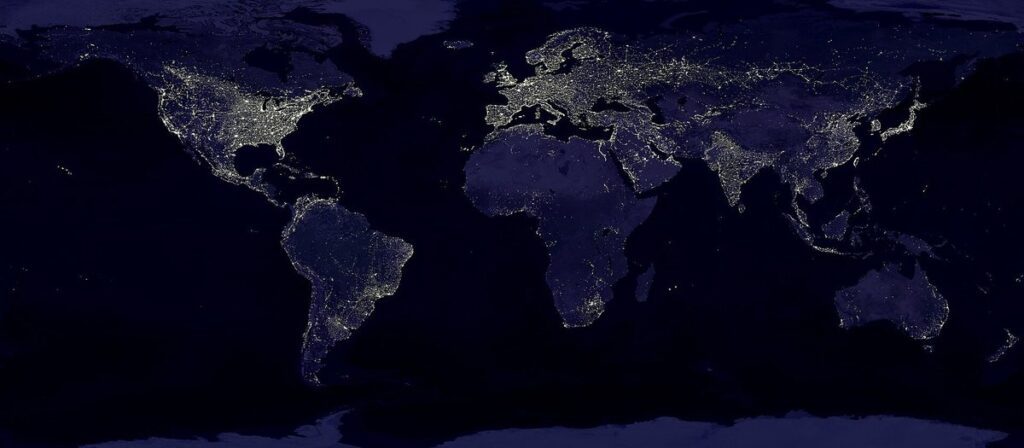
Image credits — In-article images: Image by NASA GSFC and NOAA NGDC (data: Marc Imhoff, Christopher Elvidge; image: Craig Mayhew, Robert Simmon) via Wikimedia Commons, Public Domain.
