

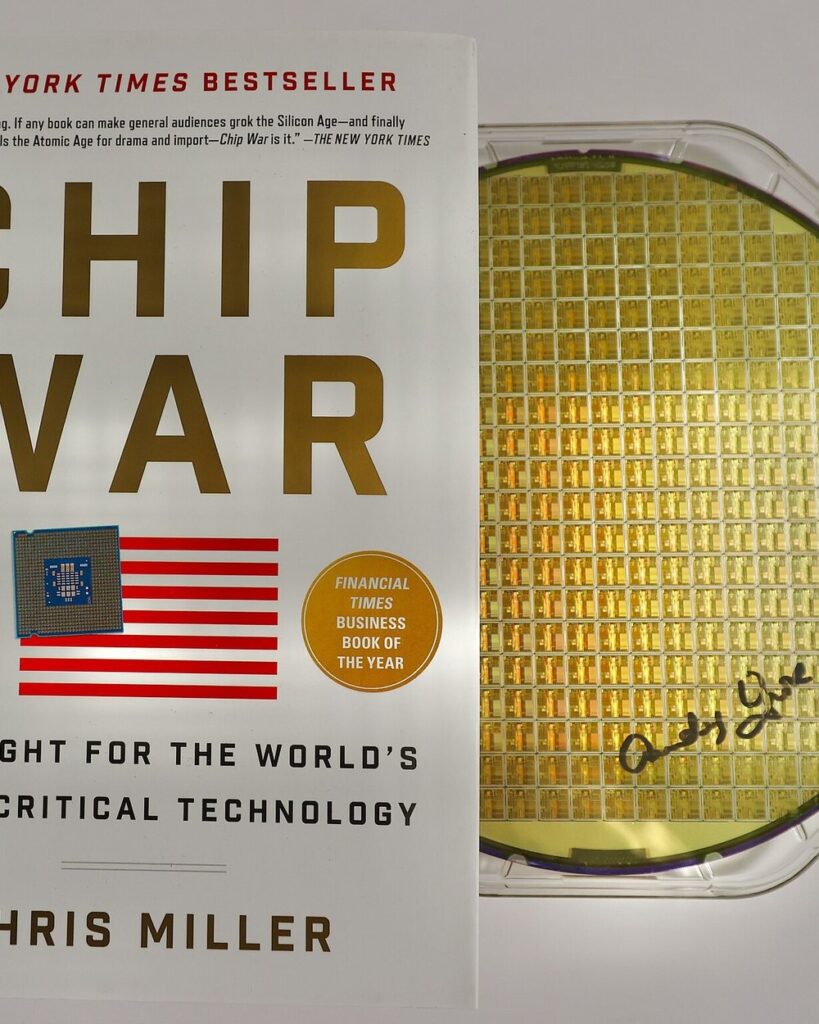
Author: Chris Miller · Published: 2022 · Genre: History, Technology
Chip War is the best single book on why semiconductors now sit at the center of world politics. Its biggest strength is how Miller, a historian at Tufts University’s Fletcher School, turns seventy years of engineering and industrial policy into a readable story of people, companies and governments. Its biggest weakness is that it tells the story from the winners’ side and through a US national-security lens, so Soviet, European and Chinese perspectives get short shrift. Read it if you want to understand the US-China rivalry, Taiwan’s importance or where AI hardware comes from.
The core ideas
The full title is Chip War: The Fight for the World’s Most Critical Technology.
- Chips are the new oil, but more concentrated. Modern economies and militaries run on chips, and the most advanced ones depend on a handful of firms. Miller points out that China spends more on importing chips than on importing oil.
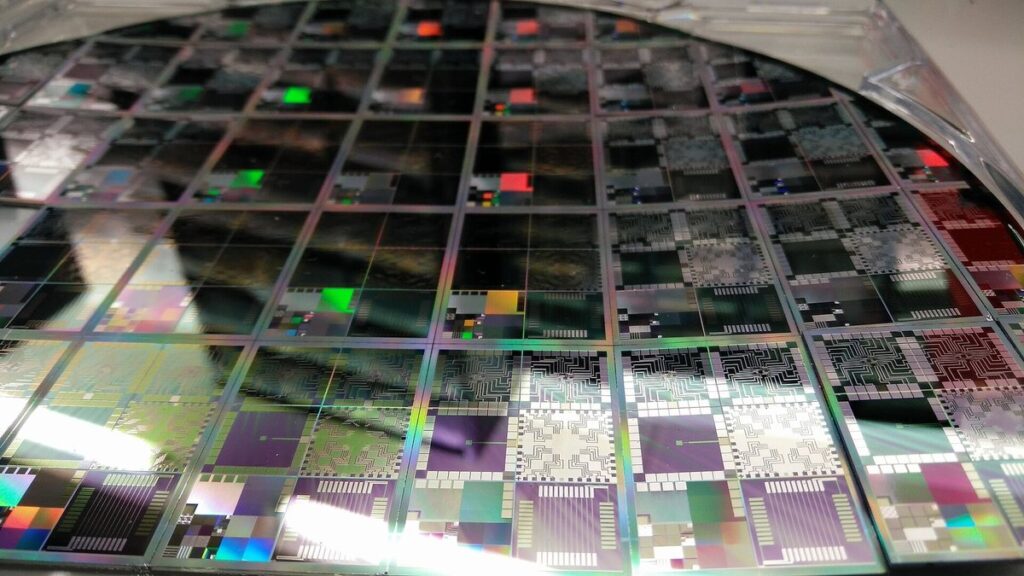
- Chokepoints. Taiwan’s TSMC makes most of the world’s leading-edge chips, and the Dutch firm ASML is the only supplier of the extreme ultraviolet (EUV) lithography machines needed to produce them. Whoever controls such chokepoints holds enormous leverage.
- Military roots. The Pentagon and NASA were early buyers of chips. Texas Instruments electronics made laser-guided bombs accurate enough to finally destroy Vietnam’s Thanh Hoa Bridge, and precision weapons later became central to the Pentagon’s plan to offset Soviet numbers.
- Copying isn’t enough. The Soviet Union built a science city at Zelenograd but leaned on copying American designs, so it stayed years behind. Miller draws a lesson for China.
- Globalized, then fragile. Offshoring assembly to Asia, and outsourcing manufacturing to foundries like TSMC, which Morris Chang founded in 1987 with Taiwanese government backing, made chips cheap but concentrated risk around the Taiwan Strait.
What’s great
- Characters. Jack Kilby, Robert Noyce, Andy Grove, Sony’s Akio Morita and Morris Chang come alive, and Miller explains their choices without drowning readers in physics.
- Clear on hard technology. He explains Moore’s Law, foundries and why EUV lithography took decades and billions of dollars to perfect, in terms a non-engineer can follow.
- Timing and recognition. It appeared in October 2022, the same month Washington imposed sweeping export controls on advanced chips to China, and it won the Financial Times Business Book of the Year award for 2022. It quickly became the standard primer for the policy debate.
What’s weak
- A winners’ history. Historian of technology Cyrus Mody argued that the book follows the companies that won, above all Intel’s line, and skips dead ends and European efforts that failed. He also faulted its light use of archival sources and its reliance on stereotypes about Soviet microelectronics.
- A Washington lens. The framing is national security first. Workers, and the domestic politics of Taiwan and South Korea, get far less attention than generals and CEOs.
- Overtaken by events. Economist Barry Eichengreen noted that the book was finished before the October 2022 export controls, leaving open whether they would work and how China would respond. Developments since, such as Huawei’s 2023 smartphone with an advanced 7-nanometer chip made in China, complicate the argument that copying and catching up can’t work.
Who should read it
Anyone in tech, investing or policy should read it, and general readers will find it accessible. Treat it as the essential starting point for the subject, then follow the news, because the story has moved fast since 2022.
Rating: 4.5/5
Image credits — Featured image: Image by Steve Jurvetson via Wikimedia Commons, CC BY 2.0, cropped. In-article images: Image by DrHughManning via Wikimedia Commons, CC BY-SA 4.0.
