

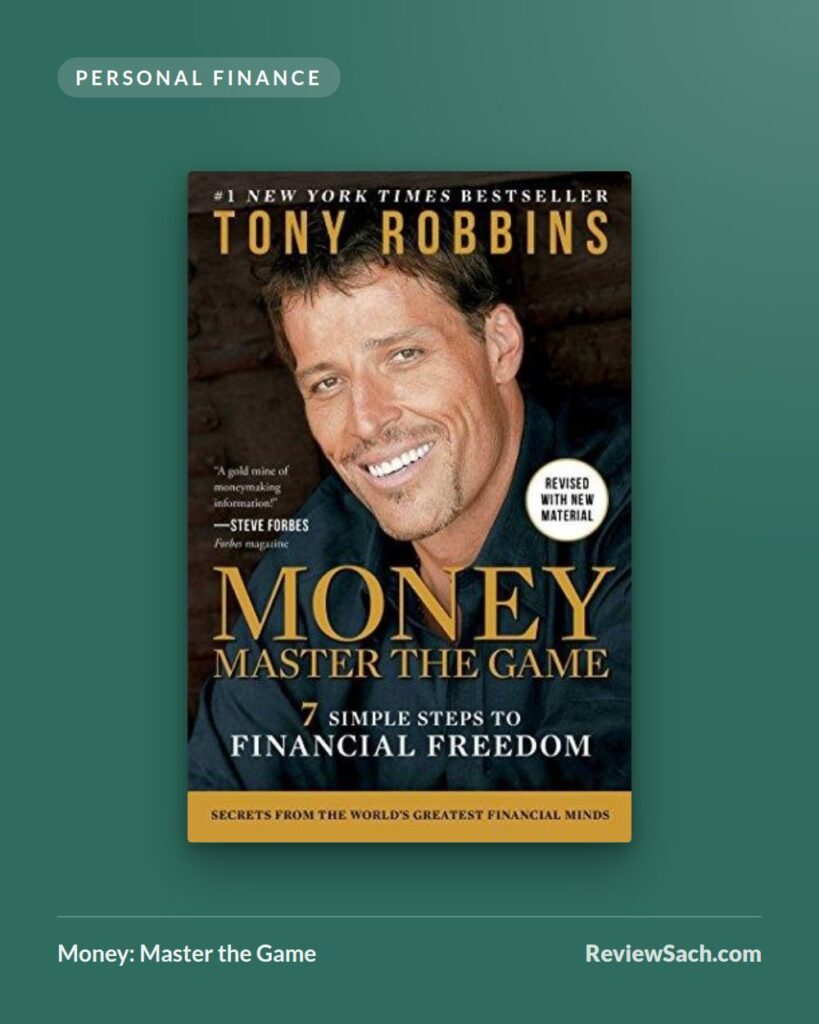
Author: Tony Robbins · Published: 2014 · Genre: Personal Finance, Investing
Money: Master the Game hides some genuinely good investing advice inside more than 600 pages of hype. Its best parts, drawn from interviews with investors such as Jack Bogle and Ray Dalio, argue for low costs and diversification. Its worst parts praise complex insurance products and promoted an advisory service with ties to Robbins’ own adviser. Unless you love the Robbins pep talk, read a shorter, cleaner book.
The big idea
Robbins sets out seven “simple steps” to financial freedom: make the decision to save and invest a set share of your income, learn the myths the financial industry sells, put a price on your dreams, choose an asset allocation, create a lifetime income plan, learn from the world’s top investors, and enjoy and share the results. He divides money into a Security bucket, a Risk/Growth bucket and a Dream bucket. The Security bucket holds money you cannot afford to lose; the Risk/Growth bucket holds stocks and other assets that can rise or fall; the Dream bucket funds the treats that keep you motivated. How you split money between the first two, he argues, matters more than which funds you pick.
The selling point is access. Robbins interviewed dozens of financial figures, including Vanguard founder Jack Bogle, Yale endowment chief David Swensen, Carl Icahn and Bridgewater’s Ray Dalio. Dalio’s contribution became the book’s most famous takeaway: a simplified “All Seasons” portfolio of 30% stocks, 55% US Treasury bonds and 7.5% each in gold and commodities.
What works
- The case against high fees. Robbins hammers home how costs, commissions and active management compound against savers over decades. Bogle’s voice gives this section real authority.
- Motivation. For people who have never saved, the energy is the point. Robbins is good at making readers put a number on their goals and start automating contributions.
- The interviews. Even filtered through Robbins, hearing serious investors explain risk and diversification in plain terms is useful. Bogle’s case for index funds and Swensen’s view that ordinary investors should keep things cheap and simple are the strongest pages in the book.
- Asset allocation first. The bucket framework is a friendly way to explain why the mix of safe and risky assets drives most of a portfolio’s outcome.
The controversy
Financial advisers and index-fund advocates criticised the book heavily, and the main charge is inconsistency. Robbins attacks mutual fund fees and broker commissions, yet he endorses advisers who charge ongoing percentage-of-assets fees and gives a warm write-up to fixed indexed annuities. Critics point out that these annuities often cap gains, exclude dividends and carry surrender charges and rider fees that ordinary buyers struggle to understand. Promoting them as upside without downside, they argue, oversells the product.
The book also promoted Stronghold, a service co-created by Robbins’ own financial adviser, and hinted that Robbins might become a partner. After conflict-of-interest criticism, he said he would not join the firm. To be fair, Robbins does push readers towards fiduciary advice, which is sound. But a book that warns about hidden conflicts should not raise questions about its own.
The All Seasons portfolio drew fire too. Its strong back-tested record owed much to a long bull market in bonds, and critics warned that a portfolio so heavy in long-term Treasuries is exposed when interest rates rise sharply, as they did in 2022.
Then there is the style. The book repeats itself, oversells constantly and reads in places like a late-night infomercial, which makes 600-plus pages hard going.
Who should read it
Robbins fans who need a jolt to start saving may find it energising. Everyone else will get the same core lessons, low costs and broad diversification, from Bogle’s The Little Book of Common Sense Investing in a fraction of the time.
Rating: 2.5/5
Image credits — Cover image via Open Library. Cover design © the publisher, shown for review purposes.
