

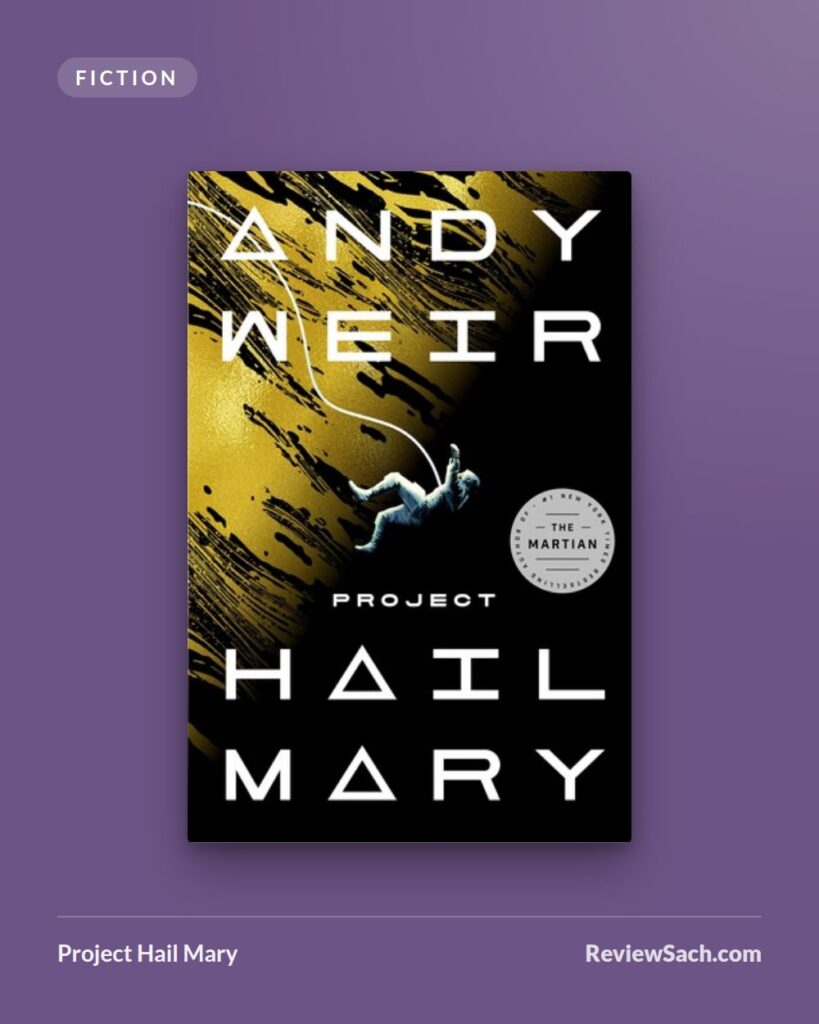
Author: Andy Weir · Published: 2021 · Genre: Science Fiction
Project Hail Mary‘s biggest strength is that it turns problem-solving into suspense: you watch a man reason his way out of one impossible situation after another, and it is gripping. Its weakness is the voice, a stream of nerdy jokes and exclamations that some readers find exhausting, surrounded by side characters who barely exist. Read it if you liked The Martian or want smart, upbeat science fiction. This review contains no spoilers.
What it’s about
A man wakes up on a spaceship with no memory of who he is or how he got there. His two crewmates are dead. Using whatever he can find on board, he works out basic facts by experiment, starting with the realisation that the gravity he feels is not Earth’s. His memories return in pieces, and a second storyline, told in flashbacks, fills in what happened back home.
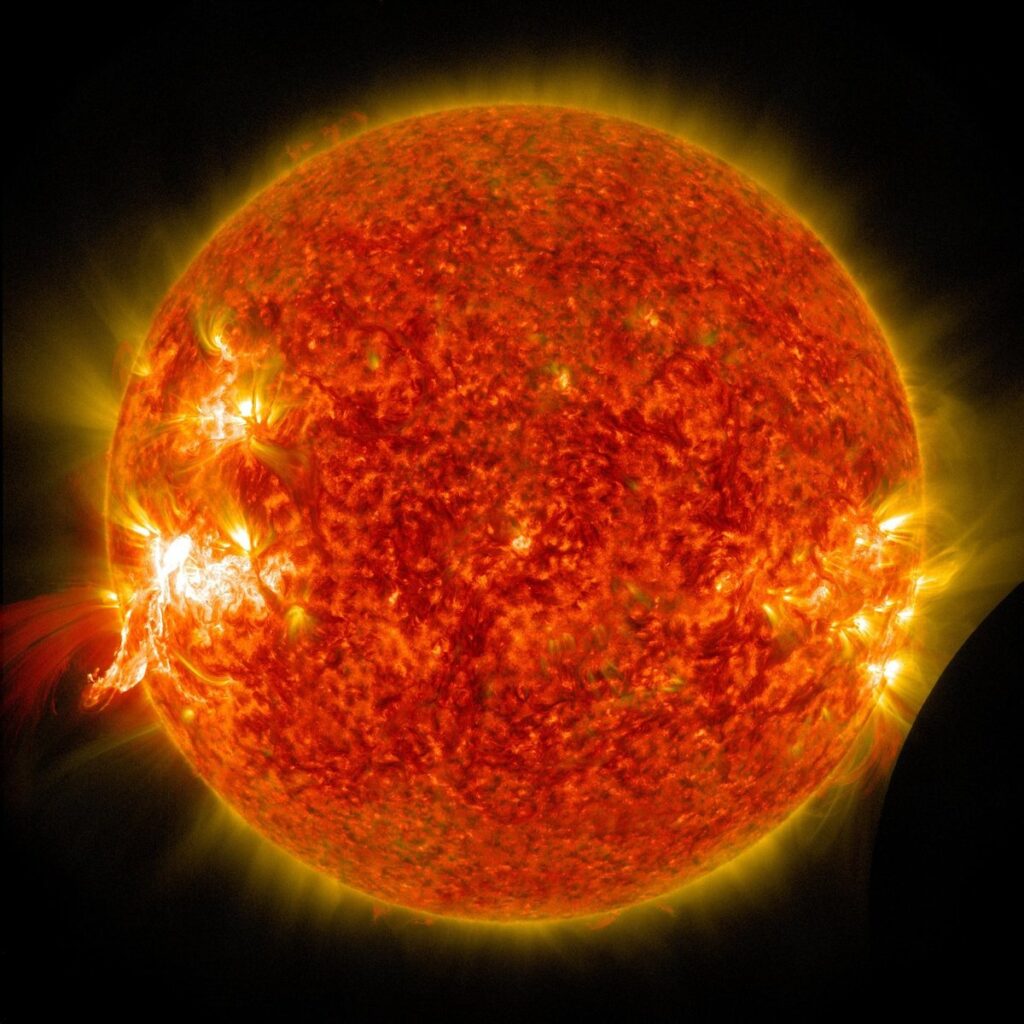
He is Ryland Grace, a former molecular biologist who left academia to teach junior high science. A microorganism nicknamed Astrophage is feeding on the Sun’s energy and dimming it, putting Earth on course for crop failures and mass famine within decades. A nearby star, Tau Ceti, seems to be unaffected. The Hail Mary is humanity’s desperate mission to find out why, and Grace is its only survivor. The flashbacks also follow Eva Stratt, the formidable official given sweeping international authority to run the project.
That is as much as I’ll say. The book has several big surprises, and they are much better discovered than described.
What’s great
- Science as plot. Weir clearly does the maths. Grace improvises measuring tools, studies Astrophage under a microscope, and worries about fuel, radiation and relativity. Each solution creates a new problem, and the logic is clear enough that you feel you could follow along with a calculator.
- Structure. Alternating the ship with the Earth flashbacks lets Weir release information exactly when it creates the most tension, and the flashbacks gradually complicate our picture of Grace himself.
- Warmth. Beyond the engineering, this is a story about cooperation, courage and friendship. Its emotional core, which I won’t describe, is what lifts it above The Martian.
- Momentum. Short chapters, constant cliffhangers and a hopeful tone make it very hard to put down.
What’s weak
Grace’s narration is jokey in the same way Mark Watney’s was in The Martian: lots of exclamations, wisecracks and pleased-with-himself asides. Over a long novel it wears thin, and if that voice grated on you before, it will again. The prose is functional rather than elegant.
Apart from Grace and Stratt, the human characters are sketches. The flashback scenes of global cooperation are optimistic to the point of implausibility, since real governments rarely agree this quickly on anything, and the book shows little interest in the politics. The reliance on rapid scientific breakthroughs also lowers the tension at times: Grace solves things so fast that the danger can feel less real than the stakes suggest. Some of the science is bent for the story, especially the biology of Astrophage, and readers who don’t enjoy technical detail may skim whole pages of calculations.
Who should read it
Fans of The Martian, science teachers, engineers and anyone who likes stories where intelligence and goodwill save the day. It is also a good entry point to science fiction for readers who usually avoid the genre. Read it before watching the 2026 film starring Ryan Gosling, and go in knowing as little as possible.
Rating: 4.5/5
Image credits — Featured image: cover image via Open Library; cover design © the publisher, shown for review purposes. In-article images: Image by NASA/GSFC/Solar Dynamics Observatory via NASA, Public Domain.
