

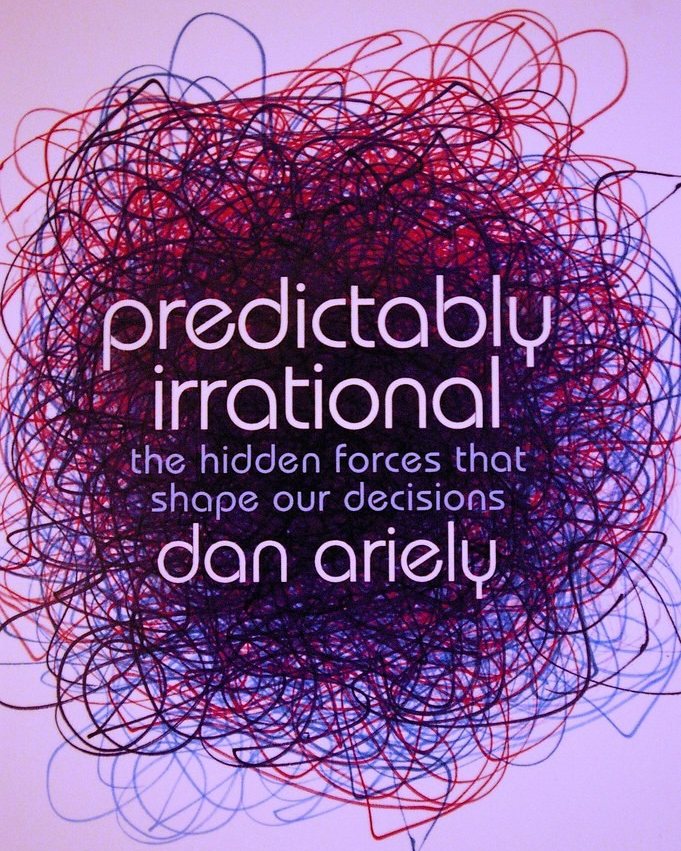
Author: Dan Ariely · Published: 2008 · Genre: Psychology, Behavioral Economics
Predictably Irrational argues that our bad decisions aren’t random: we err in consistent, predictable ways, and businesses and policymakers can plan for that. It was once the most entertaining introduction to behavioral economics on the shelf. Today it comes with a serious warning, because parts of Ariely’s research have been retracted over data problems. Read it for the questions it raises, not as settled science.
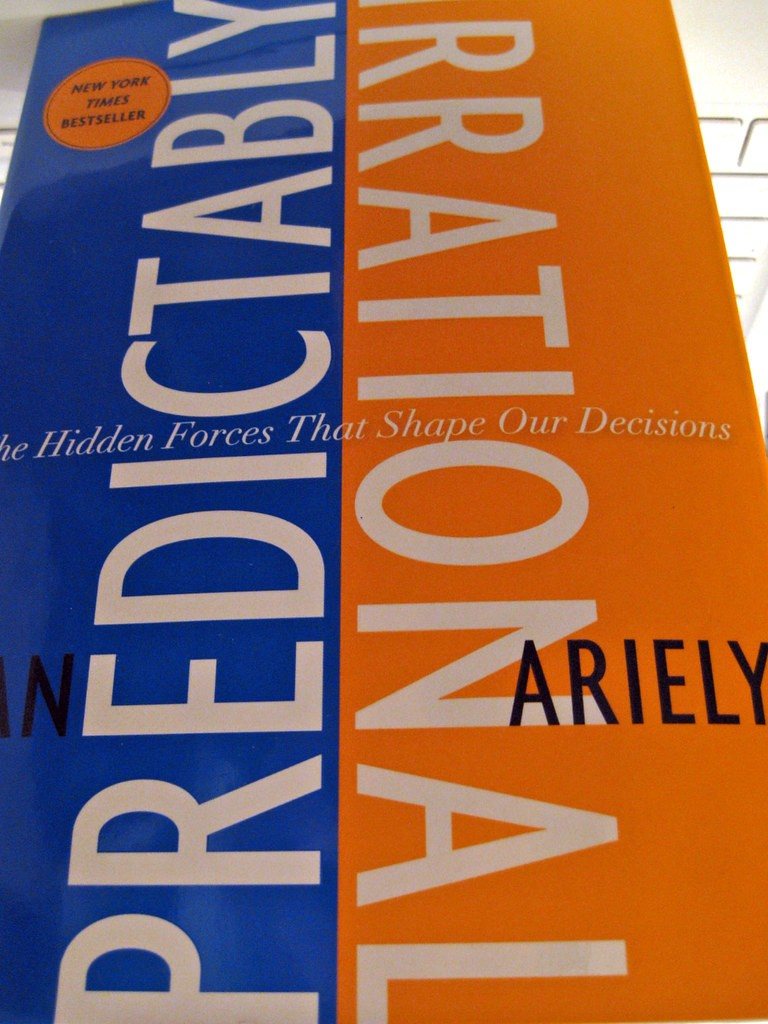
The big idea
Ariely, a psychologist and behavioral economist at Duke, wants to replace the rational decision-maker of standard economics with a more realistic one. Each chapter takes one bias and illustrates it with an experiment, often his own.
We judge things relative to nearby options, so a useless decoy can steer our choice. Arbitrary numbers anchor what we are willing to pay. The word free makes us abandon sensible cost-benefit thinking. Mixing social norms with market norms backfires, as when Israeli day-care centers introduced a fine for late pickups and lateness went up. We overvalue what we own, expectations change how things taste, and pricier placebos seem to work better than cheap ones.
What works
- The examples are memorable. Ariely shows how a subscription offer from The Economist included a print-only option priced the same as print plus web, which made the bundle look like a bargain. In another study, students wrote down the last two digits of their Social Security numbers and then bid on items such as wine; those with higher digits bid more. And when a cheap Hershey’s Kiss became free, most people switched to it from a far better Lindt truffle, even though both prices had dropped by the same one cent.
- The writing is warm and personal. Ariely explains that his interest in irrational behavior grew out of a long hospital stay after he was badly burned as a young man in Israel. That gives the book an emotional anchor most economics books lack.
- It asks good questions. Even where specific findings are shaky, the chapters on social versus market norms and on our urge to keep options open offer useful ways to think about work, dating and money.
The controversy
Ariely’s reputation has taken major hits. In 2021, the research blog Data Colada showed that a 2012 study he co-authored, which claimed people are more honest when they sign a form at the top rather than the bottom, relied on insurance data that appeared to have been fabricated. The paper was retracted. The data had passed through Ariely’s hands, but he denied fabricating it, and Duke reportedly concluded he had not knowingly falsified data but should have checked and kept it more carefully.
That paper isn’t in this book, but the problems have now reached it. In 2026, the journal Psychological Science retracted Ariely’s 2002 paper on deadlines and procrastination, the research behind the book’s chapter on self-control, after Data Colada found signs the data had been tampered with or fabricated. His co-author supported the retraction. Ariely accepted that the data could not be trusted but said he didn’t know how the problems arose.
Other findings have simply failed to replicate. The book describes a study in which students who recalled the Ten Commandments cheated less on a test. A large multi-lab replication published in 2018 found no such effect.
None of this proves every chapter is wrong, and many of the broad ideas, such as anchoring and the pull of free offers, are supported by other researchers’ work. But readers can no longer take Ariely’s own experiments on trust.
Who should read it
Readers who want a light, engaging introduction to behavioral economics and can hold its findings loosely. For the same ideas on firmer ground, read Kahneman’s Thinking, Fast and Slow or Richard Thaler’s Misbehaving instead.
Rating: 3/5
Photo credits — Featured image: Photo by Ged Carroll via Flickr, CC BY 2.0, cropped. In-article photo: Photo by Joe Loong via Flickr, CC BY-SA 2.0, cropped.
