

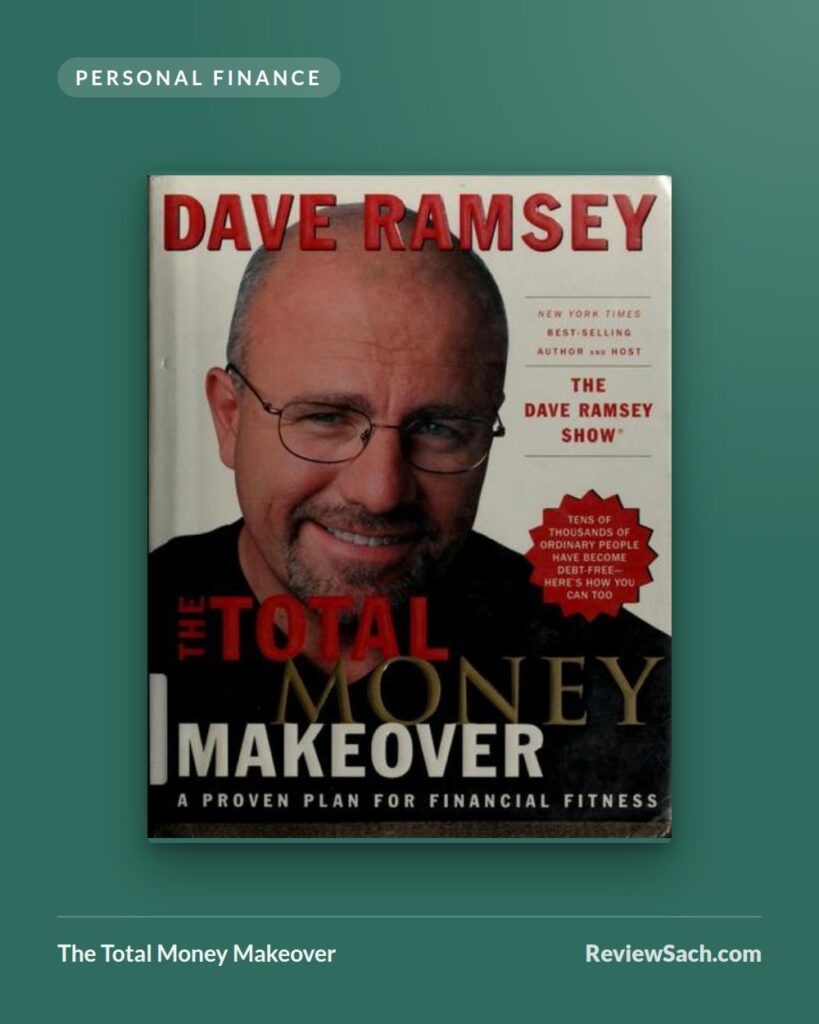
Author: Dave Ramsey · Published: 2003 · Genre: Personal Finance, Debt
The Total Money Makeover argues that debt is the main obstacle between ordinary people and wealth, and that getting out of it is about behaviour, not maths. As a motivational plan for someone drowning in credit cards and car loans, it works. As a complete financial guide, it has real flaws, especially in its investing assumptions. Read it if you need a push; read it critically if you don’t.
The big idea
Ramsey lays out seven Baby Steps, to be done strictly in order. First, save a $1,000 starter emergency fund. Second, pay off all debt except the mortgage using the debt snowball. Third, build a full emergency fund of three to six months of expenses. Fourth, invest 15% of household income for retirement. Fifth, save for children’s college. Sixth, pay off the house early. Seventh, build wealth and give generously.
The debt snowball is the centrepiece. You list your debts from smallest balance to largest, ignoring interest rates, pay the minimum on all of them and throw every spare dollar at the smallest. When it’s gone, its payment rolls into the next. Ramsey’s argument is that quick wins keep people going, because personal finance is mostly behaviour and only a little knowledge.
What works
- Clarity. The steps are simple, ordered and hard to misunderstand. For people paralysed by choices, a single sequence is a gift, and knowing exactly which step you are on makes progress visible.
- The myths chapter. Ramsey takes apart common excuses: that car payments are a fact of life, that you need a credit card to build credit, that cash-value life insurance is a good investment. His case against car loans in particular is well argued and could save many readers a fortune.
- Behaviour first. Many finance books assume readers are rational. Ramsey assumes they are tired, embarrassed and tempted, which is more realistic. The stories from families who cleared large debts show how motivating the plan can be.
The controversy
The debt snowball is mathematically worse than the avalanche method, which targets the highest interest rate first and costs less overall. Ramsey’s defence, that people quit when they don’t see progress, has some support in consumer-behaviour research. But for someone with a large, high-rate card balance, the extra interest paid can be real money.
His investment assumptions draw the most criticism. Ramsey has long used a 12% average annual return for stock mutual funds in his examples. Critics point out that this reflects a simple average over favourable periods; the compound return investors actually experience has been lower, and lower still after inflation and fund fees. Plans built on 12% can leave people under-saved. He has also steered followers towards actively managed funds through advisers in his referral network rather than low-cost index funds, and his later on-air claim that retirees could safely withdraw 8% a year drew wide criticism from financial planners.
Other rules are rigid. Ramsey tells people to pause retirement contributions during the snowball, even when an employer match is on offer, which means passing up free money. The starter emergency fund has stayed at $1,000 for more than two decades despite inflation. His outright rejection of credit cards and credit scores can also make life harder in situations where a credit history matters.
The book leans heavily on Christian values and on Ramsey’s own story of going bankrupt in his twenties, which some readers find inspiring and others find preachy.
Who should read it
People with consumer debt who have tried spreadsheets and failed, and who need rules and motivation more than optimisation. If you are already debt-free, or comfortable with interest-rate maths, you’ll get more from an investing book such as Bogle’s.
Rating: 3.5/5
Image credits — Cover image via Open Library. Cover design © the publisher, shown for review purposes.
