

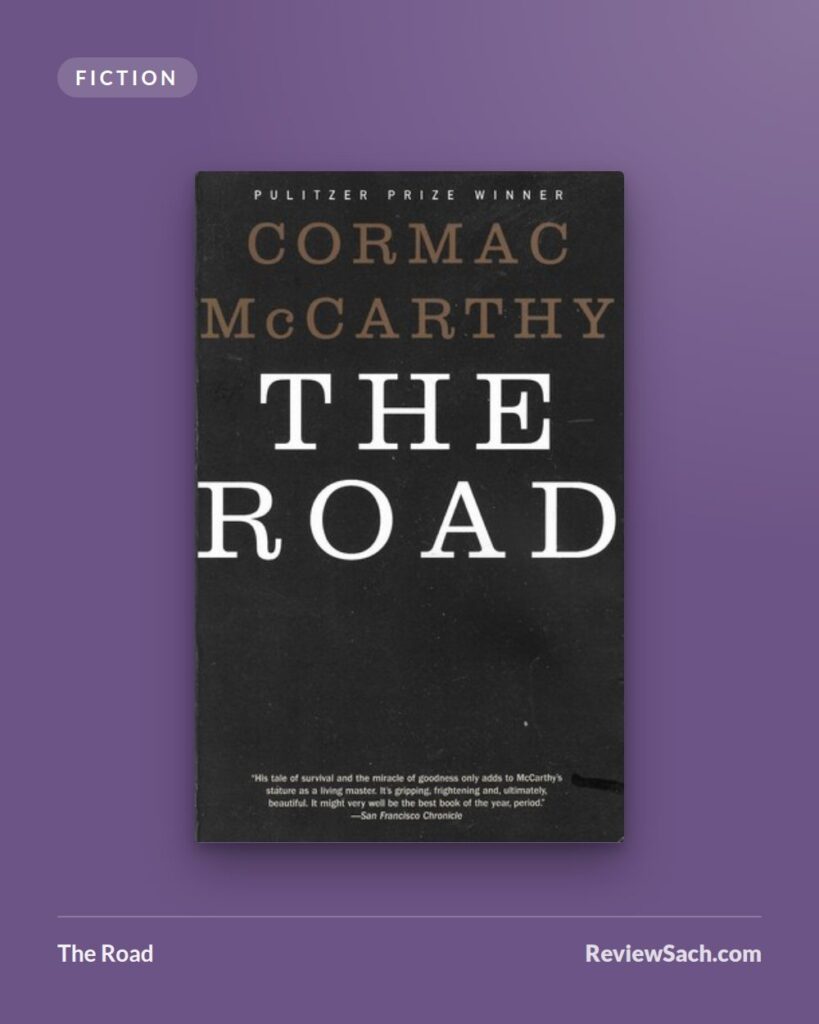
Author: Cormac McCarthy · Published: 2006 · Genre: Literary Fiction, Post-Apocalyptic
The Road‘s great strength is the bond at its centre: a father and son drawn so carefully that every small kindness between them lands like a blow. Its limitation is that it is relentlessly bleak and stripped bare, with almost no plot beyond survival, which some readers find numbing rather than moving. Read it if you want literary fiction that hits hard; skip it if you want a page-turning apocalypse story.
What it’s about
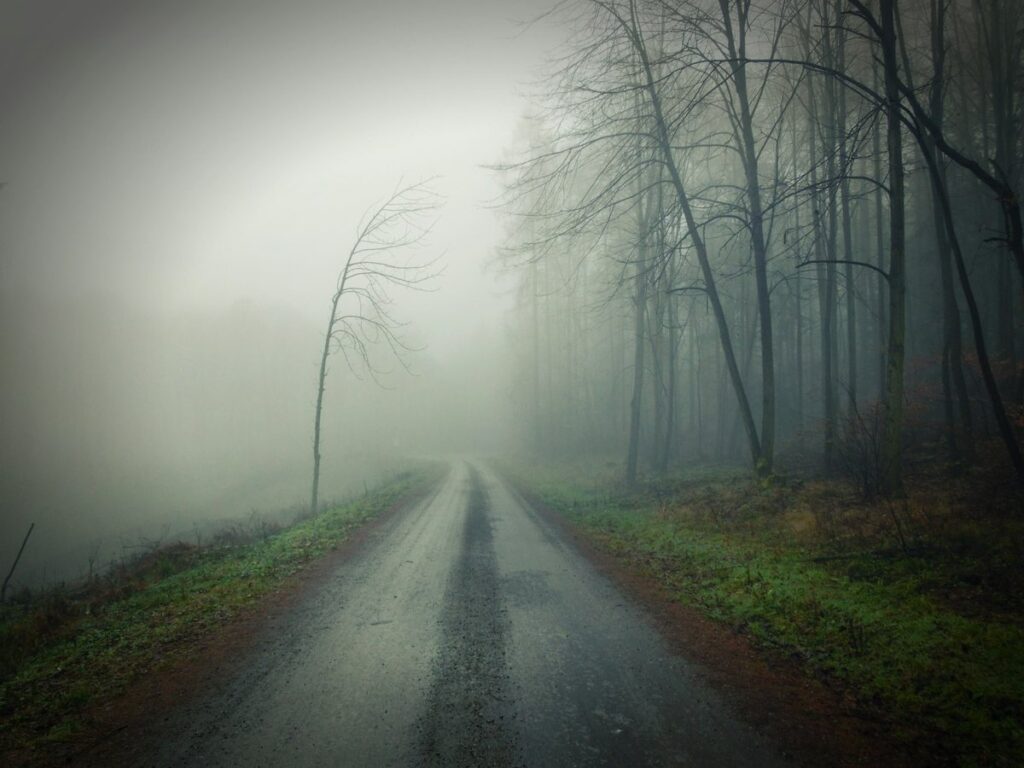
An unexplained catastrophe has burned the world. The sky is grey, ash falls constantly, plants and animals are dying, and the few people left scavenge or prey on one another. A man and his young son, never named, walk south through the ruins of America toward the coast, hoping for warmth and something better. They push a shopping cart of supplies, carry a pistol with very few bullets and sleep under tarps in the cold.
The danger comes from hunger, weather and, above all, other survivors, some of whom have turned to cannibalism. The man’s memories of the boy’s mother and of the world before surface in fragments. Against all of this, the father keeps telling his son that they are the good guys, the ones “carrying the fire”. The novel won the 2007 Pulitzer Prize for Fiction and was adapted into a 2009 film starring Viggo Mortensen.
What’s great
- The relationship. Most of the dialogue is only a few words long, and the boy’s repeated, anxious questions about whether they are still the good guys carry the moral weight of the book. The father lives entirely for the child. The child, increasingly, is the one who insists on mercy toward strangers. That tension between survival and decency is the novel’s real subject.
- The prose. McCarthy drops quotation marks and many apostrophes and writes in short, clipped paragraphs. Flat descriptions of the burned landscape alternate with sudden passages of strange, almost biblical beauty. It sounds affected on paper, but in practice it makes the world feel exhausted and reduced to essentials.
- Restraint. McCarthy never explains the disaster. That choice keeps the focus on the two characters and stops the book turning into a disaster-movie puzzle about causes.
- Tension. A handful of scenes, including the search of a house that should never have been entered, are as frightening as anything in a horror novel, yet they are never written for cheap shock. Equally memorable are the rare moments of relief, which McCarthy makes feel almost unbearably precious.
What’s weak
The bleakness is total and, by design, repetitive: walk, scavenge, hide, sleep, repeat. If the prose does not cast its spell on you, the middle stretch can feel like a long trudge through the same grey. The minimalism has costs, too. The man and the boy are archetypes more than individuals, and the boy’s mother exists only in a few brief memories, a thin treatment of the one significant woman in the story.
The violence is rarely graphic, but it is genuinely disturbing, including threats to children, and some readers will find it too much. The stylistic tics, from sentence fragments and archaic words to long chains of clauses joined by “and”, can tip into self-parody for readers who have never warmed to McCarthy. And because so little happens outside the father and son, the book depends entirely on whether their bond moves you. If it doesn’t, there is not much else to hold on to.
Who should read it
Readers of literary fiction, and anyone who wants to see how much a novel can do with very little. It is especially powerful for parents, which also makes it harder to read. If you want a fast survival thriller, try something else: this is a short book best read slowly, ideally in a few long sittings.
Rating: 4.5/5
Image credits — Featured image: cover image via Open Library; cover design © the publisher, shown for review purposes. In-article images: Photo by Bara Cross on Unsplash.
