

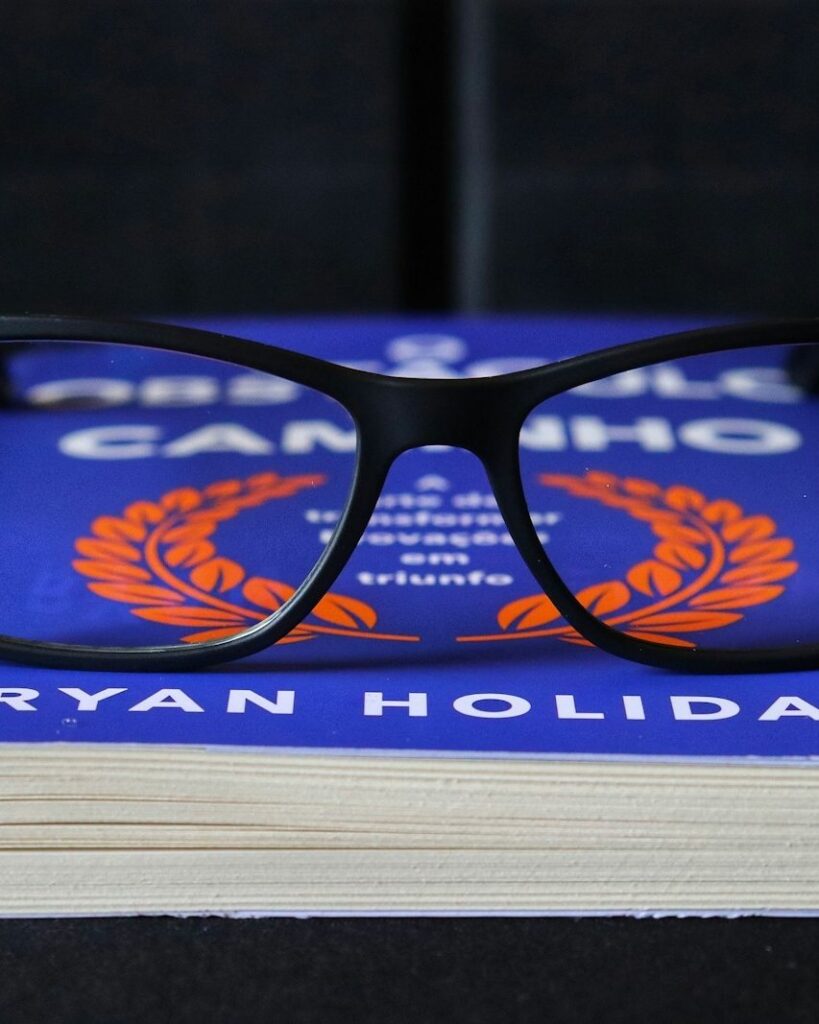
Author: Ryan Holiday · Published: 2014 · Genre: Self-Help, Philosophy
The Obstacle Is the Way argues that obstacles aren’t just things to get past; handled well, they become the path itself. Ryan Holiday takes this idea from the Roman emperor Marcus Aurelius and builds a fast, story-driven guide to Stoic resilience. It’s motivating, easy to read, and has introduced a lot of people to Stoicism. But it flattens both the philosophy and the history in its rush to inspire.
The big idea
The title comes from a passage in Marcus Aurelius’s Meditations: the impediment to action advances action, and what stands in the way becomes the way. Holiday turns this into three linked disciplines.
Perception. How you see a problem decides how you respond. Keep your emotions in check, look at events objectively, and separate what you can control from what you can’t.
Action. Once you see clearly, act: persistently, creatively and without waiting for perfect conditions. Break big problems into steps, keep iterating, and use setbacks as information.
Will. When action can’t change the situation, endure it. Accept what you can’t change, prepare for things to go wrong, and remember that you will die, an old Stoic practice meant to sharpen priorities rather than depress you.
Each short chapter pairs a principle with historical examples. A young John D. Rockefeller keeps his head as a bookkeeper during the financial panic of 1857. Thomas Edison, watching his laboratory complex burn in 1914, tells his son to fetch his mother because they’ll never see a fire like it again, then starts rebuilding. Ulysses S. Grant tries approach after approach at Vicksburg until one works.
The book spread well beyond philosophy readers. It became popular with athletes, coaches and entrepreneurs, which fits its practical, competitive tone.
What works
- Stories carry the ideas. The anecdotes are well chosen and briskly told, making abstract Stoic principles vivid and memorable.
- Short chapters. Each is only a few pages, which makes the book easy to reread in pieces when you need a push.
- A useful reframe. The central move, asking what an obstacle makes possible, is practical in setbacks large and small, from a lost job to a difficult boss. It turns frustration into a question you can act on.
- A gateway. Many readers go from this book to Marcus Aurelius, Seneca and Epictetus. That alone is a real contribution. It was also Holiday’s first book on Stoicism, and the start of a larger body of work, including The Daily Stoic, that helped bring the philosophy back into popular culture.
What doesn’t
- History simplified. Historical figures appear as lessons, stripped of context. Complex lives, including Rockefeller’s famously ruthless business career, are reduced to a single virtue. Readers who know the history may wince.
- Stoicism simplified. Classical Stoicism is a full ethical system centered on virtue, justice and duty to others. Holiday’s version focuses mainly on personal resilience and success, which critics say turns a moral philosophy into a performance tool. The ethical core is there, but it’s easy to miss.
- Survivor stories. Nearly every example ends in triumph. People who met obstacles with perfect calm and still failed don’t appear, which makes the method look more reliable than it is.
- Motivational tone. Some passages read like locker-room pep talks, and the energy becomes repetitive over a full read.
Who should read it
Read it if you’re facing a setback and want a quick, energizing change of perspective, or if you’re curious about Stoicism and want an easy entry point. Then go to the source: Meditations is shorter than you might expect and deeper than any summary of it.
Rating: 3.5/5
Photo credits — Featured image: Photo by CC PD (caio_delarolle) on Unsplash.
