


Author: Niccolò Machiavelli · Published: 1532 · Genre: Political Philosophy, History
The Prince‘s biggest strength is its brutal honesty about how power actually works: it is short, vivid and free of moralising, and it still unsettles readers five centuries later. Its limitation is that it is rooted in Renaissance Italian politics, with long runs of examples that mean little without notes, and it shows only one side of Machiavelli’s thought. Read it, in an annotated translation, if you care about politics, leadership or the history of ideas.
The big idea
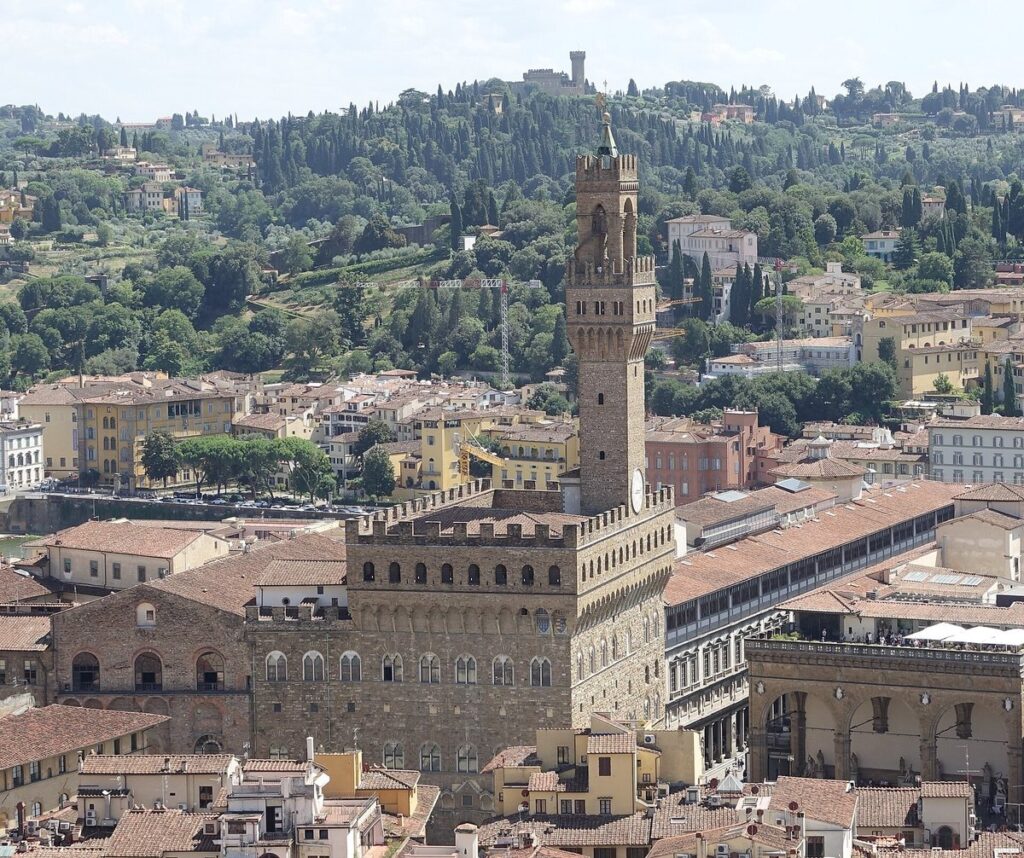
Machiavelli served the Florentine republic as a senior official and diplomat until the Medici family returned to power in 1512. He lost his post, was imprisoned and tortured in 1513 on suspicion of conspiracy, and retired to his farm outside Florence. There he wrote The Prince, dedicated it to Lorenzo de’ Medici, and hoped it would win him back a place in government. It circulated in manuscript and was printed in 1532, five years after his death.
Its 26 short chapters make a handful of arguments that still provoke:
- New rulers face the hardest task. Inherited states are easy to keep. Power won by fortune or someone else’s armies is fragile; power won by your own ability and forces lasts.
- Cesare Borgia as a model. Machiavelli admires how Borgia used a harsh deputy to pacify the Romagna, then had him publicly executed to take credit for the order and deflect the hatred.
- Fear over love. It is better to be both loved and feared, but if you must choose, fear is safer. A prince must still avoid being hated, above all by leaving his subjects’ property and women alone.
- Appearances. A ruler should seem merciful, honest and religious, but be ready to act otherwise, combining the strength of the lion with the cunning of the fox.
- Own arms, and fortune. Mercenaries are useless and dangerous. Fortune controls perhaps half of what happens, but prepared, bold rulers can resist it, as dykes resist a flood. The final chapter is a passionate call for a leader to free Italy from foreign invaders.
What’s great
It is astonishingly direct. Where earlier advice books for princes listed the virtues a good ruler should have, Machiavelli asks what actually keeps a ruler in power, and answers with cases from his own time and from ancient history. The prose is compact and quotable, and most chapters take ten minutes to read. Its ideas about legitimacy, reputation and the costs of half-measures still apply to modern politics, business and office life.
The controversy
The book’s reputation made “Machiavellian” a synonym for cunning amorality. The Catholic Church placed his works on its Index of Prohibited Books in 1559, Elizabethan drama turned the “Machiavel” into a stock villain, and the twentieth-century philosopher Leo Strauss called him a teacher of evil. That reading has a basis: Machiavelli really does defend cruelty used decisively, deception and breaking promises when necessary.
Scholars have offered fuller readings. Machiavelli never wrote the phrase “the ends justify the means”. His longer Discourses on Livy praises republics, and Rousseau argued that The Prince was really a book for republicans, exposing how princes rule. Historians such as Quentin Skinner read it in context, as a response to Italy’s crisis after foreign invasions began in 1494. Isaiah Berlin argued that its originality lay in showing that political virtue and Christian morality are different, perhaps incompatible, systems of value.
Its weaknesses are real, too. Long stretches on mercenary captains and papal politics are hard going, and the famous passage comparing fortune to a woman who must be beaten into submission is ugly.
Who should read it
Anyone interested in politics, power or the history of ideas. Choose a translation with good notes, such as Harvey Mansfield’s or George Bull’s, then read the Discourses for the rest of Machiavelli.
Rating: 4.5/5
Image credits — Featured image: Photo by Marius Teodorescu on Unsplash. In-article images: Image by Gzen92 via Wikimedia Commons, CC BY-SA 4.0.
