

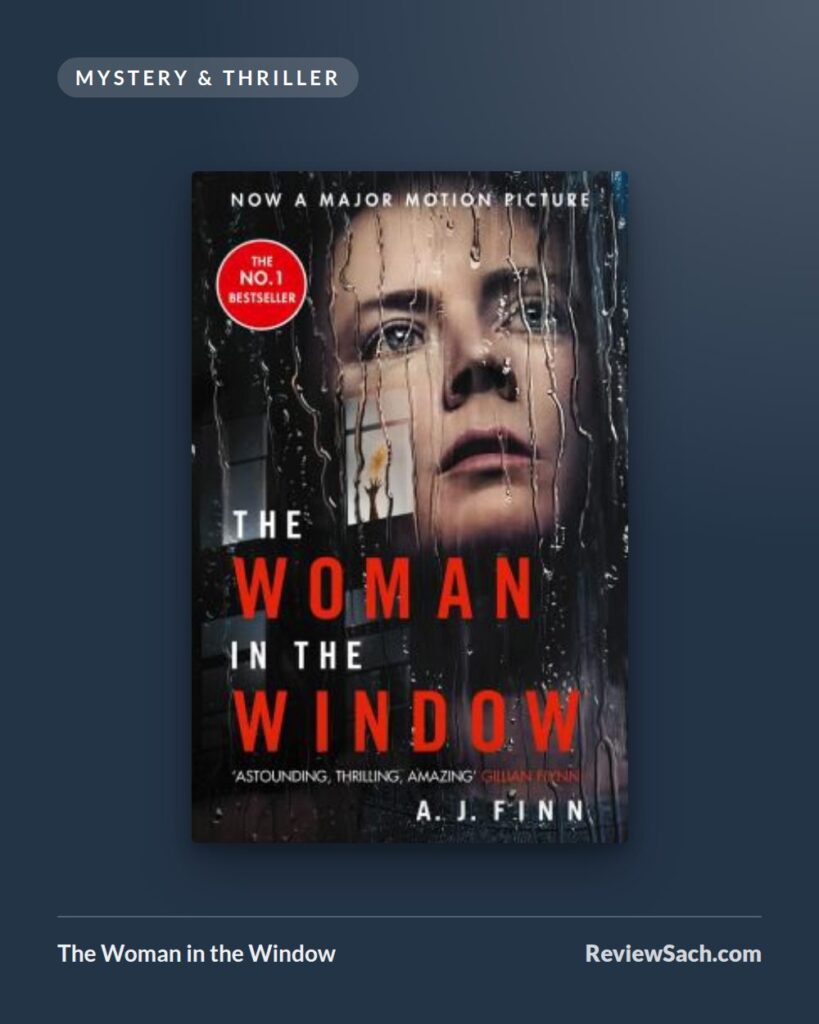
Author: A.J. Finn · Published: 2018 · Genre: Psychological Thriller, Domestic Suspense
The Woman in the Window‘s biggest strength is Anna Fox’s voice: wry, lonely, steeped in old movies and convincing as someone trapped in her own house. Its weakness is that almost everything else feels borrowed, from Rear Window to Gone Girl, and the plot asks you to forgive a lot. Read it if you want a quick, atmospheric thriller and love classic suspense films.

What it’s about
Dr. Anna Fox is a child psychologist who has not left her large New York townhouse in months. Severe agoraphobia keeps her inside, where she watches black-and-white thrillers, plays chess online, counsels other agoraphobics through an internet forum and drinks too much wine on top of her medication. She also watches her neighbours through her camera lens.
The Russells, a father, a mother and their teenage son, have just moved in across the street, and they look like the perfect family. Then one night, through their window, Anna sees what she believes is a crime. When she tries to raise the alarm, the police find nothing to support her, and given her drinking and medication, nobody believes her. Anna starts to doubt herself, and the novel becomes a question of what she really saw and who is lying.
What’s great
- Voice and atmosphere. Anna is funny, observant and painfully self-aware, and the claustrophobic house, with its stairs, its basement tenant and its view across the street, becomes a character in its own right.
- Film references. Finn has cited Rear Window and Gaslight among his inspirations, and he threads classic noir through the book: Anna’s viewing choices comment on her situation, and fans of old Hollywood will enjoy spotting the echoes.
- Speed. The chapters are short and the book reads fast. The early sections, establishing Anna’s routines, rituals and fears, are the strongest.
- A narrator you can’t trust, and neither can she. Anna’s drinking and medication make her doubts real, so the question of whether she imagined everything creates genuine tension for much of the book.
What’s weak
The premise is close to a remix. A woman nobody believes, watching a crime through a window, is Rear Window crossed with The Girl on the Train, and the book arrived on the wave of thrillers that followed Gone Girl. Critics noticed. Writing in The New Yorker, Joyce Carol Oates called it a superior example of the recent wave of such thrillers but felt that Anna was more a function of the plot than a fully realised person. That is fair.
The middle drags, with repeated scenes of Anna drinking, doubting and being disbelieved. The final act leans on revelations and coincidences that do not survive much thought, though I won’t describe them. And experienced thriller readers may guess more than the book wants them to.
The author controversy. In February 2019, a long New Yorker report by Ian Parker found that Dan Mallory, the publishing editor who writes as A.J. Finn, had for years made false claims about his life, including that he had cancer and that his mother and brother had died. Mallory attributed his behaviour to severe bipolar II disorder. None of this changes what is on the page, and it plays no part in my rating, but it does colour how many readers now approach the book.
Who should read it
Readers who enjoy domestic suspense like The Girl on the Train, and film buffs who love Hitchcock. If you are new to the genre, it is an entertaining weekend read; if you have read widely in it, expect a polished but familiar ride. The 2021 Netflix film starring Amy Adams covers the same ground.
Rating: 3/5
Image credits — Featured image: cover image via Open Library; cover design © the publisher, shown for review purposes. In-article images: Photo by the blowup on Unsplash.
