

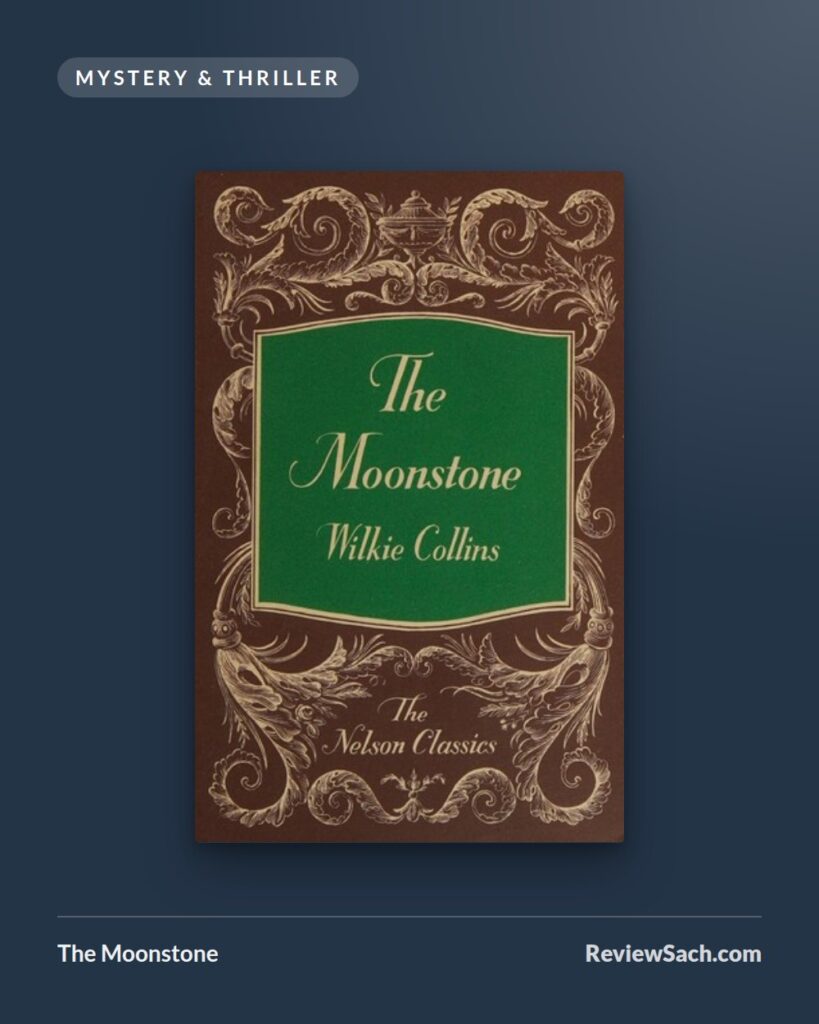
Author: Wilkie Collins · Published: 1868 · Genre: Mystery, Victorian Fiction
The Moonstone is one of the first full-length detective novels in English, and its biggest strength is its narrators: a parade of distinctive voices, several of them very funny, who each tell part of the story. Its biggest weakness is its length and Victorian pace, with digressions and a sagging middle, plus a portrayal of India that is sympathetic for its time but still exoticizing. Read it if you love classic mysteries or want to see where many of the genre’s conventions began.
What it’s about
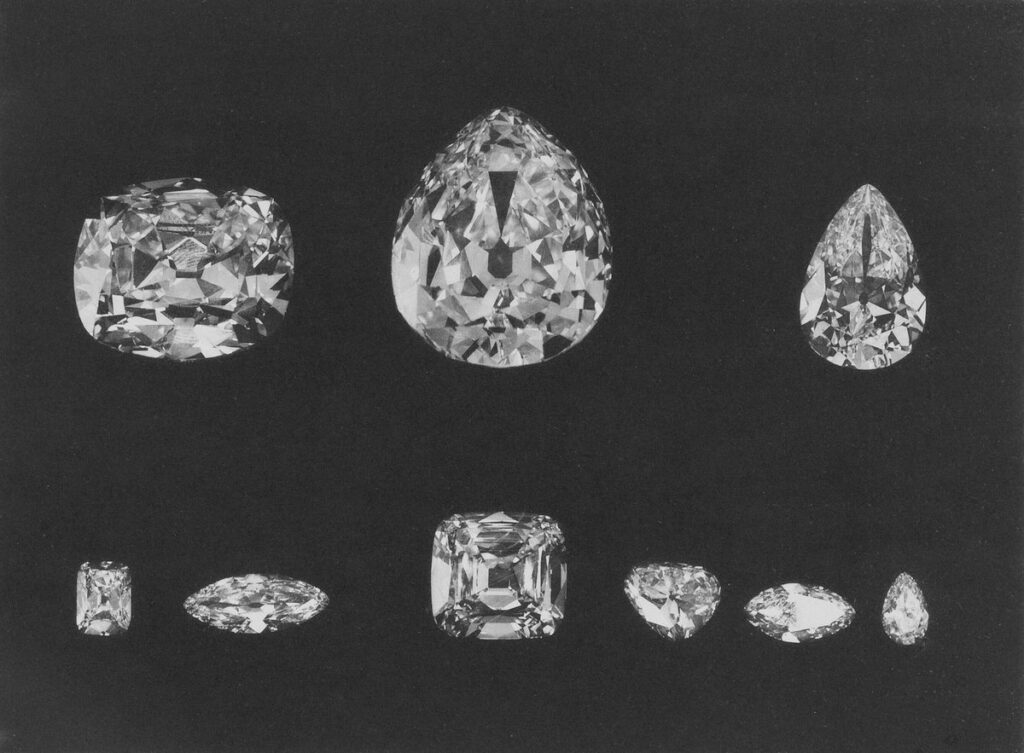
The novel opens in 1799 at the storming of Seringapatam in India, where a British officer, John Herncastle, loots a sacred diamond, apparently killing its guardians to get it. Decades later, Herncastle leaves the stone to his niece, Rachel Verinder, as an eighteenth-birthday present, and her cousin Franklin Blake brings it to the family’s Yorkshire country house.
Three Indian men, apparently devoted to recovering the diamond, appear near the house. On the night of Rachel’s birthday the Moonstone vanishes from her room. The local police fumble, and the celebrated Sergeant Cuff arrives from London. Suspicion falls on servants, guests and family, and Rachel herself behaves in ways no one can explain. The case drags on for many months, moving between Yorkshire and London, and Collins tells it through a series of written accounts by people who witnessed different parts of it. The novel first appeared as a serial in Charles Dickens’s magazine All the Year Round.
What’s great
- The voices. Gabriel Betteredge, the elderly house steward, opens the story and nearly steals it. He consults Robinson Crusoe the way others consult the Bible, and his grumbling, affectionate account is a comic masterpiece. Miss Clack, a poor and pious relation who presses religious tracts on everyone, is a sharp satire of Victorian evangelism, all the funnier because she has no idea how she sounds.
- Sergeant Cuff. Thin, melancholy and devoted to growing roses, Cuff is an early model of the eccentric professional detective. His attention to small physical details, such as a smear on freshly painted woodwork, set a template for the genre.
- A real puzzle. Collins plants his clues openly and builds a genuine mystery. Many elements that became standard, from the country house and the closed circle of suspects to the bungling local policeman, are already here.
- Sympathy for the overlooked. Rosanna Spearman, a housemaid with a criminal past, has one of the book’s most moving storylines, and Collins treats servants and outsiders with more seriousness than many writers of his day.
What’s weak
It is long, and the pace is Victorian. Some narrators repeat what we already know, and the middle sections, especially the London chapters, slow down. Readers used to tight modern plotting may find their patience tested before the threads come together.
The book’s view of India is mixed. Collins frames the British theft of the diamond as a crime and treats the three Indians with a kind of respect, but they remain mysterious, exotic figures rather than full characters, and some of the language around them is very much of its time. It is worth reading with that in mind.
Who should read it
Read it if you enjoy Agatha Christie, Sherlock Holmes or Dickens, or if you are curious about the history of crime fiction. Choose an annotated edition, such as Oxford World’s Classics or Penguin Classics; the notes help with the colonial background and Victorian detail.
Rating: 4/5
Image credits — Featured image: cover image via Open Library; cover design © the publisher, shown for review purposes. In-article images: Photo by Amsterdam City Archives on Unsplash.
