

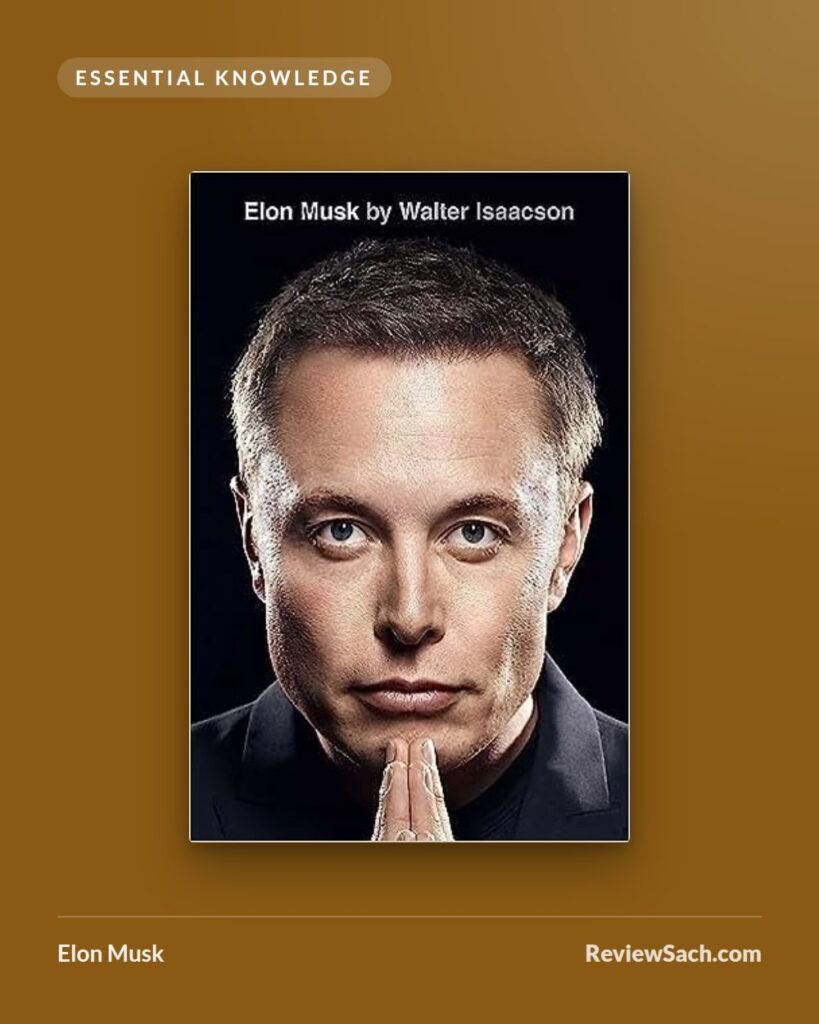
Author: Walter Isaacson · Published: 2023 · Genre: Biography, Business
Elon Musk‘s biggest strength is access: Isaacson shadowed Musk for about two years, sat in on meetings and interviewed family, colleagues and rivals, so the book is full of scenes no outsider could get. Its biggest weakness is that it is a chronicle, not an analysis, and much of the story is told from Musk’s side with little critical distance. Read it for an inside view of Tesla, SpaceX and the Twitter takeover, but pair it with tougher reporting.
What it’s about
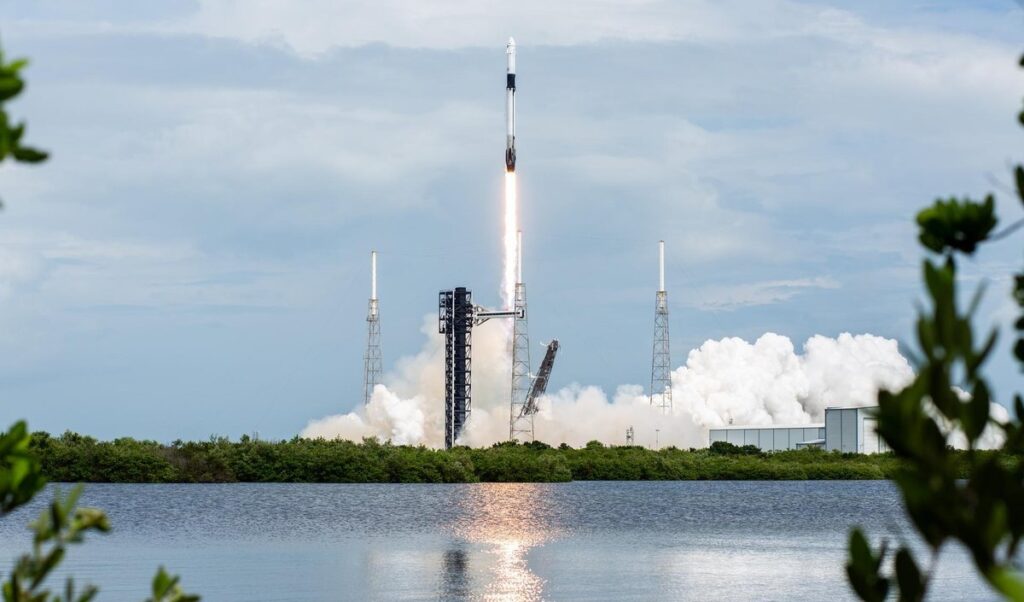
Published by Simon & Schuster in September 2023, the book runs in short, fast chapters from Musk’s childhood in Pretoria, South Africa, through Zip2, PayPal, Tesla, SpaceX, Neuralink and the Boring Company, to his 2022 purchase of Twitter and its rebranding as X. Isaacson’s central thesis is psychological: a brutal schoolyard and an abusive, manipulative father, Errol, left Musk with a hunger for risk and drama, and his genius and his cruelty come from the same source.
Isaacson describes the dark moods his former partner Grimes called “demon mode”, along with Musk’s habit of manufacturing crises and declaring surges of maniacal urgency. He also lays out the engineering “algorithm” Musk drills into his teams: question every requirement, delete every part or process you can, then simplify, speed up and, only last, automate.
What’s great
- Scenes. The Model 3 “production hell”, the early Falcon 1 failures and the chaotic first weeks at Twitter are reported in granular detail, often from inside the room.
- Range of voices. Ex-wives, partners, siblings and executives such as SpaceX president Gwynne Shotwell all speak, and some contradict Musk.
- The algorithm. The chapters on Musk’s engineering method are genuinely useful for anyone who builds things, whatever you think of the man.
- No hiding the ugliness. Impulsive firings, feuds and humiliations of staff are on the page, and readers can draw their own conclusions.
The controversy
Reviewers largely respected the reporting but criticised the stance. In The Washington Post, Will Oremus argued that Isaacson’s heavy reliance on Musk and his circle kept him too close to his subject. In the Los Angeles Times, Brian Merchant called the “great man” approach dated and too accepting of Musk’s predictions. In The New York Times, Jennifer Szalai praised Isaacson as a patient chronicler but felt he let Musk off easily, for instance by not pushing him to explain his complaints about the “woke mind virus”. Musk’s estranged daughter, Vivian Wilson, called the book inaccurate and said Isaacson never contacted her; Isaacson said he reached out through family members.
The most concrete dispute came before publication. A passage excerpted in The Washington Post said Musk had secretly ordered Starlink coverage switched off near the Crimean coast in 2022 to thwart a Ukrainian drone attack on Russia’s fleet. Musk denied it, and Isaacson clarified on X that coverage had not been enabled there in the first place: Musk had refused Ukraine’s request to activate it. The Post corrected the excerpt, and Simon & Schuster said future editions would be updated. The episode is small, but it shows how dependent the narrative is on Musk’s own account.
The book is also dated. It ends in 2023, before Musk’s heavy involvement in the 2024 US election and in the Trump administration’s Department of Government Efficiency in 2025.
Who should read it
Readers who want the history of Tesla and SpaceX told at speed, and founders and engineers curious about how Musk runs a company. Read it alongside more critical work, such as Kate Conger and Ryan Mac’s Character Limit (2024) on the Twitter takeover, and treat it as a vivid first draft rather than the final word.
Rating: 3/5
Image credits — Featured image: cover image via Open Library; cover design © the publisher, shown for review purposes. In-article images: Image by NASA/Keegan Barber via NASA, Public Domain.
