

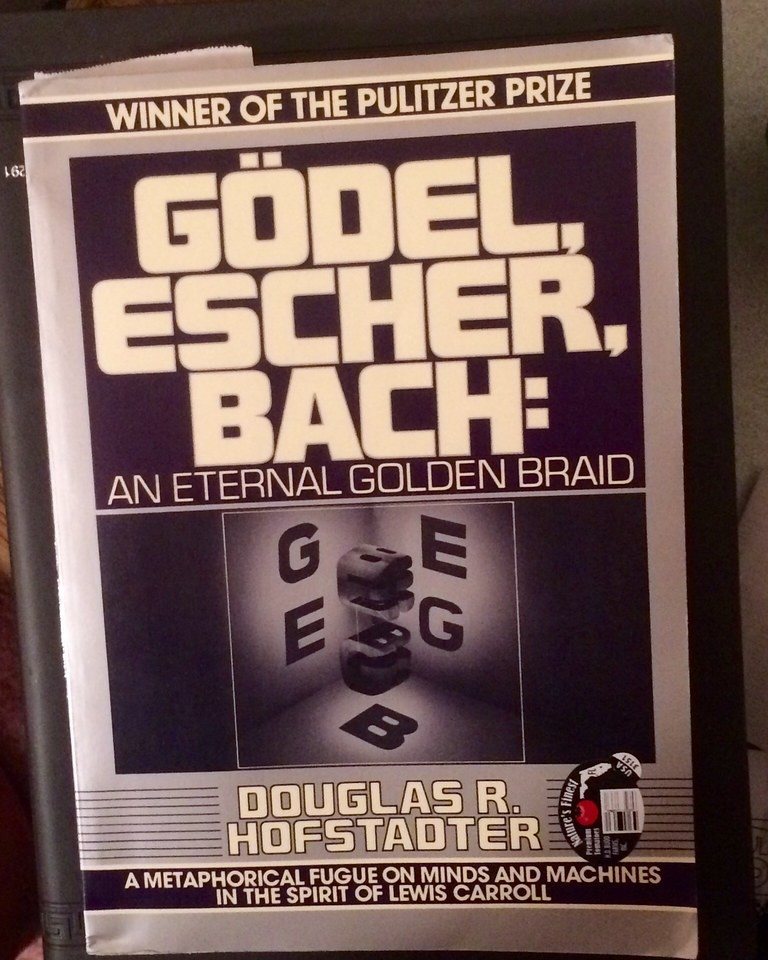
Author: Douglas R. Hofstadter · Published: 1979 · Genre: Mathematics, Philosophy of Mind
Gödel, Escher, Bach‘s biggest strength is its originality: it explains Gödel’s incompleteness theorem, recursion and formal systems through witty dialogues, puzzles and music, then uses them to ask how a mind can arise from mindless parts. Its biggest weakness is sprawl. At well over 700 pages of wordplay and digressions, it hides its main argument so well that Hofstadter later complained most readers missed it. It’s worth the effort for patient readers who love math, logic, programming or philosophy of mind.
The core ideas
- Formal systems. Hofstadter starts with the MU puzzle: from the string MI and four rewriting rules, can you produce MU? Working inside the rules, you flail. Step outside, notice that the number of I’s can never become a multiple of three, and you see it’s impossible. That difference between working within a system and reasoning about it runs through the whole book.
- Gödel’s incompleteness theorem. Hofstadter builds a formal system for arithmetic, Typographical Number Theory, and shows how Gödel encoded statements as numbers so that a statement can, in effect, say of itself that it can’t be proved in the system. If the system is consistent, that statement is true but unprovable, so any consistent formal system strong enough to express basic arithmetic is incomplete.
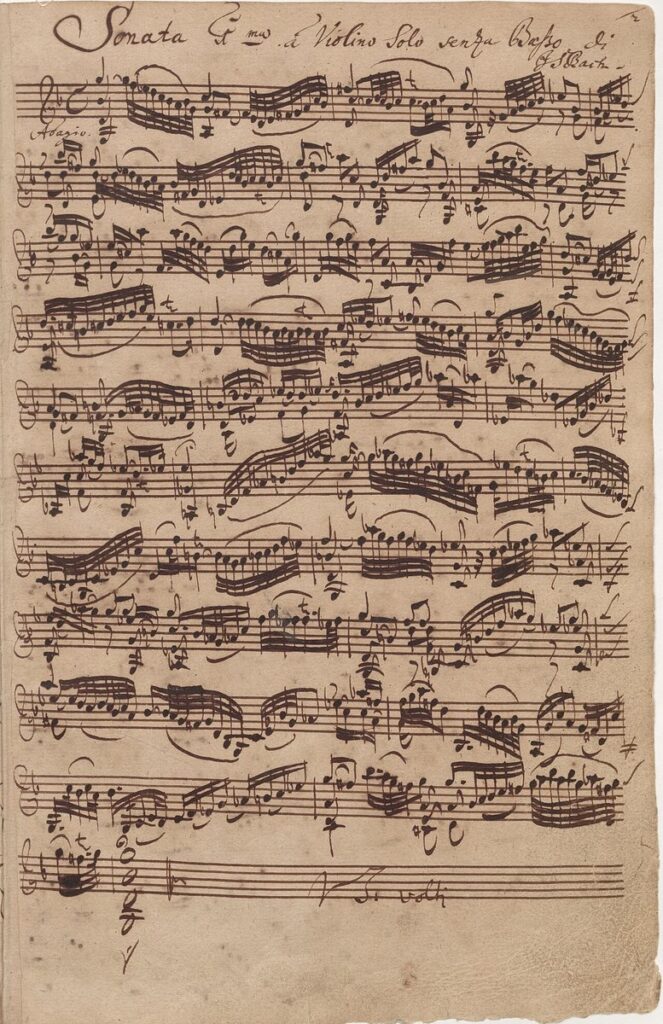
- Strange loops. Escher’s Drawing Hands, Bach’s endlessly rising canon in The Musical Offering and Gödel’s self-referential sentence are all hierarchies that loop back on themselves.
- Minds from meaningless parts. In the “Ant Fugue” dialogue, an ant colony as a whole knows things no single ant does. Hofstadter’s thesis is that a self is a strange loop that emerges when a system of neurons becomes rich enough to represent itself.
- Artificial intelligence. Because intelligence is a matter of pattern rather than substance, he argues, it could in principle run on machines.
What’s great
- The dialogues. Achilles and the Tortoise, borrowed from Zeno and Lewis Carroll, act out each idea before the chapter explains it. Some dialogues copy the form of the Bach pieces they discuss, like the “Crab Canon,” which is built as a palindrome.
- The best popular explanation of Gödel. You come away understanding why the theorem works, not just what it says.
- Playfulness everywhere. Acrostics, puns and hidden structures fill the book. It also coined Hofstadter’s Law: things always take longer than you expect, even when you take Hofstadter’s Law into account.
- Recognition. It won the 1980 Pulitzer Prize for General Nonfiction, rare for a book this technical.
What’s weak
- Too much. Many readers enjoy the first third, stall in the dense chapters on formal number theory, and never reach the argument about minds. In the preface to the 1999 20th-anniversary edition, Hofstadter lamented that people treated it as a book about links between math, art and music, when it’s really about how a self emerges from mechanism.
- Dated AI. The AI chapters describe the symbolic programs of the 1970s. Hofstadter also predicted that any program able to beat everyone at chess would be a general intelligence rather than a chess specialist; IBM’s Deep Blue, which defeated world champion Garry Kasparov in 1997, proved that wrong.
- Suggestive, not tested. The claim that consciousness is a strange loop is an evocative picture rather than a theory with evidence behind it, and critics of computational theories of mind remain unconvinced.
Who should read it
Read it if you enjoy puzzles and have months, not days, for a long and strange book. Keep a pencil handy; the exercises reward effort. If you mainly want the argument about consciousness, Hofstadter’s I Am a Strange Loop (2007) makes it far more directly.
Rating: 4.5/5
Image credits — Featured image: Image by byzantiumbooks via Flickr, CC BY 2.0, cropped. In-article images: Image by Johann Sebastian Bach via Wikimedia Commons, Public Domain.
