

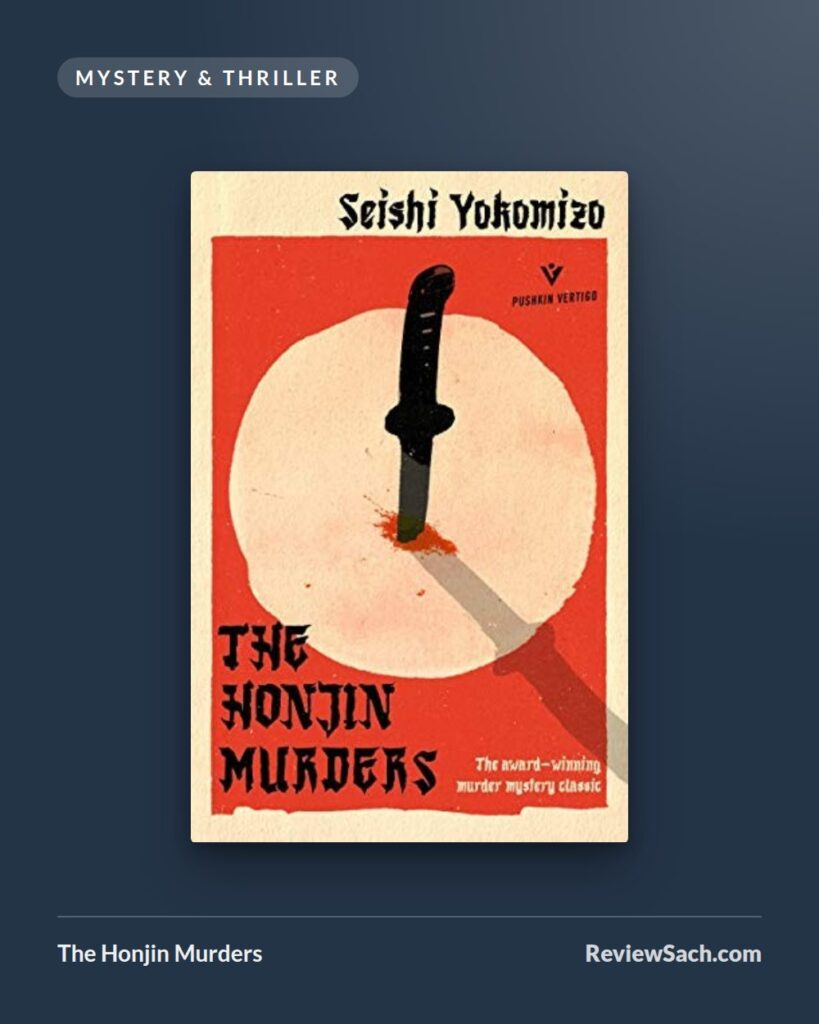
Author: Seishi Yokomizo · Published: 1946 · Genre: Locked Room Mystery, Honkaku · Original title: Honjin Satsujin Jiken
The Honjin Murders is a short, snowbound locked-room mystery that introduces Kosuke Kindaichi, Japan’s most famous fictional detective. It pairs a Golden Age puzzle with a sharp portrait of a proud rural family, and it’s one of the best places to start with classic Japanese crime. The solution is elaborate and not everyone will buy it, but puzzle fans will love it.
What it’s about
In the winter of 1937, in a village in Okayama, the Ichiyanagi family is preparing for a wedding. The family’s pride rests on its ancestry: they once ran the local honjin, the inn where feudal lords stayed on their travels. The eldest son, Kenzo, a stiff and scholarly man, is marrying Katsuko Kubo, a schoolteacher whose father was a tenant farmer. The family is not pleased about the match.
On the wedding night, the household is woken by a scream and the sound of a koto. The newlyweds are found slashed to death in the annex. The building is sealed from the inside, fresh snow lies unbroken around it, and a bloodied katana is stuck in the snow in the garden. A masked stranger with only three fingers on one hand had been asking questions about the family days earlier. Katsuko’s uncle, Ginzo, calls in a young detective he knows: Kosuke Kindaichi.
What works
- The narrator. The story is told years later by an unnamed narrator who pieces the case together from witness accounts and records. He’s chatty, gossipy and in love with Western detective fiction, and he openly compares the case to locked-room classics, name-checking John Dickson Carr. It’s playful and knowing, and it makes a 1940s puzzle feel surprisingly modern.
- The setting as puzzle. Yokomizo makes the Japanese details part of the mystery: sliding doors, rain shutters, carved transoms, the snow, the koto and the family’s rigid customs. Floor plans of the house are included, and you’ll want them.
- Kindaichi. He’s scruffy and stammering, scratches his untidy hair when excited, wears a shabby kimono and hakama, and is far sharper than he looks. The contrast with polished European sleuths is deliberate and charming.
- Class and pride. The tension over the marriage gives the book an edge of social comment: a family clinging to feudal status in a Japan that is changing fast. It adds depth to what could have been a pure mechanical exercise.
What doesn’t
The solution is ingenious but mechanical. It depends on a precise sequence of physical steps that some readers find more impressive than convincing, and the explanation takes time to unpack. If you prefer psychological mysteries, it may feel like a trick performed for its own sake. Readers with no patience for floor plans, timings and physical detail will find the final chapters tedious.
Kindaichi also arrives well into the book and gets little room to be a character. Readers who want to know him better will have to turn to later novels, such as The Inugami Curse. The book is short, so the rest of the family is thin, and some period attitudes, especially about the bride’s class and about women in general, feel dated.
The novel won the first Mystery Writers of Japan Award in 1948. Louise Heal Kawai’s English translation for Pushkin Vertigo (2019) is clean and readable, and the cultural details never become a barrier for readers new to Japan.
Who should read it
Fans of locked-room puzzles and Golden Age mysteries, especially John Dickson Carr. It’s also an ideal first step into Japanese crime fiction because it’s short and self-contained, easily read in an evening. Readers who dislike mechanical solutions may prefer Yokomizo’s The Inugami Curse.
Rating: 4/5
Image credits — Cover image via Open Library. Cover design © the publisher, shown for review purposes.
