

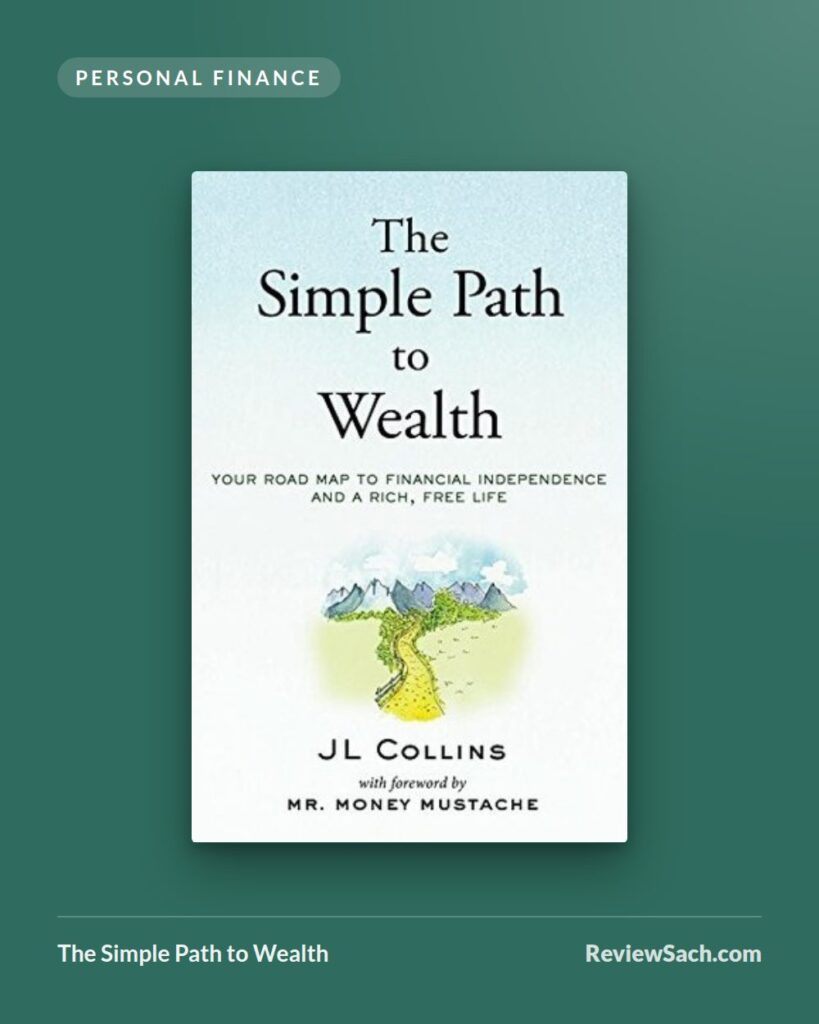
Author: JL Collins · Published: 2016 · Genre: Personal Finance, Investing
The Simple Path to Wealth argues that building wealth needs only three habits: spend less than you earn, invest the surplus in a broad, low-cost stock index fund, and avoid debt. It is one of the clearest investing books for ordinary people and a cornerstone of the financial independence movement. Its simplicity, including a heavy bet on US stocks, is also its main weakness.
The big idea
The book grew out of letters Collins wrote to his daughter, who had little interest in money, and from a popular series of posts on his blog. He wanted to explain investing so plainly that anyone could follow it.
His plan has two stages. While you are building wealth, own a total US stock market index fund; he names Vanguard’s VTSAX. As you approach living off your investments, add a bond index fund to smooth the ride. He discusses the 4% rule for withdrawals, explains why he trusts Vanguard’s investor-owned structure, and argues that most financial advisers add cost without adding value. The split between a wealth-building stage and a wealth-preserving stage is the book’s quiet strength: it tells a young investor why a crash is a buying opportunity and tells a retiree why stability now matters more.
Running through it all is the idea of “F-you money”: enough savings to walk away from a bad job, a bad boss or a bad situation. For Collins, the point of wealth is freedom, not luxury.
What works
- Crashes are normal. Collins is at his best explaining that the US market has always recovered from its drops and that selling in a panic is the real danger. He makes volatility feel like weather rather than disaster, which is exactly what nervous investors need to hear before the next downturn, not during it.
- Plain language. No jargon survives unexplained. His account of how an index fund works, and why picking stocks is a losing game for most people, is as clear as anything in print.
- Blunt about debt. He treats debt as a burden to be avoided rather than a tool, and has little patience for the idea that borrowing for cars and lifestyle is normal.
- Freedom as the goal. Framing savings as the price of options, not status, gives the frugal parts of the book a purpose that sticks.
What doesn’t
The tilt towards one country is a real risk. Collins argues that big US companies already earn money around the world, but a portfolio of only US stocks bets that the best-performing major market of the last century will keep leading. Many index-investing advocates recommend at least some international diversification, and Japan’s long slump after 1989 shows that a single market can disappoint for decades.
The book is also very Vanguard-specific and US-specific. Readers outside the US can’t easily buy VTSAX and must find their own equivalents, along with different tax accounts.
An all-stock portfolio during the building years requires a strong stomach. Collins acknowledges this, but many readers overestimate their tolerance until a real crash arrives. A steadier mix of stocks and bonds may suit people who would otherwise panic and sell.
Finally, the book is thin beyond investing. Budgeting, insurance and housing get little attention, and some chapters still read like the blog posts they began as. A revised and expanded edition in 2025 added a decade of fresh data and new material.
Who should read it
Anyone who wants a simple, low-maintenance investing plan and needs convincing that it works. It is especially good for readers who find markets intimidating, provided they think seriously about international diversification and their own risk tolerance.
Rating: 4/5
Image credits — Cover image via Open Library. Cover design © the publisher, shown for review purposes.
