

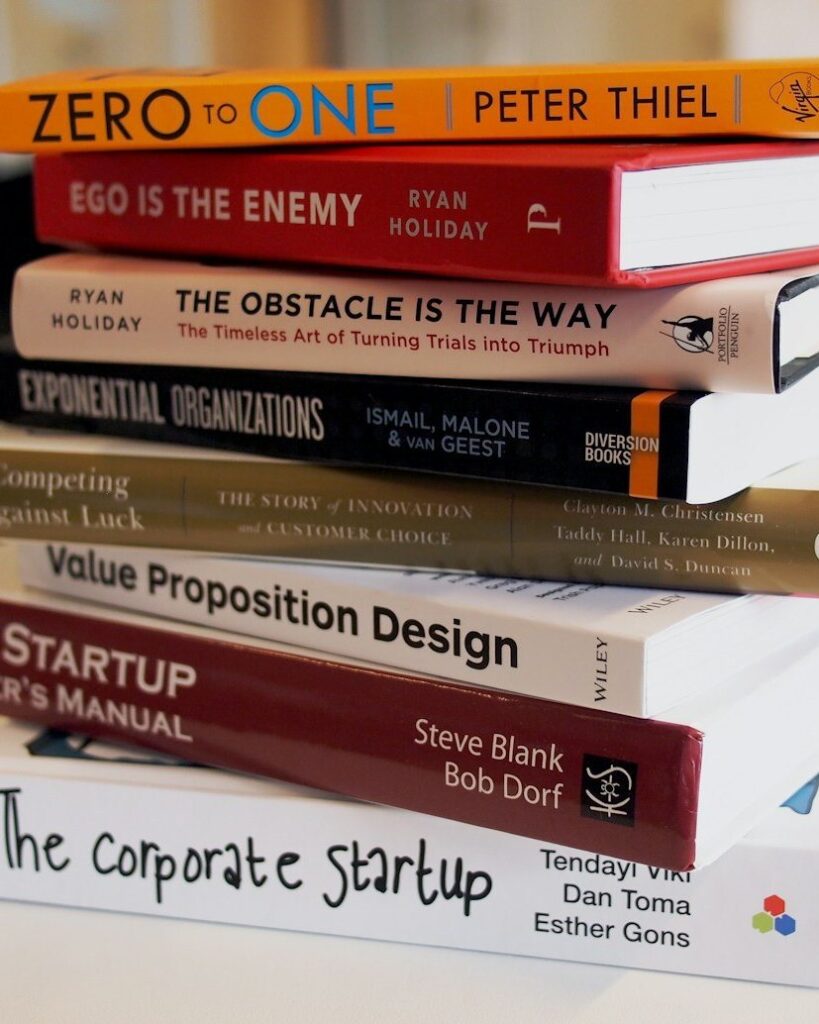
Author: Peter Thiel with Blake Masters · Published: 2014 · Genre: Business, Startups
Zero to One‘s biggest strength is that it forces original thinking: its questions about secrets, monopoly and timing are sharper than anything in most startup books. Its biggest weakness is that it makes sweeping claims from a handful of outlier successes, and its praise of monopoly skips over the real costs of market power. It’s worth reading for founders and investors who want a provocative counterweight to conventional startup advice.
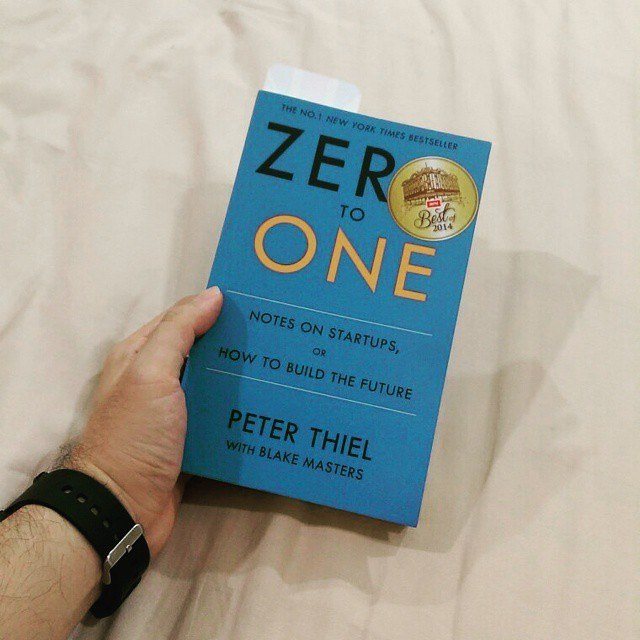
The core ideas
The book grew out of Blake Masters’s notes on a startup course Thiel taught at Stanford in 2012. Its main arguments:
- Vertical vs. horizontal progress. Going from zero to one means creating something new. Going from one to n means copying what already works, as globalization does. Thiel argues real growth depends on the first kind.
- Competition is for losers. In a perfectly competitive market, profits get competed away. Great businesses are creative monopolies. He notes that monopolies downplay their power by describing themselves as small players in huge markets, while struggling firms define their market narrowly to look unique.
- How to build a monopoly. Look for proprietary technology roughly ten times better than the alternative, network effects, economies of scale and branding. Start by dominating a small market: PayPal first targeted eBay’s power sellers, and Amazon began with books.
- Secrets and contrarian truths. His favorite interview question is “What important truth do very few people agree with you on?” Valuable companies are built on truths others have missed.
- The power law. Venture returns are dominated by a few huge winners, so both investors and founders should think in outliers, not averages.
What’s great
It’s short, crisp and full of arguments you can test against your own plans. The seven questions every business must answer (engineering, timing, monopoly, people, distribution, durability and secret) are a practical checklist. Thiel applies them to the cleantech bust of the 2000s and argues that most failed companies got several wrong, while Tesla got them right.
The book is also a useful challenge to startup orthodoxy. Thiel takes the lessons many founders drew from the dot-com crash, such as making only incremental advances, staying flexible and focusing on product over sales, and argues the opposites are often closer to the truth. His chapter on distribution is a good corrective for engineers who assume a great product sells itself.

What’s weak
The monopoly argument is the biggest problem. Thiel mostly treats monopoly as the reward for innovation, but economists have long pointed out that dominant firms can raise prices, block rivals and slow innovation. With today’s antitrust fights over Big Tech, the book’s cheerful case reads less like neutral strategy and more like an investor’s wish list.
The evidence is thin. Most examples come from Thiel’s own circle, including PayPal, Facebook and Palantir, and survivorship bias is everywhere: plenty of founders held contrarian beliefs and were simply wrong. The chapter on founders romanticizes them as extraordinary figures who deserve outsized authority, with little attention to the governance problems that follow.
Some chapters still read like lecture notes. The discussions of artificial intelligence and the long-term future are brief and more speculative than useful.
Who should read it
Founders, early startup employees and investors should read it for its questions, not its answers. Read it next to The Lean Startup: Thiel’s case for bold plans and Ries’s case for fast experiments are more useful together than either is alone.
Rating: 4/5
Image credits — Featured image: Photo by Daria Nepriakhina on Unsplash. In-article images: Image by liewcf via Flickr, CC BY-SA 2.0; Photo by Kvalifik on Unsplash.
