

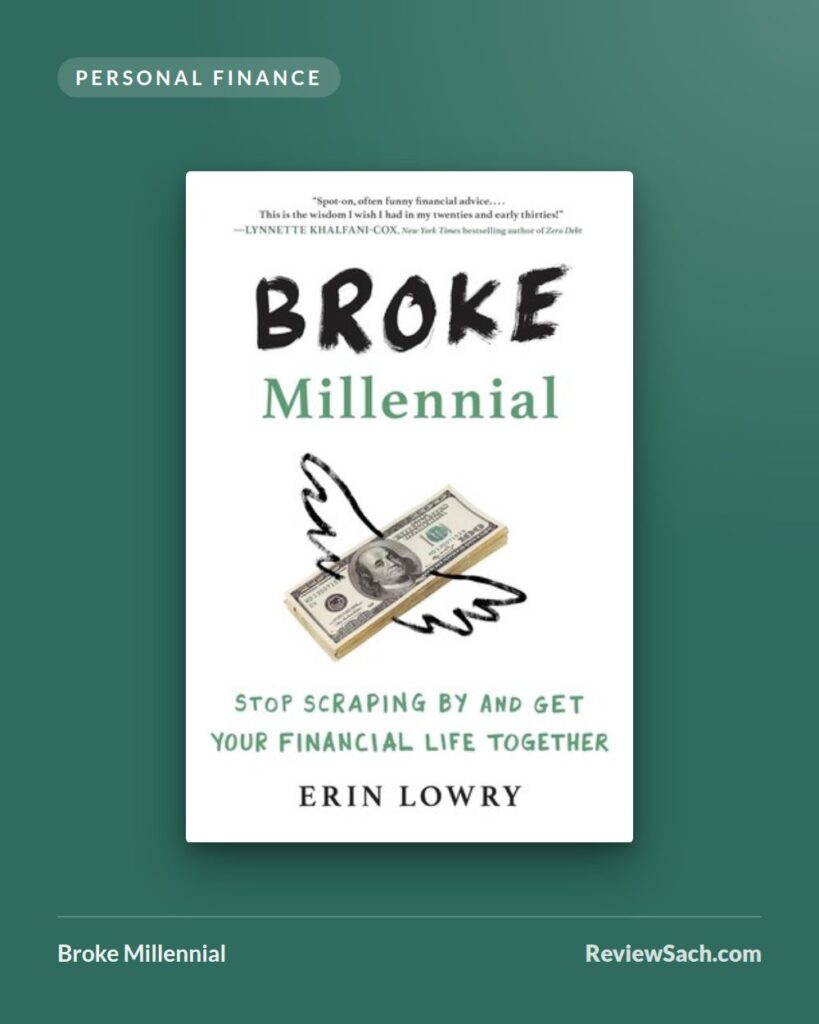
Author: Erin Lowry · Published: 2017 · Genre: Personal Finance, Young Adults
Broke Millennial is a beginner’s guide to money for people in their twenties: budgeting, credit, student loans, awkward money conversations and a first look at investing. It is friendly, practical and unusually good on the social side of money. Its breadth is also its limit, so readers who already have the basics will outgrow it quickly.
What it’s about
Lowry, a personal finance writer who built a following through her Broke Millennial blog, organises the book as a choose-your-own-adventure guide. Each chapter stands alone, so readers can jump straight to the problem in front of them and return months later for the next one.
The early chapters deal with money attitudes and budgeting, offering several budgeting methods rather than one, so readers can pick the style that suits their personality. Then come credit scores and credit reports, using credit cards well, paying off consumer debt and handling student loans. The middle section turns to conversations: talking about money with friends, splitting bills fairly and discussing finances with a partner before moving in together or marrying. The final chapters cover negotiating pay, investing basics, retirement accounts, choosing a financial adviser and buying a home.
What works
- The social side of money. The chapters on friends and partners are the book’s best. Lowry treats situations such as splitting a group bill when incomes differ, or finding out how much debt a partner carries, as real financial problems with practical answers, not etiquette footnotes.
- Several budgeting styles. Instead of insisting on one method, she explains a few and accepts that the best budget is the one you will actually keep. That is honest advice many books skip.
- A relatable guide. Lowry draws on her own experience of living in New York City on a small salary early in her career, and she acknowledges the advantages she had. The light humour keeps dry topics moving, and the tone never talks down to readers.
- Credit explained clearly. For readers confused by credit scores, the explanation of how they are calculated, why they matter and how to build one without paying interest is clear and practical.
What doesn’t
The book is broad rather than deep. Investing and retirement get a chapter each, enough to get started but not enough to make confident decisions about asset allocation or fund choice. Lowry followed up with Broke Millennial Takes On Investing in 2019, which suggests she knew the gap was there.
The advice itself is conventional: pay down high-interest debt, build an emergency fund, use workplace retirement accounts. That is sound, but anyone who has read another beginner’s money book will recognise most of it. The book’s value lies in its tone and its social chapters rather than in new ideas.
It is also very American. Student loan programmes, 401(k)s, Roth IRAs and US credit scoring dominate, so readers elsewhere will need local equivalents for much of the practical detail. And the New York examples, from rent to social life, can feel narrow for readers in cheaper cities or smaller towns.
The text-heavy format may put off readers who want quick answers, and some of the detail on student loan repayment dates quickly as rules change. The generational branding also ages: the oldest millennials are now well into their forties, and the book’s concerns belong firmly to the first decade of adult life.
Who should read it
Graduates and young workers who feel lost about money, especially those dealing with student loans or money tensions in friendships and relationships. It also works well as a graduation gift. If you already budget, have decent credit and invest regularly, you can skip it.
Rating: 3.5/5
Image credits — Cover image via Open Library. Cover design © the publisher, shown for review purposes.
