

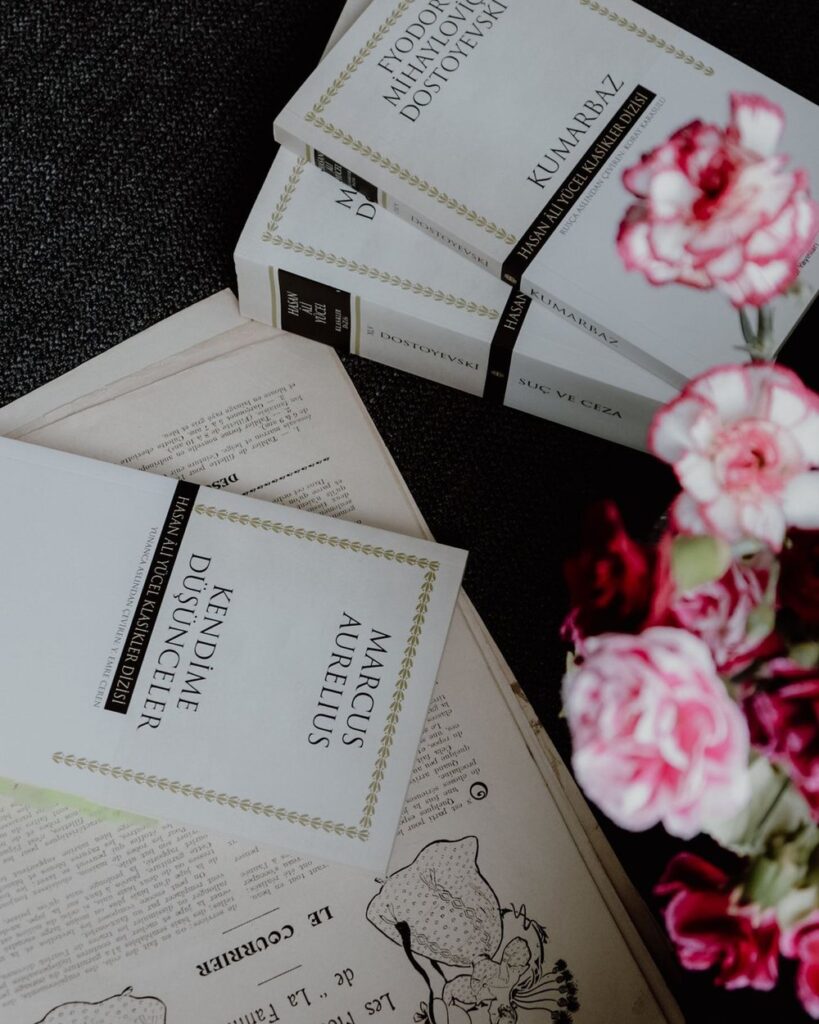
Author: Marcus Aurelius · Published: c. 170–180 AD · Genre: Philosophy, Stoicism · Original title: Ta eis heauton (To Himself)
Meditations is a Roman emperor’s private notebook of reminders to himself about how to live well, stay calm and do his duty. Its biggest strength is its honesty: this is a powerful man arguing with his own anger, fatigue and fear of death, and the advice still lands. Its biggest weakness is that it was never meant to be a book, so it is repetitive, unstructured and at times bleak. It’s worth reading for anyone interested in Stoicism, or simply in keeping a steady mind under pressure.
The core ideas
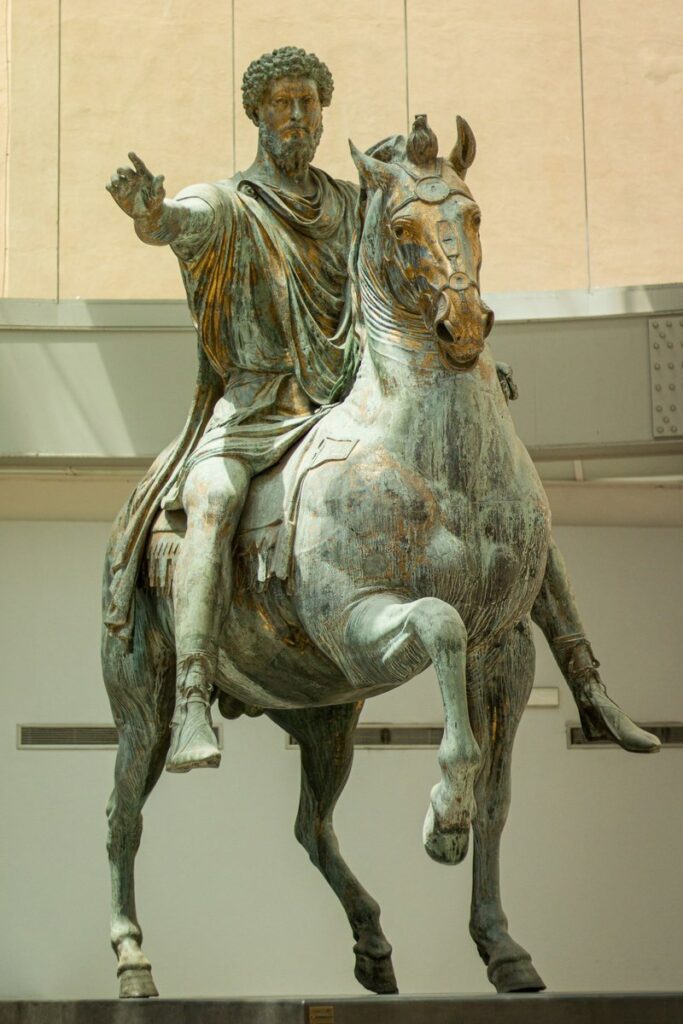
Marcus Aurelius ruled Rome from 161 to 180 AD, and much of the text seems to have been written during his long campaigns on the Danube frontier. He wrote in Greek, in twelve short books, for himself rather than for an audience.
- Focus on what’s up to you. Your judgments, choices and character are in your control; other people’s behavior, fame and fortune are not. Much of our distress comes from our opinions about events rather than the events themselves. In Book 1 he thanks his teacher Rusticus for introducing him to the teachings of Epictetus, whose influence runs through the whole work.
- Expect difficult people. He reminds himself at the start of the day that he will meet the meddling, the ungrateful and the arrogant, that they act out of ignorance of good and bad, and that they cannot really harm him. They are still his kin, born to work together with him.
- Everything passes. He keeps picturing the emperors, philosophers and cities that have vanished. Alexander the Great and his mule driver, he notes, ended up in the same place. Fame is empty, and death is a natural process, not a disaster.
- Duty to the common good. Humans are social beings and part of a rational whole. Do your work well, act for others, and don’t wait for a perfect world.
- Obstacles as material. What blocks an action can become a new way of acting, the passage behind the title of Ryan Holiday’s The Obstacle Is the Way.
What’s great
The voice is unlike any other ancient text. This isn’t a philosopher lecturing students but a tired man with enormous power telling himself to be patient, to be fair, and to get out of bed and do his job. That makes the Stoic ideas feel tested rather than theoretical.
The lessons are practical. Viewing events from above, separating what happened from your judgment about it, and remembering that everyone dies all still work as mental exercises. Book 1, a list of what he learned from family and teachers, is a moving portrait of gratitude. The entries are short, so you can read a few at a time and return often.
What’s weak
Because it’s a private notebook, it repeats itself constantly and has no argument that builds from start to finish. Some readers find the stress on death, the smallness of human life and the emptiness of fame gloomy rather than consoling. The Stoic physics and theology underneath, a rational, providential universe, will not persuade many modern readers.
There’s also a gap between the text and the reign. Marcus spent years at war, Christians were persecuted in parts of the empire under his rule, and he made his son Commodus his heir. Modern self-help packaging can also flatten the book into productivity tips.
Translation choice matters a lot here. George Long’s 19th-century version sounds formal and archaic. More recent translations, such as Gregory Hays’s plain, contemporary English or Martin Hammond’s Penguin Classics edition with its detailed notes, read very differently from each other and from the older ones. Readers disagree about which works best, so sample a few pages of two or three before committing.
Who should read it
Anyone curious about Stoicism should start here or with Epictetus. Read slowly, a few entries at a time, in a translation whose voice suits you. Pierre Hadot’s The Inner Citadel is an excellent guide if you want the philosophy explained in depth.
Rating: 4.5/5
Image credits — Featured image: Photo by Céline on Pexels. In-article images: Photo by Adrian Botica on Unsplash.
