

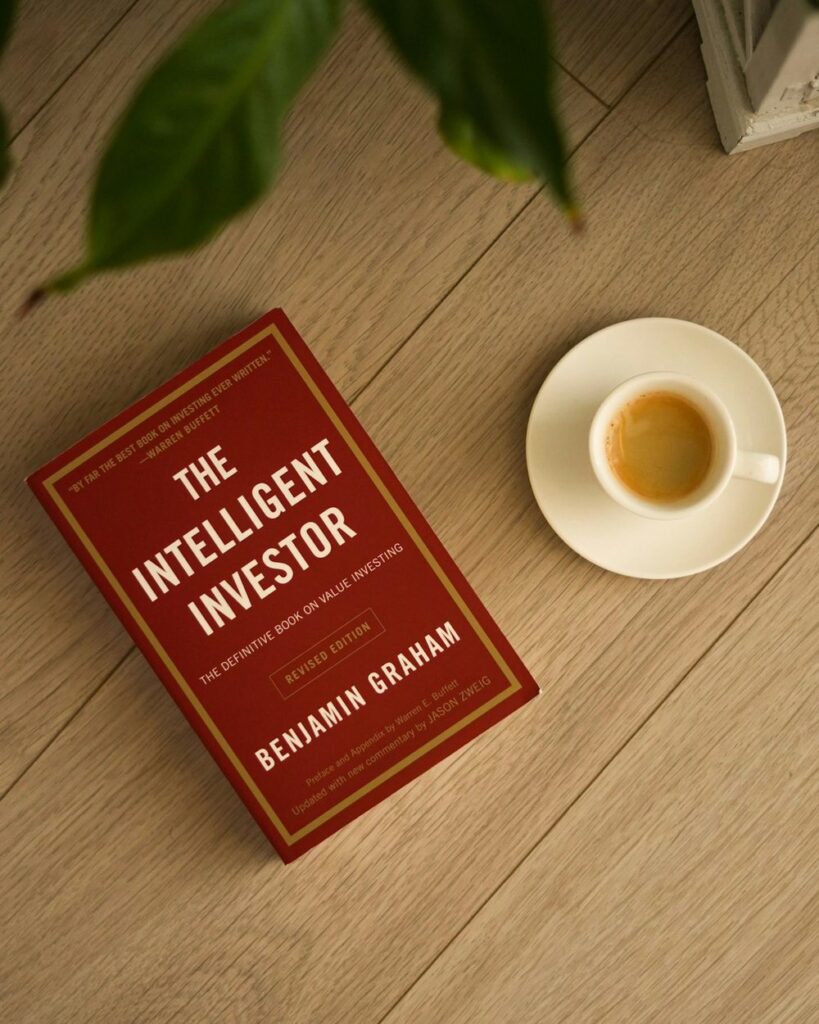
Author: Benjamin Graham · Published: 1949 · Genre: Personal Finance, Investing
The Intelligent Investor argues that successful investing depends less on brilliance than on temperament: paying less than a business is worth and refusing to be swept along by the market’s moods. It is the founding text of value investing and still the best book on investor psychology. It is also dense and dated, so it rewards committed readers more than beginners looking for a quick plan.
The big idea
Graham, who taught Warren Buffett at Columbia, draws a sharp line between investing and speculating. An investment, in his definition, is an operation that, after thorough analysis, offers safety of principal and an adequate return. Anything else is speculation.
He then divides readers into two types. The defensive investor wants safety and freedom from effort. Graham tells this reader to hold high-grade bonds and a diversified list of large, established companies, keeping stocks between 25% and 75% of the portfolio. The enterprising investor is willing to do serious work and can hunt for bargains, but only under strict rules.
Two ideas hold the book together. Mr. Market is an imaginary business partner who offers every day to buy your share or sell you his, at prices that swing with his mood. You are free to ignore him, or to take advantage of him when he is being foolish. The margin of safety, the subject of the final chapter, means buying only when the price sits well below a conservative estimate of value, so that errors and bad luck don’t ruin you.
What works
- Mr. Market is the best metaphor in investing. It turns volatility from a threat into an opportunity and puts responsibility for panic squarely on the investor, not the market.
- The defensive plan still holds up. A balanced mix of stocks and bonds, bought regularly, rebalanced and otherwise left alone, is close to what index-fund advocates recommend today. Graham’s suggested starting point, an even split restored whenever it drifts noticeably, is simple enough to follow for decades.
- Modesty about the odds. Graham warns repeatedly that enterprising strategies demand time and skill, and that most people are better off being defensive. For a book so associated with stock picking, it is refreshingly frank about how hard beating the market is.
- The modern commentary helps. Most readers now use the 2003 revised edition with chapter-by-chapter notes from Wall Street Journal columnist Jason Zweig, who updates Graham’s lessons with examples from the dot-com bubble.
What doesn’t
The prose is heavy. Graham writes like the professor he was, with long passages on bond yields, preferred stocks and corporate accounts that will lose casual readers. Many of his company examples come from the middle of the last century and mean little now, and the chapters on convertible issues and warrants are hard going for little modern payoff.
Some of his specific screens, such as buying stocks for less than their net current assets, are hard to apply today, when such bargains are rare and quickly spotted by computers. In a 1976 interview, shortly before his death, Graham himself said he was no longer an advocate of elaborate security analysis to find bargains. That sits uneasily with the book’s reputation as a stock-picking manual.
The book also can’t offer the solution most modern readers use. Index funds were barely available to ordinary investors when Graham last revised it, so readers have to supply that piece themselves, which is why many pair it with Bogle or Malkiel.
Who should read it
Anyone who plans to buy individual stocks, and any long-term investor who wants to understand why discipline matters more than forecasts. Beginners should lean on Zweig’s commentary, or start with a simpler book and come back to this one later.
Rating: 4.5/5
Photo credits — Featured image: Photo by Nenad Kaevik on Unsplash.
