

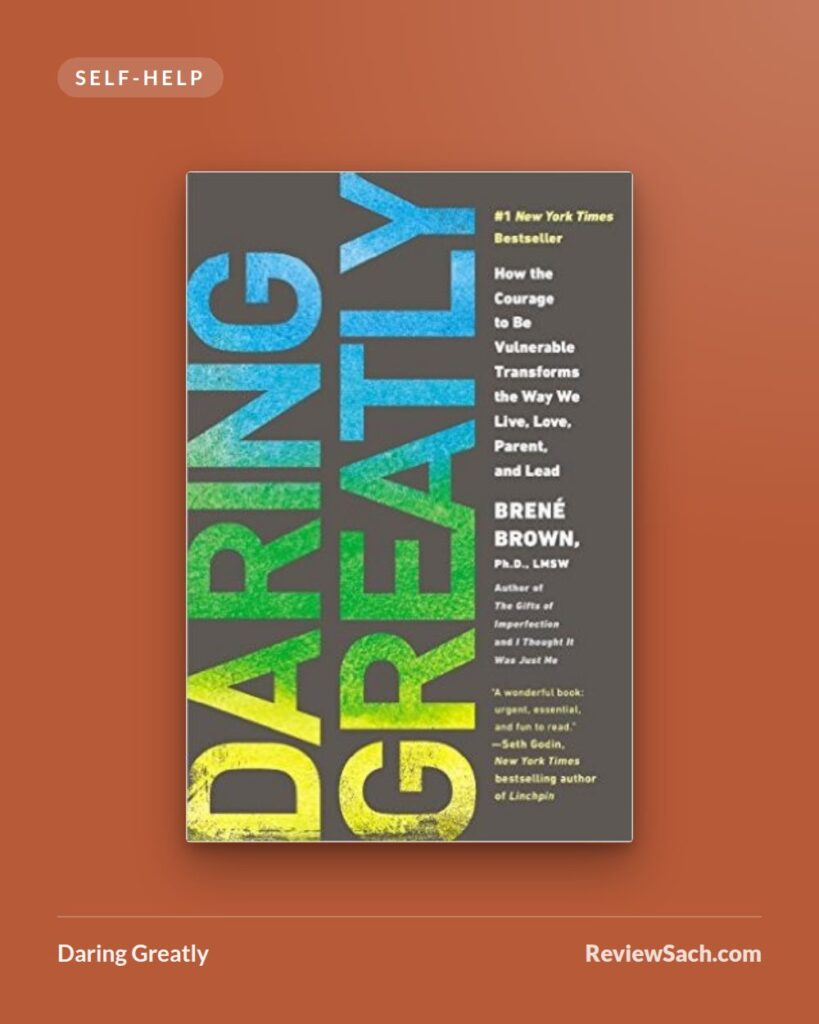
Author: Brené Brown · Published: 2012 · Genre: Self-Help, Psychology
Daring Greatly argues that vulnerability, meaning uncertainty, risk and emotional exposure, isn’t weakness but the source of courage, connection and creativity. Brown’s ideas on shame are genuinely useful, and the book has helped many readers be kinder to themselves and more honest with others. It’s also padded, heavy on coined terms and built on qualitative research that’s hard to check. Read it if shame or perfectionism is holding you back.
The big idea
Brown, a research professor at the University of Houston, became widely known after her 2010 TEDx talk on vulnerability. The title comes from Theodore Roosevelt’s 1910 “Man in the Arena” speech, which praises the person actually in the fight over the critic on the sidelines. Her point is that you can’t live fully while staying safely in the stands.
Her central distinction is between guilt and shame. Guilt is the feeling that you did something bad; shame is the feeling that you are bad. Guilt can motivate change. Shame, in her account, tends to fuel hiding, blaming and lashing out. The antidote is shame resilience: recognizing shame when it hits, checking whether its message is true, and talking about it with someone who has earned the right to hear your story.
She also argues that we live in a culture of scarcity, a constant sense of never being good, safe, rich or certain enough. People protect themselves with what she calls armor, including perfectionism, emotional numbing and foreboding joy, the habit of imagining disaster in happy moments. Early on, she takes apart common myths: that vulnerability is weakness, that some people simply don’t do it, that it means oversharing, and that anyone can go it alone.
What works
- Guilt vs shame. This simple distinction is the most practical idea in the book. It changes how you talk to children, partners and yourself after a mistake.
- The marble jar. When Brown’s daughter Ellen was hurt after classmates spread a secret she’d shared, Brown explained trust using the class marble jar: people earn marbles through small, reliable acts over time. It’s a clear model of who deserves your vulnerability, and it counters the idea that being vulnerable means oversharing with everyone.
- Perfectionism vs healthy striving. Brown argues that perfectionism is about earning approval and avoiding blame, while healthy striving is about your own growth. Perfectionists will find that distinction freeing.
- Foreboding joy. Naming the reflex of bracing for disaster when things go well, and suggesting gratitude instead, strikes a chord with many readers.
- Scope. Later chapters apply the ideas to leadership, schools and parenting, arguing that shame-driven workplaces and families stifle creativity and honest feedback.
What doesn’t
Brown’s method is grounded theory, which builds concepts from interviews and stories. That’s a legitimate approach, but it produces frameworks rather than tested claims. Many statements, such as how shame shapes whole organizations, are hard to verify, and the book often presents findings with more certainty than qualitative data supports.
The writing is repetitive, and the pile of branded terms, such as wholeheartedness, the vulnerability armory and disengagement, gets tiring. Much of it also overlaps with her earlier book, The Gifts of Imperfection, so fans of that book will find large parts familiar.
It assumes a fairly comfortable reader. The call to be more vulnerable works best when the risks are emotional, and it says less about situations where exposure could cost someone their job or safety.
Who should read it
Read it if you’re a perfectionist, a parent or a leader who struggles with criticism or connection. Managers may get the most from the leadership chapter, which argues that honest feedback depends on leaders showing vulnerability first. If you’ve already seen her TED talk and read The Gifts of Imperfection, you’ve got most of it.
Rating: 3.5/5
Image credits — Cover image via Open Library. Cover design © the publisher, shown for review purposes.
