

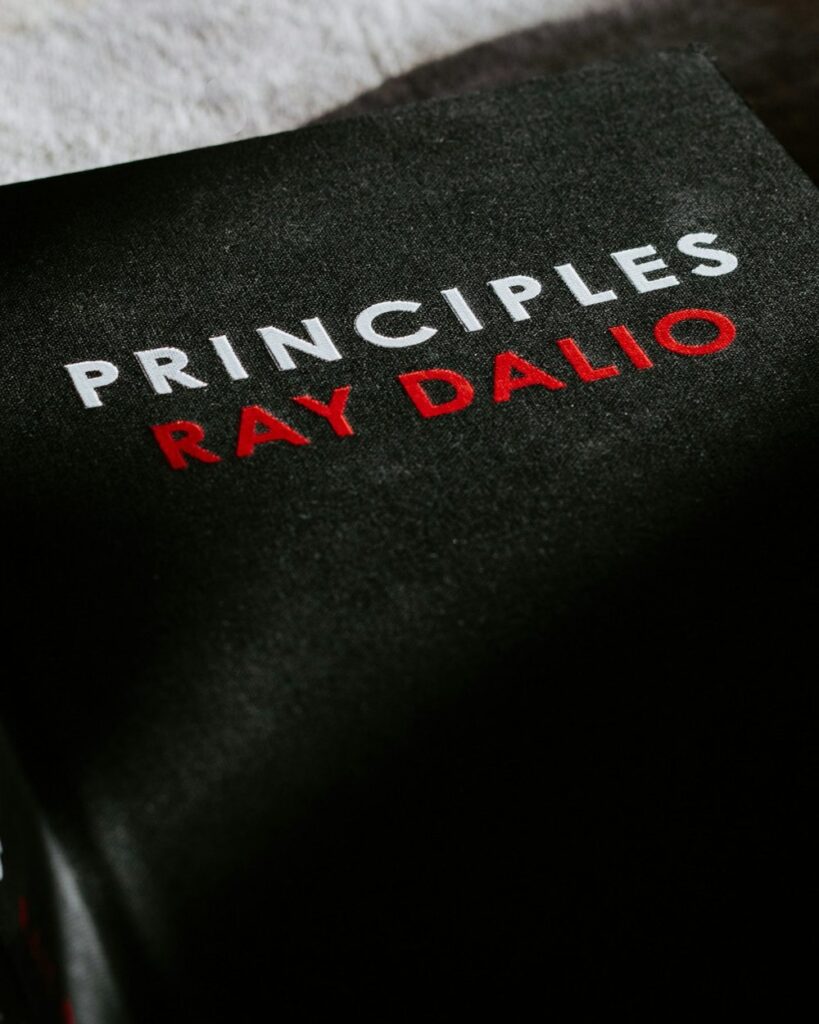
Author: Ray Dalio · Published: 2017 · Genre: Business, Decision Making
Principles‘s biggest strength is its core habit: treat every mistake as data, write down what you learned, and turn it into a rule you can apply next time. Its biggest weakness is everything piled on top of that habit: hundreds of numbered principles, much repetition, and a workplace system that former employees and journalists describe far less kindly than Dalio does. It’s worth reading for people who like systems and for managers interested in decision-making, as long as they skim.

The core ideas
The book has three parts: Dalio’s life story, his Life Principles and his Work Principles. The ideas that matter most:
- Pain + Reflection = Progress. Painful mistakes are the best learning opportunities, if you stop and analyze them honestly instead of defending your ego.
- The five-step process. Set clear goals, identify the problems blocking them, diagnose root causes, design a plan, then execute it. Most people, he argues, are strong at some steps and weak at others.
- Radical truth and radical transparency. At Bridgewater, the hedge fund he founded in 1975, meetings are recorded and people are expected to criticize each other openly, including the boss.
- Idea meritocracy. The best idea should win, not the most senior person. Opinions are weighted by believability, meaning a person’s track record in that specific area.
- People are wired differently. Understand your own and others’ strengths and weaknesses, and match people to roles that suit them.
What’s great
The autobiographical first part is the best section. In 1982 Dalio publicly predicted a debt-driven depression and was badly wrong. The losses cost him his staff and forced him to borrow $4,000 from his father. He explains how that humiliation taught him to seek out smart people who disagreed with him and to test his views before betting on them. It is an unusually candid origin story for a billionaire.
The decision-making advice is concrete and transferable. Writing down your criteria before deciding, then reviewing them after the outcome, is a simple discipline most people and teams skip. Dalio’s idea of turning those criteria into explicit rules, and eventually into algorithms, explains a lot about how Bridgewater invests.
The emphasis on separating the question of who is right from who is senior is a useful challenge to hierarchy in any organization.
The controversy
The book is bloated. The Life and Work sections run to hundreds of principles and sub-principles, many of them platitudes, and the list format makes it hard to tell what matters most.
Some of its tools rest on weak foundations. Dalio relies on personality assessments such as the Myers-Briggs Type Indicator to sort people into roles, and many psychologists question that test’s scientific validity.
The biggest issue is the gap between the ideal and the practice. Former employees have long described Bridgewater’s culture as intense and unforgiving, and Dalio himself acknowledges that the culture isn’t for everyone. Rob Copeland’s 2023 book The Fund went further, alleging that the Principles were applied unevenly and used to intimidate staff. Dalio dismissed that book as fiction and disputed its reporting, so readers should weigh both accounts.
There is also survivorship bias. The method belongs to one of the most successful investors of his era, but the book cannot show that the Principles, rather than skill, timing or luck, produced that success.
Who should read it
Read Part 1 and the Life Principles if you want better personal decision-making; skim the Work Principles unless you run a team. Dalio also published Principles for Success (2019), a much shorter illustrated version that covers the essentials.
Rating: 3.5/5
Image credits — Featured image: Photo by Alejandro Barba on Unsplash. In-article images: Photo by Tim Mossholder on Unsplash.
