

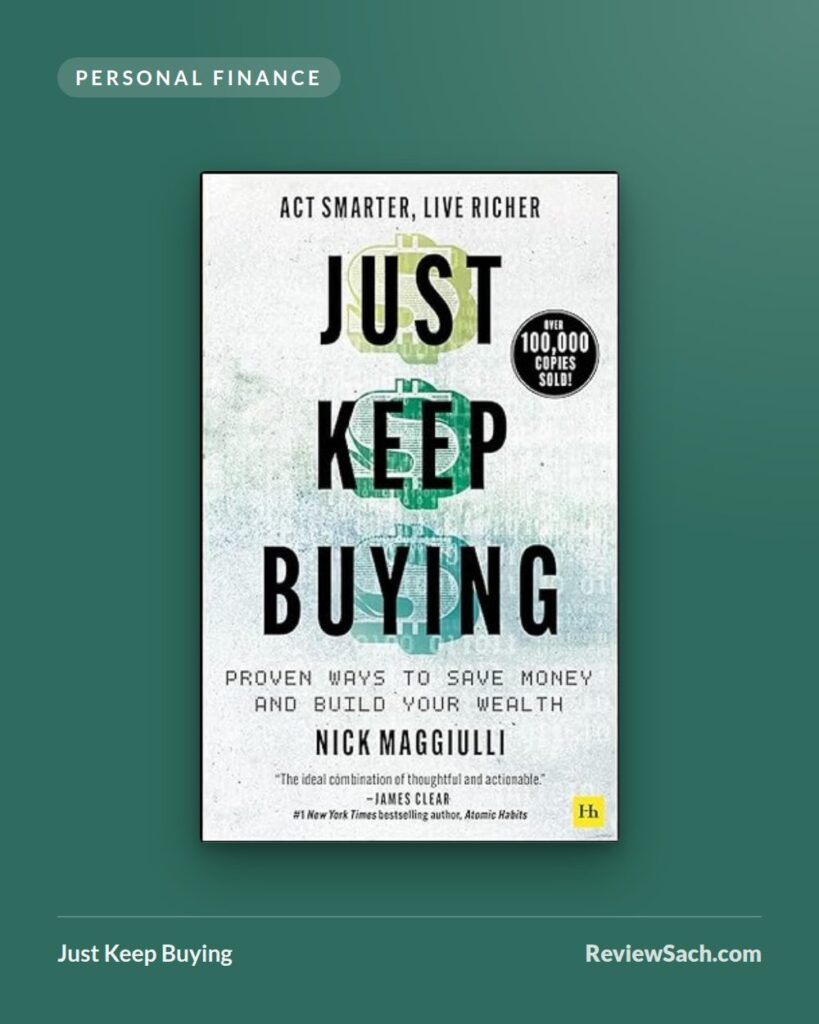
Author: Nick Maggiulli · Published: 2022 · Genre: Personal Finance, Investing
Just Keep Buying uses historical data to answer the everyday questions of personal finance: how much to save, whether to rent or buy, when to invest and what to own. Its answer to most investing questions is in the title: buy income-producing assets regularly and keep doing it. It is one of the best recent money books, practical and well argued, with a few conclusions that need caveats.
The big idea
Maggiulli, who writes the Of Dollars and Data blog and is chief operating officer of Ritholtz Wealth Management, splits the book into two parts: saving, then investing.
The saving half starts with a simple principle. Early in your career, how much you save matters far more than your investment returns, so focus there; as your portfolio grows, returns take over. He argues that raising your income usually does more than extreme frugality, and suggests saving a good share of every pay rise instead of spending it all. For splurges he offers the 2x rule: whenever you spend on something indulgent, invest or give away the same amount.
The investing half is where the data shines. He shows that investing a lump sum right away has usually beaten spreading it out over months, because markets rise more often than they fall. He argues against picking individual stocks and makes the case for owning a broad range of income-producing assets for the long term, then selling gradually in retirement. He even questions the standard advice to max out workplace retirement accounts, arguing that disciplined savers may value the flexibility of an ordinary brokerage account.
What works
- The buy-the-dip analysis. The book’s best-known finding is that even an investor who knew exactly when every market bottom would come would usually have done worse than someone who simply invested every month, because waiting in cash for the dip means missing years of gains. It is a vivid, memorable case against market timing.
- Balanced views. On renting versus buying a home, paying off debt and choosing when to retire, Maggiulli presents trade-offs rather than rules, and admits when the answer depends on personal circumstances and values.
- Usable rules of thumb. The 2x rule and the idea of saving part of every future raise are easy to apply and far less punishing than strict budgets.
- Clear writing. He explains data without drowning readers in it, the chapters are short, and each ends with a clear takeaway.
What doesn’t
The evidence is overwhelmingly American. Most of the results come from US market history, one of the best-performing markets of the past century. Investors in countries with weaker market histories, or where low-cost US-style funds are hard to buy, should apply the conclusions with care.
Some findings are presented with more confidence than history allows. Patterns such as lump-sum investing winning most of the time describe probabilities, not guarantees, and the book occasionally slides into treating them as rules. A reader who invests everything just before a long bear market won’t be consoled by the averages.
The investing chapters may be too dense for complete beginners. Some reviewers also found Maggiulli dismissive of early retirement, which he suggests may prove less fulfilling than many expect.
Finally, much of the material first appeared on his blog. Regular readers of Of Dollars and Data will find less that is new, though the book organises it well and adds a clear structure the blog lacks.
Who should read it
Readers past the absolute basics, and experienced savers who want evidence rather than slogans. It pairs well with Bogle’s book for anyone who wants the full case for regular, patient investing.
Rating: 4/5
Image credits — Cover image via Open Library. Cover design © the publisher, shown for review purposes.
