

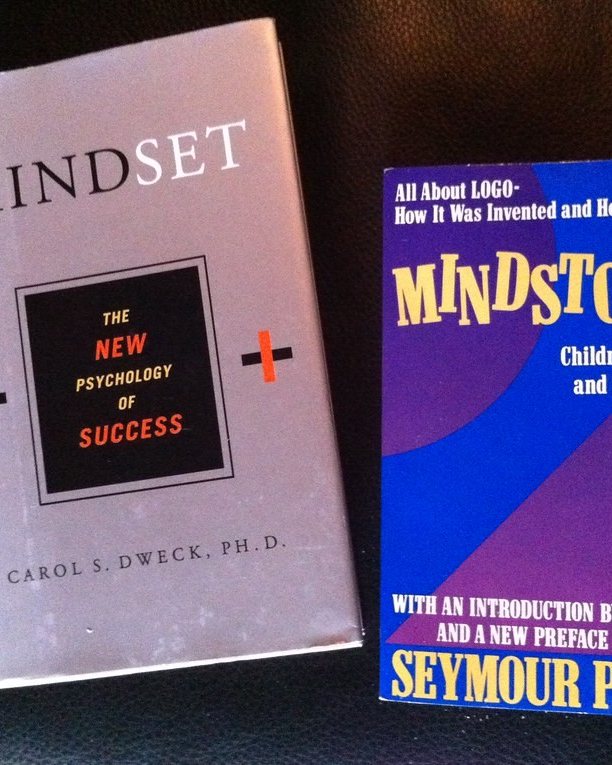
Author: Carol S. Dweck · Published: 2006 · Genre: Psychology, Self-Help
Mindset argues that people who see ability as something they can develop do better than those who see it as fixed. It’s a simple, appealing idea with some truth in it, and the book is easy to read. But it stretches one finding across every area of life, and later research suggests the effects are much smaller than the book implies. A good summary may give you everything you need.
The big idea
Dweck, a Stanford psychologist, distinguishes two beliefs. In a fixed mindset, talent and intelligence are set, so every challenge is a test of your worth and failure is a verdict on who you are. In a growth mindset, ability can be built through effort, better strategies and help from others, so failure is information.
Her best-known research concerns praise. In experiments with children, those praised for being smart tended to avoid harder puzzles afterward and did worse after setbacks, while those praised for their effort sought out challenges. From there, Dweck applies the framework to sports, business, relationships, parenting and teaching. In relationships, for example, she argues that people with a fixed mindset read every conflict as proof of a permanent flaw in their partner.
What works
- A clear, portable idea. The contrast between the two mindsets is easy to remember and apply. Adding the word yet to a statement about what you can’t do is a small but real shift in how you approach difficulty.
- The praise research. Her advice to praise process, strategy and persistence rather than innate talent is practical for parents, teachers and managers, and it grows directly out of her own experiments.
- Relatable examples. Dweck contrasts John McEnroe, whom she presents as blaming everything but himself, with Michael Jordan, who answered early setbacks with more practice. Her business chapter sets Enron’s culture of talent worship against leaders such as Lou Gerstner, who turned IBM around by focusing on teamwork and learning.
What doesn’t
The book has one idea and many pages. After the first few chapters, the argument becomes repetitive, with each new area of life getting a similar set of success and failure stories. The examples are also chosen after the fact: a failed leader is labeled fixed, a successful one growth, which makes the framework hard to disprove.
The bigger problem is the evidence. A pair of meta-analyses published in 2018 found only a weak link between mindset and academic achievement, and small average effects from mindset interventions. A major 2019 study in Nature, led by David Yeager with Dweck as a co-author, found that a short online program raised grades for lower-achieving American high school students, but the gain was modest. Later reviews have disagreed on whether the effects are small but real for some groups or close to zero overall, and several questioned the quality of many earlier studies. At least one careful attempt to replicate her praise experiments, published in 2019, found no effect.
Dweck deserves credit for facing this. She has warned publicly against what she calls a false growth mindset, such as praising effort that isn’t working or simply telling struggling students to try harder, and she has said the idea was often misapplied in schools. The book’s tone, however, remains more certain than the research.
It also underplays circumstances. A child in a chaotic home or an underfunded school faces obstacles that no belief about ability will remove, and the book says little about them.
Who should read it
Parents, teachers and coaches who want a quick framework for talking about effort and failure will get something from it. Read the first few chapters, adopt the praise advice, and treat the grander claims about business, love and life with caution.
Rating: 3/5
Photo credits — Featured image: Photo by Ben Chun via Flickr, CC BY-SA 2.0, cropped.
