

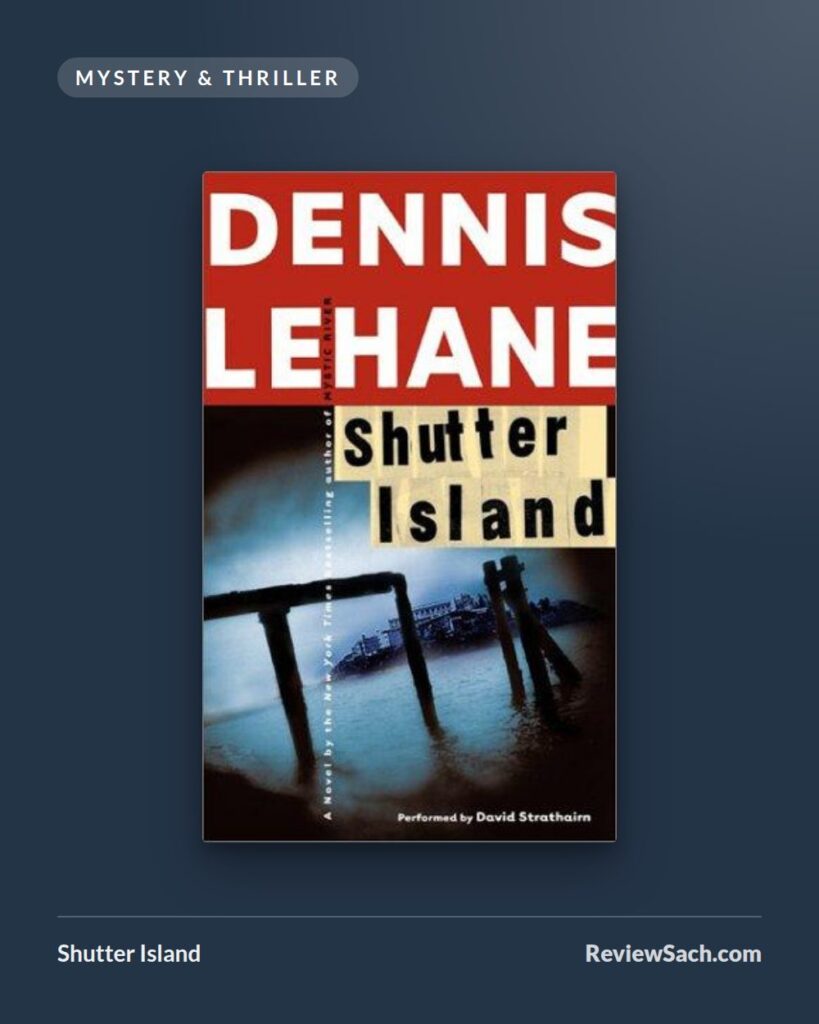
Author: Dennis Lehane · Published: 2003 · Genre: Psychological Thriller, Gothic Mystery
Shutter Island is a claustrophobic, pulpy thriller set in a 1950s hospital for the criminally insane, built around one of the best-known reveals in modern crime fiction. It’s worth reading even if you’ve seen Martin Scorsese’s 2010 film, because the atmosphere and the grief at its centre are the real pleasures. Readers who want a gothic mood piece with a strong hook will enjoy it most.
What it’s about
In 1954, US Marshal Teddy Daniels and his new partner, Chuck Aule, take a ferry to Shutter Island in Boston Harbor. The island is home to Ashecliffe Hospital, which holds dangerous patients. One of them, Rachel Solando, has vanished from a locked room, barefoot, with no obvious way off the island. She has left behind a cryptic note that begins with “the law of 4”.
Teddy is a Second World War veteran who saw the liberation of Dachau. He is still grieving his wife, Dolores, who died in a fire, and he has his own private reasons for wanting to get inside Ashecliffe. The chief psychiatrist, Dr John Cawley, is polite and evasive. The staff seem to be hiding something. Then a hurricane hits, the ferry can’t run, and the marshals are stuck.
What works
- Atmosphere. Lehane piles on the gothic furniture: an old fort that houses the most dangerous patients, a lighthouse nobody will talk about, storms, rats and sheer cliffs. It’s pulp, but it’s confident pulp, and the hurricane chapters are genuinely tense.
- The partnership. Chuck is easy, likeable company, and his banter with Teddy gives the opening chapters a buddy-film lightness. That makes the creeping dread more effective when it arrives.
- Period and politics. The novel is sharp on 1950s psychiatry, torn between surgery, new drugs and talking therapy. Cold War paranoia and memories of the war feed Teddy’s growing suspicion that something monstrous is happening on the island.
- Teddy’s grief. The dream sequences involving Dolores, and Teddy’s memories of Dachau, contain the best writing in the book. They give the thriller an emotional core rather than just a mechanism.
- The design. The final revelation reframes almost every scene, and a reread shows how carefully Lehane laid the groundwork. The clues are there, in dialogue and small details, if you’re paying attention.
What doesn’t
The middle third sags. Lehane leans on coded notes and puzzles that feel more like props than real detection, and Teddy’s trips around the island start to repeat. Some of the dialogue, especially the hard-boiled banter between the two marshals, tips into cliché.
The reveal also divides readers. Some find it earned and haunting. Others think it can be guessed early, or that the book cheats by holding back what it knows. In my view it plays fairer than its reputation suggests. Still, if you guess early, the second half becomes more about confirming a hunch than being surprised. Scorsese’s film, with Leonardo DiCaprio as Teddy, follows the book closely, so if you’ve seen it you’ll be reading for craft rather than shock.
It’s also worth knowing that this is a detour for Lehane, who is best known for realistic Boston crime novels such as Mystic River. Shutter Island is a deliberate pastiche of gothic horror and B-movie paranoia, and it should be read in that spirit.
Who should read it
Fans of gothic suspense, unreliable perception and period thrillers. It’s a fast read for a long weekend. If you want a realistic crime novel or a fair-play whodunit, Lehane’s Mystic River is the better choice. If you loved the film, the book gives you far more of Teddy’s inner life and is worth reading for that alone.
Rating: 4/5
Image credits — Cover image via Open Library. Cover design © the publisher, shown for review purposes.
