

Author: Clayton M. Christensen · Published: 1997 · Genre: Business, Innovation
The Innovator’s Dilemma has one of the most powerful ideas in business writing: well-run companies can fail precisely because they do everything good managers are taught to do. Its biggest weakness is that the theory has been stretched further than its evidence, and later research found that many of its supposed examples don’t fit the pattern cleanly. Read it if you make strategy or product decisions, and read the critics alongside it.
The core ideas
- Sustaining vs. disruptive technology. Sustaining innovations make existing products better for existing customers. Disruptive ones start out worse on the measures mainstream customers care about, but they are cheaper, simpler or smaller, and they win a new, often low-margin market first.
- Good management is the trap. Leaders listen to their best customers and invest where margins are highest. That is exactly why they ignore a small, unprofitable market until the entrant has improved enough to move upmarket and take their core business.
- Performance overshoots demand. Technology tends to improve faster than customers need, so a product that once looked too weak eventually becomes good enough for the mainstream.
- Resources follow customers. A firm’s customers, cost structure and investors decide what it can afford to pursue. Small markets can’t satisfy a big company’s growth targets, and markets that don’t exist yet can’t be analyzed with the usual forecasts.
- The prescription. Give the disruptive project to an independent unit sized to the small market, with permission to fail and learn.
What’s great
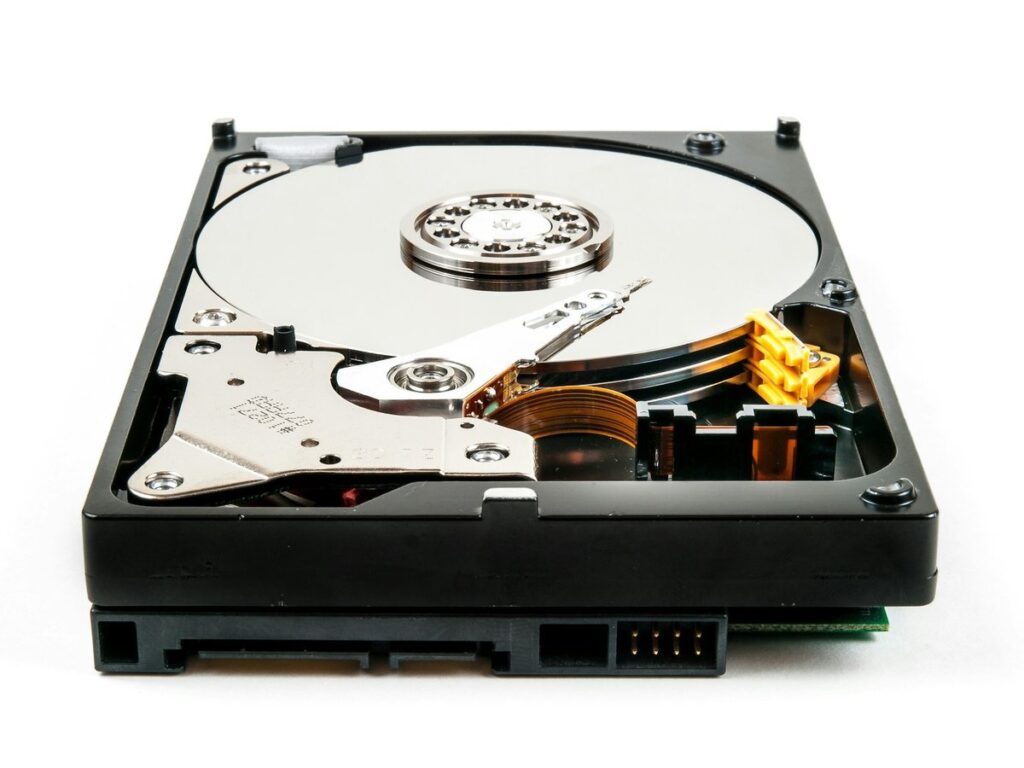
The disk drive research is the heart of the book, and it’s excellent. Christensen follows successive generations of drives, from 14-inch models down to 3.5-inch ones, and shows how established makers repeatedly stumbled on the smaller format because their current customers didn’t want it yet. The same pattern then appears in other industries: cable-operated excavators losing ground to hydraulic machines that began as small, less capable tools for small contractors, and integrated steel mills ceding market after market to minimills that started with low-grade rebar and worked their way up.
The argument is also fair to the people it describes. It doesn’t blame lazy or stupid executives. It shows how rational decisions, made by capable people with good data, add up to failure. That framing gave managers a shared vocabulary, and disruption became one of the most influential business ideas of the following decades.
The controversy
The sharpest attack came from historian Jill Lepore in The New Yorker in 2014. She argued that Christensen chose his cases selectively, that some firms he treated as casualties kept growing (she cited Seagate in disk drives), and that disruption had become an all-purpose justification for upheaval. She also pointed to his 2007 prediction that the iPhone would struggle. Christensen pushed back hard, saying she had misread the theory and ignored how he had refined it since 1997.
A 2015 MIT Sloan Management Review study by Andrew King and Baljir Baatartogtokh asked experts to assess 77 examples of disruption drawn from Christensen’s work. They concluded that only about 9 percent matched all of the theory’s key elements. Their point was not that the idea is useless, but that it explains less than its reputation suggests and works best combined with ordinary strategic analysis.
Christensen himself later narrowed the term, arguing in a 2015 Harvard Business Review article with coauthors that Uber, for example, was not truly disruptive. The practical lesson: the concept is precise, but popular usage is sloppy. The theory also explains failures after the fact better than it predicts which newcomer will win.
Who should read it
Founders, product managers and anyone working in strategy should read it, especially the disk drive chapters. Follow it with The Innovator’s Solution, Christensen’s refinement of the theory, and with Lepore’s essay for the strongest counterargument.
Rating: 4/5
Image credits — Featured image: cover image via Open Library; cover design © the publisher, shown for review purposes. In-article images: Photo by William Warby on Unsplash.
