

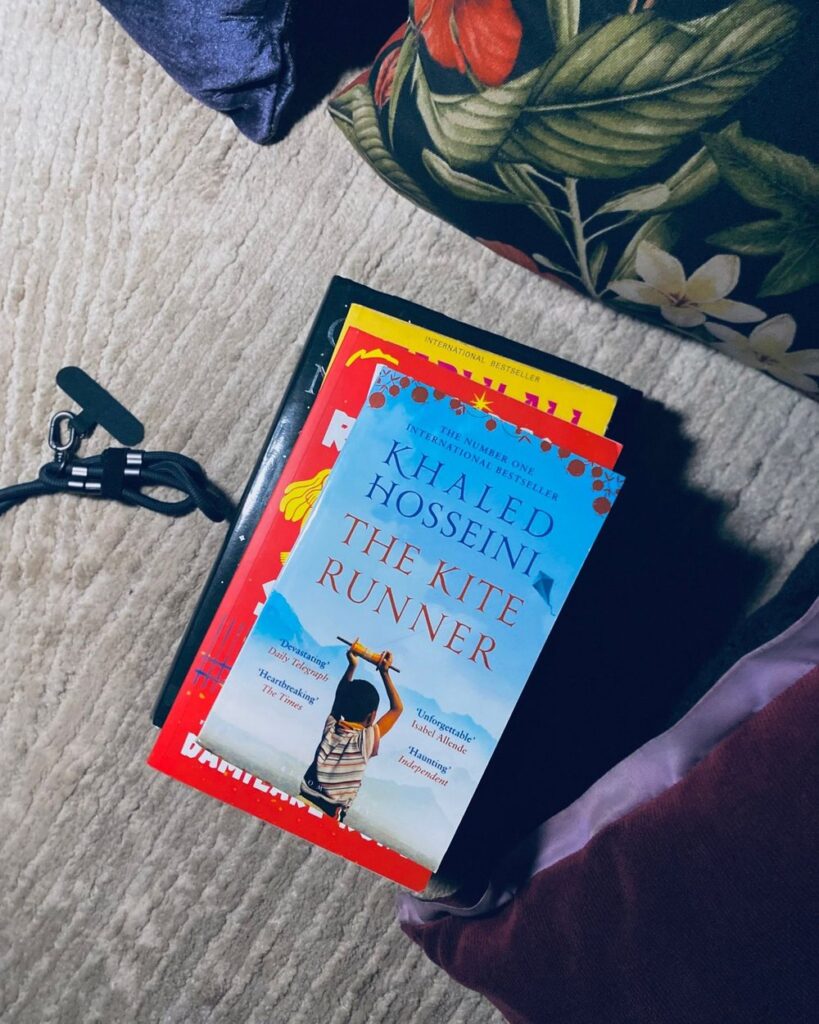
Author: Khaled Hosseini · Published: 2003 · Genre: Literary fiction, Historical fiction
The Kite Runner is a novel about guilt: a boy betrays his closest friend in 1970s Kabul and spends decades trying to make up for it. It’s gripping and easy to read, and this debut by a Kabul-born doctor living in California brought Afghanistan to millions of Western readers. But the second half relies on coincidence and a one-dimensional villain. Read it for the first half and the emotional punch, not for subtlety.
What it’s about
Amir grows up in a wealthy Kabul household with his father, Baba, a big, bold businessman whose approval Amir desperately wants and rarely gets. His constant companion is Hassan, the son of Baba’s servant Ali. Amir is Pashtun. Hassan is Hazara, a minority many Pashtuns look down on, and he is utterly loyal to Amir.
In the winter of 1975, Amir wins a city kite-fighting tournament, and Hassan runs to fetch the last kite he cut down. While chasing it, Hassan is sexually assaulted by an older boy named Assef, and Amir, who sees it happen, does nothing. That failure shapes both of their lives. After the Soviet invasion, Amir and Baba flee to California, where Amir grows up, marries Soraya, the daughter of an exiled Afghan general, and becomes a writer. Years later, a phone call from an old family friend in Pakistan pulls him back to an Afghanistan now ruled by the Taliban.
What works
- The kite-fighting. Hosseini makes a children’s game thrilling and specific: glass-coated strings, bleeding fingers, the chase for the last fallen kite. It’s the best set piece in the book.
- Baba. He is brave, generous, stubborn and hard to please. His life in California, working at a gas station and selling secondhand goods at a flea market, is the most moving thread in the novel.
- Afghanistan before the wars. The early chapters show a Kabul many Western readers had never pictured: cinemas showing American westerns, a pomegranate tree on a hill, wealthy neighborhoods, and deep ethnic divisions running under the surface.
- Pace. The prose is simple and the chapters move fast. Whatever its flaws, it’s a book people finish.
What doesn’t
The coincidences pile up. When Amir returns to Afghanistan, the plot leans on reunions and confrontations that feel engineered to settle old scores rather than to tell the truth about a war-torn country. Assef in particular is a sadist and an admirer of Hitler from his earliest scenes, with no complexity at all.
Amir is hard to like, and the book knows it, but his redemption can feel more like a checklist of suffering than a real change of character. The emotional cues are loud, and Hosseini rarely trusts readers to feel something on their own.
Some critics also point out that the Hazara characters exist mainly to be loyal and to suffer, and that the story centers the guilt of a privileged Pashtun narrator. The book has been challenged in American schools, mostly over its sexual violence and language. When the 2007 film adaptation was released, concerns about the safety of its young Afghan actors, because of the assault scene, led to them being moved out of the country.
Readers should also know that sexual violence against children is central to the plot. Hosseini doesn’t describe it graphically, but it is disturbing.
Who should read it
Readers who want a fast, emotional novel with a strong sense of place, and book clubs looking for plenty to discuss. Readers who dislike melodrama or obvious emotional manipulation should look elsewhere, or at least go in knowing what kind of book this is.
Rating: 3.5/5
Photo credits — Featured image: Photo by Emordama on Pexels.
