

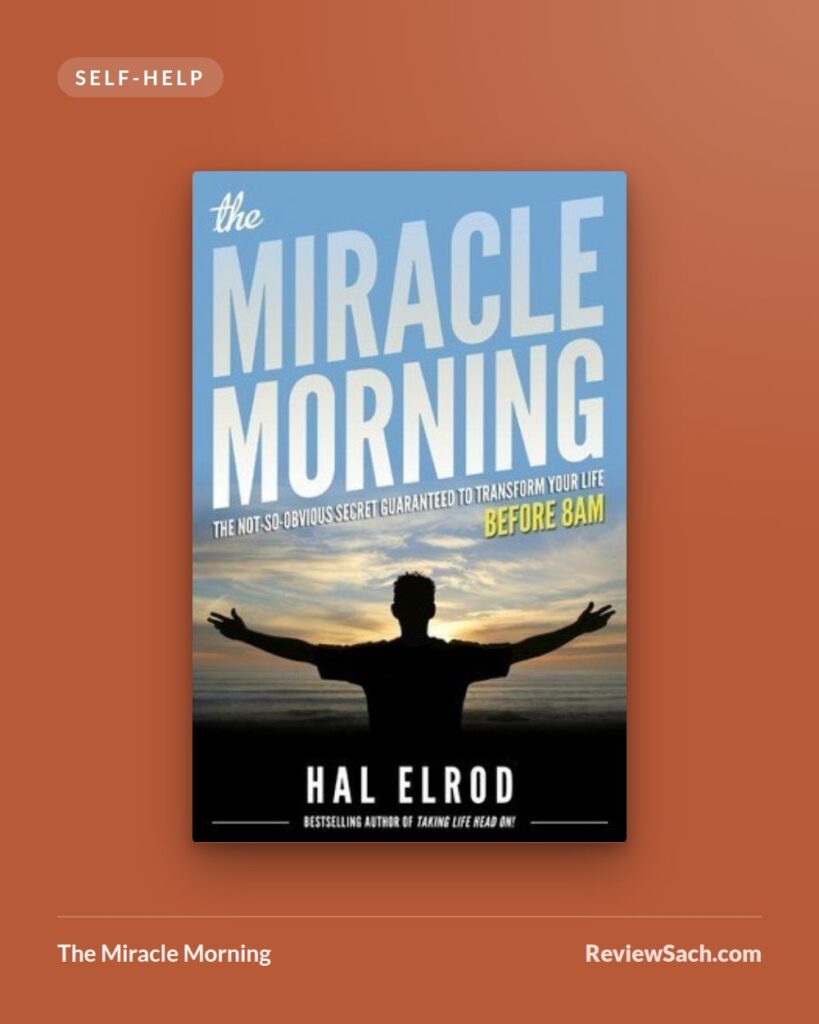
Author: Hal Elrod · Published: 2012 · Genre: Self-Help, Habits
The Miracle Morning argues that how you spend the first hour of your day shapes everything else, and that a structured morning routine can transform your life. The routine it offers, called SAVERS, is flexible and genuinely useful. The book around it is repetitive, heavy on hype and too insistent that everyone should get up earlier. Take the routine, skim the rest.
The big idea
Elrod’s own story is the hook. At 20, his car was hit head-on by a drunk driver; he was clinically dead for several minutes and was told he might never walk again. He recovered, became a top salesman and then a speaker, only to hit a financial and emotional low during the 2008 recession. His way out was a new morning practice, which became this book.
The practice is SAVERS, six habits in one routine:
- Silence: meditation, prayer or quiet reflection.
- Affirmations: statements of what you want, why it matters and what you’ll do to get it.
- Visualization: mentally rehearsing your goals and the actions they require.
- Exercise: even a few minutes to raise your energy.
- Reading: personal development books, a few pages every day.
- Scribing: journaling.
He suggests spending about an hour on them, but also offers a six-minute version with one minute for each. The book closes with a 30-day challenge, built on his claim that a new habit feels unbearable at first, then uncomfortable, then unstoppable.
What works
- SAVERS is a good menu. Each element has some support on its own. Exercise and journaling in particular have well-documented benefits, and bundling several into one routine makes them easier to start and harder to skip.
- The six-minute version. This is the book’s smartest idea. It lowers the bar so far that busy parents or shift workers can try the routine without rebuilding their lives.
- Starting on purpose. His argument that you should begin the day by choice rather than by reacting to your phone and inbox is simple and sound.
- Momentum. Elrod is relentlessly enthusiastic, and many readers credit the book with finally getting them to exercise, meditate or journal regularly. For some people, that push is exactly what’s missing.
What doesn’t
The early-rising message. Elrod pushes readers to get up earlier and leans on the idea that successful people start their day before everyone else. But people differ in their natural sleep timing, and cutting sleep to fit in a routine can backfire. The routine itself works at any hour, so the emphasis on the alarm clock is unnecessary.
Affirmations. Elrod does criticize vague, wishful affirmations and asks for ones tied to action, which helps. But research on positive self-statements is mixed, and some studies suggest they can leave people with low self-esteem feeling worse. The book doesn’t engage with that evidence.
Hype and padding. The title promises miracles, testimonials pile up, and a routine that fits on one page is stretched to book length through repetition and motivational storytelling. The brand has since grown into a long series of spin-off titles aimed at different groups, which says something about how much the core idea can be repackaged.
Little on why. The book tells you what to do each morning but rarely explains why particular practices work or how to adapt them when they don’t.
Who should read it
Read it if you want a structured way to start the day and need a push to try one. Night owls should take the routine and ignore the sermon about waking up early. If you already have a morning habit you like, you can skip it.
Rating: 3/5
Image credits — Cover image via Open Library. Cover design © the publisher, shown for review purposes.
