

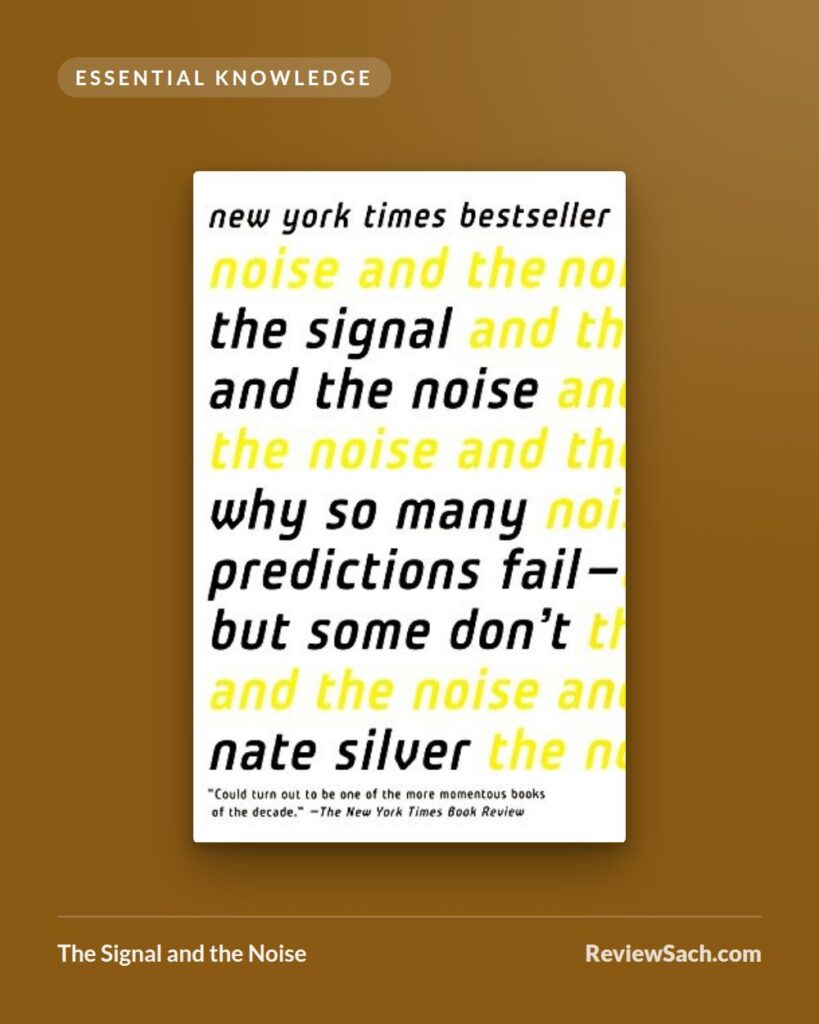
Author: Nate Silver · Published: 2012 · Genre: Statistics, Decision Making
The Signal and the Noise asks why most predictions fail, and why a few fields, like weather forecasting, keep getting better. Its biggest strength is breadth: Silver moves through baseball, elections, earthquakes, poker, finance and climate with clear explanations and real case studies. Its biggest weakness is unevenness, since some chapters go much deeper than others, and his case for Bayesian over traditional statistics is more slogan than argument. It’s worth reading for anyone who makes or consumes forecasts, which is nearly everyone.
The core ideas
- Data doesn’t speak for itself. More information means more noise, and people are very good at finding patterns that aren’t there. Overfitting, building a model that explains past noise instead of the underlying signal, is a recurring villain.
- Think in probabilities. Good forecasters give probabilities and ranges, not certainties, and they should be judged on calibration: when they say 70 percent, the event should happen about 70 percent of the time.
- Update like a Bayesian. Start with a prior belief, then revise it in proportion to the strength of new evidence. Bayes’ theorem is the book’s organizing idea.
- Be a fox, not a hedgehog. Borrowing from Philip Tetlock, Silver argues that forecasters who draw on many ideas and admit uncertainty beat those who force everything into one grand theory. His review of TV pundits’ predictions finds them right about as often as a coin flip.
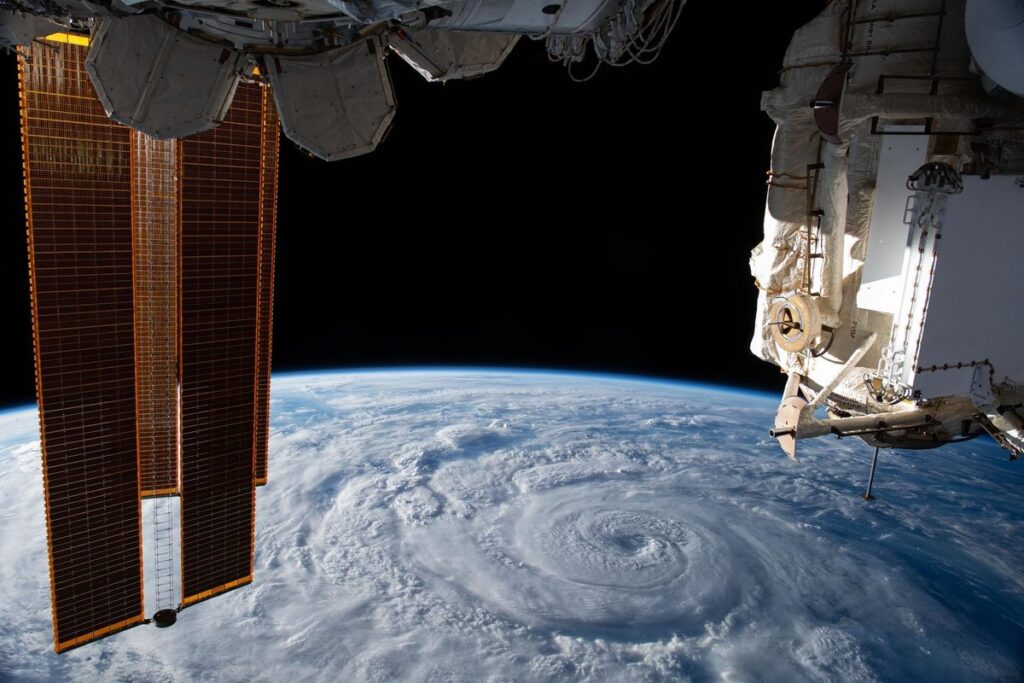
- Know what can be forecast. Weather forecasting has improved dramatically because the physics is understood and forecasters get constant feedback. Earthquakes can be described statistically but not predicted in time and place, and economic forecasts are far less accurate than their confident point estimates imply.
What’s great
The case studies are excellent. The chapter on the 2008 financial crisis shows how rating agencies gave top ratings to mortgage securities partly by underestimating how closely defaults would be linked. The weather chapter explains why commercial forecasters shade rain predictions upward: viewers resent a surprise downpour far more than a dry day. The baseball chapter draws on PECOTA, the player-forecasting system Silver built, and the poker chapter on his years playing the game professionally.
Silver is honest about uncertainty, including in politics, where he made his name forecasting the 2008 presidential election state by state with notable accuracy. The writing is clear, and the math never gets heavier than the idea requires.
What’s weak
The chapters vary a lot. Weather, baseball and poker are rich; others read more like quick surveys of fields Silver knows less well. The climate chapter drew criticism from the climate scientist Michael Mann, who argued that Silver applied the skepticism suited to social-science forecasting to well-understood physics.
Some statisticians also objected that his attacks on frequentist statistics, the tradition he associates with R. A. Fisher, are a caricature, and that Bayes’ theorem is sold as more of a cure-all than it is. The formula itself is simple; the hard part in practice is choosing sensible priors and models, which the book discusses less than its enthusiasm suggests.
The book is also longer than it needs to be, and a few sections drag.
Who should read it
Anyone who reads polls, makes business forecasts or wants to understand uncertainty will get a lot from it. It pairs well with Superforecasting, which offers stronger evidence on how individuals can improve, and with Silver’s later On the Edge (2024), which extends his interest in risk and gambling.
Rating: 4/5
Image credits — Featured image: cover image via Open Library; cover design © the publisher, shown for review purposes. In-article images: Image by NASA via NASA, Public Domain.
